Tag Archive for: Influence PEOPLE

Keys to Persuading Amiable Personalities

How would you like to meet Sandra Bullock? She always plays characters that are so nice and now she’s going to be nice to you. Imagine for a moment you have a big favor you want to ask her. How will you persuade her to say “Yes?”

This week we’ll take a look at how best to persuade someone who is an amiable or facilitator personality type. When I think of an amiable, Sandra Bullock jumps out at me because she seems to be someone who is more relationship-focused than task-oriented. But unlike Oprah, she doesn’t seek to control situations and others. Rather, she prefers to focus on self-control. The follow describes this personality type:

Amiable people really enjoy relationships; tend to focus more on feelings than facts; don’t consider themselves very assertive; are usually willing to set aside work if someone needs to talk; don’t like change; when they need help they prefer a real person to help them even if it takes more time.

Of the four personality types, fewer people taking my survey identified themselves as being amiable (14%) when compared to the other personalities: pragmatic (32%), expressive (24%) and thinker (29%).

Because amiable personality types are relationship-oriented, like the expressives, it will come as no surprise to find out they chose answers that engaged reciprocity and liking far more than did the pragmatic and analytical personality types, personalities that are much more task focused than they are on relationship building. Some influence advice when dealing with an amiable:

Make it a point to work the likingprinciple with these folks, because they want to know and enjoy the people they interact with. Can’t you just image Sandra wanting to get to know you and be your friend before you get down to business? I sure can. The good news is, if she likes you then she’ll probably go out of her way to help you.

While amiable personality types didn’t respond to reciprocityas much as the expressives they did place a higher value on it than thinkers and pragmatics. Do them a good turn or something thoughtful and it’s highly likely they’ll look for ways to return the favor.

Like the other personality types, when it comes to business decisions, helping amiable people deal with uncertainty is huge.

Amiable folks were persuaded by what others were doing – the principle of consensus– a little more than thinkers and expressives. When it comes to personal decisions consensus is even more important. This makes sense for someone relationship focused because they would rather go with the flow than buck the system.

Sharing facts or relying on the advice of experts is the most effective route with this group.  However, despite the fact that authority was the #1 principle chosen by amiables, it was not as effective as it was for thinkers and pragmatics.

When it came to using consistency– what someone has said or done in the past – this was the #3 choice for amiables. With these folks it’s not about being right as much as it is feeling obligated to live up to their word. My guess is part of this has to do with being liked. If you can tie your request to his or her beliefs or values the chance you’ll year “Yes” will increase significantly. You’ll also learn more about them so you can connect even better.

Scarcitywas least effective with this personality type when compared others. If something is truly rare or going away, by all means incorporate that into your request but don’t spend much time on it. You’ll get far more out building a relationship (liking and reciprocity) and helping t them overcome uncertainty (consensus and authority) in the business setting.

When it comes to the amiables in your life they may not be as nice and personable as  Sandra Bullock, but you’ll still be better off focusing on certain principles that will help you more than others. In order, here are the most effective principles of influence for amiables:

  • Authority
  • Consensus
  • Consistency
  • Liking
  • Reciprocity
  • Scarcity

Next week we’ll take a look at the final personality type, the thinker, also known as the analytic.

Brian Ahearn, CMCT®
Chief Influence Officer
influencePEOPLE 
Helping You Learn to Hear “Yes”.

Influencers from Around the World – How to Ask for a Pay Raise

This week you’ll learn how to persuasively ask
for a pay raise. The advice comes to us to from Italy’s Marco Germani. Marco
has written guest posts regularly for Influence PEOPLE since I started this
series nearly four years ago. I know you’ll enjoy his perspective on influence.
To learn more about Marco, connect with him on Facebook, LinkedIn or Twitter. 
Brian Ahearn, CMCT® 
Chief Influence Officer
influencePEOPLE 
Helping You Learn to Hear “Yes”.

How to Ask for a Pay
Raise
I
recently read an article on the labor market in the U.S stating; according to a
study, about 95% of employees never ask their company for a rise, during their
entire professional career. One of the obvious considerations of this finding
is that the remaining 5% of employees earn on average much higher figures than
others! “Ask and you shall receive,” says a well-known passage from the Bible,
but in the field of labor, people often don’t ask because often they don’t know
HOW and WHEN to ask. Lacking adequate preparation, they fear a refusal could at
least complicate, if not compromise seriously, their future stay with the
company.
What
follows summarizes the advice of many experts in personal development,
including Brian Tracy, Zig Ziglar, and Jay Abraham. In my opinion it’s the most
relevant information related to the request for a salary increase.
Who can apply
In the
current economic situation, those who have a more or less stable job in a
company consider themselves already lucky and often see no reason why they
should take the risk of asking their supervisors for a pay rise. This mentality
is unfortunately very common today among employees, who prefer to complain
about the boss, colleagues or their job at the coffee machine rather than
focusing on how they can create more value for the company through a greater
commitment in what they are doing. These people obviously have an attitude and
probably a performance that doesn’t justify a request for an increase.
On the
other hand, those who are constantly focused on performing effectively and
efficiently the tasks they’ve been assigned — those who constantly look for
more responsibilities and are willing to learn new things — should periodically
assess whether the wage they’re currently paid is in line with their true
market value. If not, they should decide to ask for a pay raise. Many people
live in hope that their supervisors, seeing their hard work and great results, will
decide to increase their compensation in the right time. This seldom happens
and asking for a pay raise can be a very appropriate action.
When to ask
The
timing, in the request for a salary increase is crucial and can determine in
large part the success of the operation. The best strategy is undoubtedly to
make an appointment with your superior (it’s important that you speak directly
with the person who can make this decision, when possible) and simply tell him
you want to make a point of the overall situation on your work, without going
into too much detail. A half hour should be sufficient. When hearing this
uncommon request, your supervisor, especially if you are a “top performer” in
your company (if you’re not it may not be appropriate to take this appointment
in the first place), would probably worry about the fact that you might want to
resign, which will give you some negotiating power in the first place.
The preparation of the meeting
Preparation
is everything and especially if, as in this case, most likely your manager will
not invest the time to prepare, can give you a big advantage in the
negotiation. In your case, preparation consists in collecting as much objective
data as possible, relating to the results that you have produced for your
company during the past 12 months or since your last salary increase. Ideally,
you should sum up the most important points in a short document in Word or
PowerPoint where, highlighting the concrete results that you generated with
your work.
The
second field on which you must prepare are the average salaries offered by the
market for positions similar to the one your cover. The important thing is to
provide objective information, citing sources (just search on the internet and
there are many sites that offer this type of information).
The meeting
It’s important
to enter the meeting with a relaxed and confident attitude: you are well
prepared and you are carrying a high value for your company, then you’re in a
position of power. Many find it difficult to ask and this makes them nervous
but this should not be your case! Start saying you want to make a point of the
situation regarding your work and that you’ve prepared a document that
summarizes your results.
Then
discuss it with your boss and ask him what, in his or her opinion you could or
should do better. Now, since your boss 
probably will not be prepared, unless there is something serious and
obvious, it is likely he will be unable to say anything particularly
significant, which does nothing but increase your negotiating power in view of
the request.
You may
proceed citing an authoritative source (website, a head hunter, etc.) about the
average level of salary for your position that is higher than what you’re receiving
and finally make your request, precise, clear, expressed in percentage of your
gross annual wage. “I think it would be appropriate to revise my salary
increasing it by 15% because…” At this point it is essential to remain silent
and wait for the reaction of the boss, which will be positive or negative.
The follow-up
In case
of positive response it’s important you define the terms and exact timing with
which the increase will be allocated. Starting from which paycheck? Will there be
an official announcement? Over what time period? If your boss tells you she
feels your compensation should be increased but, for X reasons, she cannot
change your salary at the moment, then work together to find a formula that
leads to the same result: a prize, bonus, etc. The important thing is there is
something of substance.
If your
boss tells you that he does not consider it appropriate that you receive a
salary increase, ask for detailed reasons, trying to get him to focus on your
performance. Very often motivation is given along these lines, “Your colleague
Tom earns the same salary and increasing your salary could cause a problem.” Of
course an explanation like this makes no sense at all and has nothing to do
with your performance. However, if your boss is really insistent about not giving
you the salary increase right there, sk the following question, “What needs to
happen to allow me an increase of 15%?” At this point your boss is forced to
define an objective condition, the achievement of which, automatically gets the
increase.
You just
have to try. Remember, if you don’t ask you won’t get anything. However, even a
“No” might just be a “Not yet.” If you think you are not in the position to
ask, get more engaged in your work and focused on producing greater results,
until you are in the position to ask for a pay rise.

** To vote for Robert Cialdini, President of Influence At Work, for the Top Management Thinker of 2013 click here

Marco

Keys to Persuading Expressive Personalities

You are one lucky person because you just got another big break! This week you’re meeting Oprah Winfrey! You’ve been given 15 minutes to talk with one of the few people who can make or break your career just my mentioning your name. How will you influence Oprah to give you that positive mention or perhaps airtime on one of her shows?

This week we’ll take a look at how best to persuade someone who is an expressive or influencer personality. When I think of an expressive, Oprah Winfrey immediately comes to mind because she’s someone who is more relationship-focused than task-oriented. Like the Trump, Oprah also likes to control situations and others. The follow describes this personality type:

Expressives like being part of social groups; enjoy attending events with lots of people; are more in tune with relating to people than working on tasks; are imaginative and creative; can usually win others over to their way of thinking; like things that are new and different; have no problem expressing themselves.

If I had to sum up expressive personalities in a word I’d say they’re balanced. Of the four personality types their answers had the least amount of variance. In other words, all of the principles of influence work well with them.

Because expressive personality types are relationship-oriented it will come as no surprise to learn in my online survey that they chose answers that engaged reciprocity and liking far more than did the pragmatic and analytical personality types, two personalities that are task focused much more than they are on building relationships. Some persuasion advice when dealing with an expressive:

Definitely spend time engaging the likingprinciple with them, because they want to like the people they interact with. Oprah certainly cares about closing the deal but she also cares about you and your story so look for ways to connect with her. If she likes you it’s a good bet she’ll go out of her way to help you.

Expressive personalities responded more to reciprocitythan any other personality type so look for ways to genuinely help them and they’ll respond in kind much more than pragmatics or thinkers will.

As was the case with pragmatics, in a business setting overcoming uncertainty is key for expressives.

Sharing trends and what others are doing – the principle of consensus– can be quite effective with expressives. Oprah types want to move the masses and they know it’s easier to swim with a wave rather than against it so share what many others are already doing.

Sharing hard data or using the advice of perceived experts is the most effectiveroute with this group.  However, while authoritywas the #1 principle chosen by expressives, it wasn’t as effective as it was with the other personalities. Show Oprah the numbers or share insight from experts and it will give her pause to consider your request.

When it came to using consistency– what someone has said or done in the past – this was the #3 choice for expressives. For this group it’s not as much about being right as it is being true to themselves and what they believe. Look for ways to tie your request to his or her beliefs or values and the chance you’ll year “Yes” will increase significantly.

Scarcitywas no more effective for this group than the others. Definitely don’t force the issue unless something is truly rare or diminishing. Oprah Winfrey and her expressive friends don’t like to miss out on opportunities but just know you won’t be as effective with the scarcity strategy as you might be with Donald Trump and his pragmatic buddies.

When it comes to the expressives you know, they may not be as expressive as Oprah Winfrey, but there are still principles that will be more effective than others. As I noted at the beginning, there is less variance with the principles for this group when compared to others. In order, here are the most effective principles:

  • Authority
  • Consensus
  • Consistency
  • Liking
  • Reciprocity
  • Scarcity

Next week we’ll take a look at the amiable personality, sometimes known as the facilitator.

Brian Ahearn, CMCT®
Chief Influence Officer

influencePEOPLE 
Helping You Learn to Hear “Yes”.

Keys to Persuading Pragmatic Personalities

Here it is, your big break – you have a meeting with the Donald! That’s right, Donald Trump has agreed to give you 15 minutes to pitch your idea. How will you go about persuading him to get a yes answer?

This week we’ll take a look at how best to persuade someone who is a pragmatic or driver personality. In my mind, Donald Trump is an off-the-charts pragmatic because he’s someone who is more task-oriented as opposed to relationship-focused and he likes to control situations and others. The following describes this personality type:

Pragmatics generally want quick results; are more focused on getting things done than chatting with people; prefer taking control of situations; sometimes act before thoroughly thinking things through; are assertive; not afraid to take risks; appreciate getting to the point quickly.

Because pragmatics are not relationship-oriented it will come as no surprise to learn in my online survey they chose answers that engaged reciprocity and liking far less than did the expressive and amiable personality types, two personalities that are people-focused much more than task-oriented. Some persuasion advice when dealing with a pragmatic.

Don’t be rude but don’t spin your wheels using the liking principle because they don’t care much about being your friend. Do you think Donald cares more about being your friend or possibly closing the deal? I bet he wants to close the deal.

Don’t try to pull the reciprocity lever by doing favors with an expectation that it will be a difference maker because it probably won’t help too much. Donald will gladly accept what you offer but it’s doubtful it will be top of mind for him to think about how to repay the favor.

Uncertainty can be bothersome for pragmatics so when they’re not sure what to do they tend to respond to a couple of principles more than others.

Pragmatics generally don’t care what everyone else is doing but it can be persuasive to tell them what others just like themare doing. While they don’t respond to the principle of consensus as much as other personalities it was nonetheless one of their top choices. Donald Trump doesn’t care what the run of the mill businessperson is doing but he cares what respected peers are doing so do some research and incorporate your findings into your presentation.

Sharing hard data or using the advice of perceived experts is the most effective route with this group.  In fact, in more than half the cases where authority was a choice, pragmatics went with it! Show Donald what the numbers are or share what respected experts have to say and he’ll give that more weight than anything else.

Motivating pragmatics to action can be easy if you know which principles to look for. Generally, you want to use consistency or scarcity.

When it came to using consistency – what someone has said or done in the past – pragmatics were more motivated by this principle than any other personality style. In fact, it was their second most often chosen reason when it came to being persuaded. When Donald Trump says something do you think he believes he’s right? Of course he does, so tie your request to his previous words, actions or beliefs and your odds of success go up dramatically. I can back up that claim because I saw this to be the case on an episode of The Apprentice.

While scarcity wasn’t one of the top three choices for pragmatics, using this principle was more effective with pragmatics than any other personality type. Think about Donald Trump – he hates to lose! Talk about what pragmatics might lose by not going along with what you’re proposing and you’ll get more compliance than you would by talking about what they might gain or save.

When it comes to the pragmatics you know, they may not be as extreme as Donald Trump, but nonetheless there are certain principles that will be more effective than others. In order of effectiveness they are:

  • Authority
  • Consistency
  • Consensus
  • Scarcity
  • Reciprocity
  • Liking

Next week we’ll take a look at the expressive personality, sometimes known as the influencer.

Brian Ahearn, CMCT®
Chief Influence Officer

influencePEOPLE 
Helping You Learn to Hear “Yes”.

DISCover Keys to Persuading Different Personality Types

Should you try to persuade different personality types with different principles of influence? Several years ago I conducted a survey on that topic and the results seemed to indicate there were certain principles of influence that were more effective with particular personality types.

My original survey contained a mixture of business and personal questions, which led many people to contact me because they felt they responded differently in business situations vs. personal settings. For example, in business they felt friendship was far less important when it came to saying “Yes” to someone than it might be away from the office.

Because much of what I write about is oriented towards business I decided to conduct a new survey that would be entirely focused on business-related issues. I’m happy to report that more than 500 people participated in the survey!The actual survey questions can be seen here. Without going into great detail, what’s important for you to understand is each question had three possible answers:

For the most part those who contacted me years ago were correct – people seem to respond to different principles of influence in the business environment than they do away from work. For example, with each personality type those taking the survey responded most often to the principle of authority. That’s not to say another principle such as liking was irrelevant but it was clear from the data that given the choice to respond because of friendship versus a perceived expert or hard data, people choose the expert or authoritative information when it came to saying “Yes.”

Something else to understand about the survey are the four personality types I asked survey participants to choose from. The personality choices are similar to the DISC profile you may be familiar with:

Pragmatic/Driver– This is someone who is more focused on accomplishing tasks than building relationships. They’re also more focused on control of others and situations than they are self-control. Donald Trump would be an off the charts representative of the driver personality style.

Expressive/Influencer– This person is more focused on building relationships versus accomplishing tasks. They’re also more focused on control of others and situations than they are on self-control. Oprah Winfrey would be a classic example of the influencer personality style.

Amiable/Facilitator– This is someone who is more focused on building relationships than accomplishing tasks. They’re also more focused on self-control as opposed to control of others or situations. Based on the roles she plays, Sandra Bullock comes to mind for this amiable personality style.

Thinker/Analytical– This individual is more focused on accomplishing tasks that building relationships. They tend to display more concern about self-controlvs. control of others or situations. Albert Einstein would be the perfect picture of this analytical personality style.

In the coming weeks I’ll share details on each of the four personality types and give some tips on the best ways to persuade people when you have a handle on their personality.

Brian Ahearn, CMCT®
Chief Influence Officer
influencePEOPLE 
Helping You Learn to Hear “Yes”.

5 Tips for Persuasive Presentations

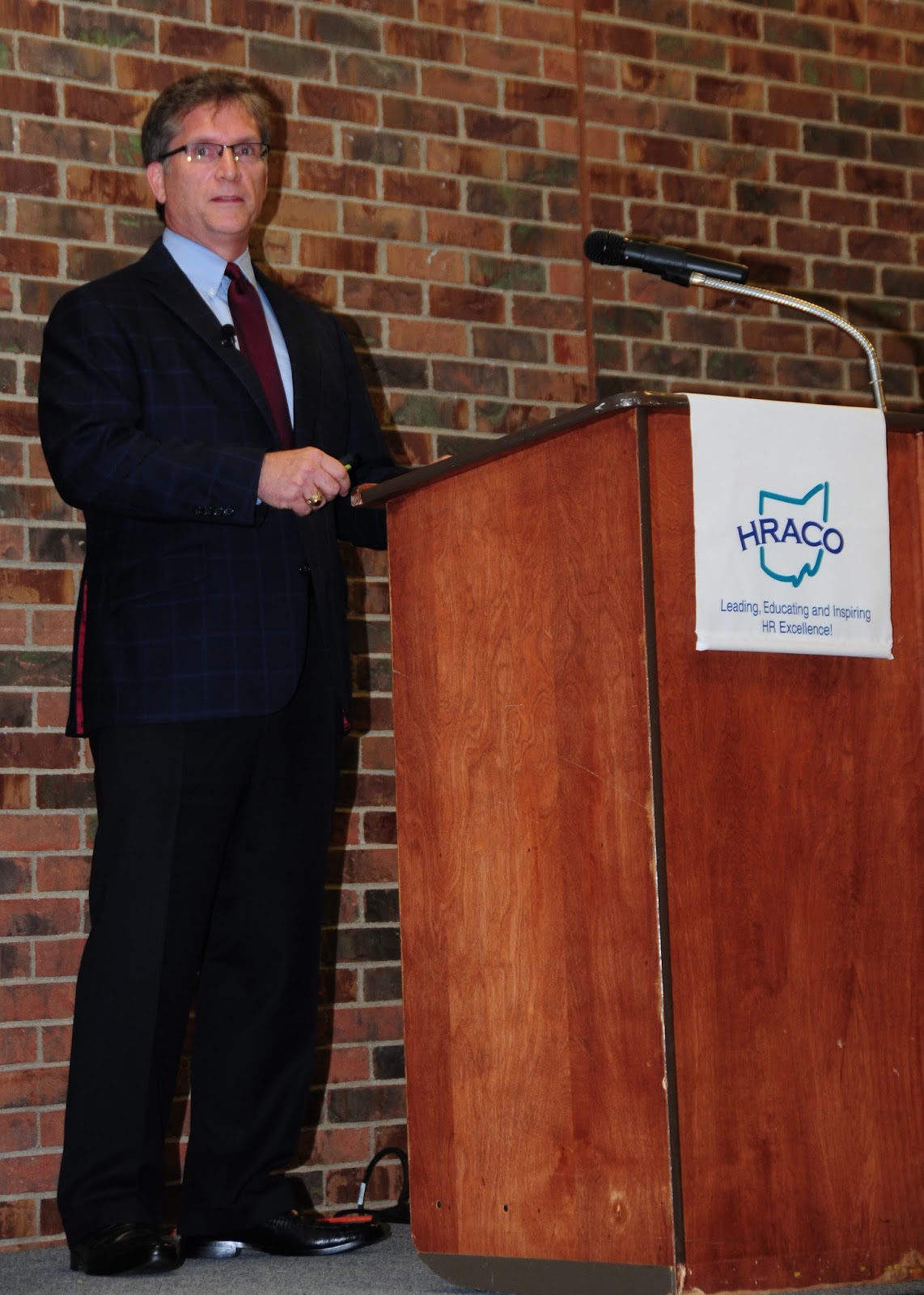
In June, I had the pleasure of giving a
keynote presentation to about 200 members of HRACO (Human Resources of Central
Ohio). It went really well and the best thing I can say is I persuaded many
people to try some of the influence tips I shared.
Often people ask me what I do to prepare for a
presentation. I’ll start by telling you what I don’t do – wing it. I always put
in lot of time, effort and practice. Here are five tips you might find helpful
next time you want to give a persuasive presentation.
1. Preparation – Vince Lombardi,
Hall of Fame coach of the Green Bay Packers, said, “Most people have the will
to win but few have the will to prepare to win.” This can’t be overstated
enough. Nobody would expect an athlete to perform with excellence without
countless hours of practice so why should you expect to give a great
presentation without plenty of practice?
When I do the Principles of Persuasion workshop
I stress this point – what you do before
the thing you do quite often makes your attempt at influence much easier. I’ll
spend at least an hour a day for weeks on end practicing my presentations. As I
do so I’m timing myself to make sure I stay within the allotted time. I work on
hand gestures, head movements at key times and voice inflection.
When I’m alone in the car I turn the radio off
and use the down time to practice. When I’m working out alone, between
exercises I practice parts of the talk. I’ll even record myself so I can hear
how it sounds.
2. Visual
Aids

– I use Power Point as a visual aid to almost all of my presentations and I’ll
have a handout for those who like to take notes. I highly recommend two books that
really influenced how I use this tool – Presentation Zen and The Presentation Secrets ofSteve Jobs.
I’ve moved away from traditional text-filled
slides, bullet points and lists. If I use words it’s usually one or two in very
large font to drive home a key point. Other that that I go almost entirely with
pictures because that’s how people think and best remember things.
I must tell you this; the first time you
present without the text and bullet points it’s a little scary because you
can’t glance at the screen for a reminder of what to say next. However, there
are several great reasons to go this route:
  • It forces you to know your material inside and
    out which makes you look more like a professional.
  • If you do miss something no one is any wiser
    because they’re not thinking, “He didn’t cover that last bullet point.”
  • It keeps the audience focused on you rather
    than the screen.
3. Questions – I ask lots of
questions. There are two reasons you want to do this. First, you can physically
engage the audience by asking for a show of hands if they agree or disagree.
The more you can physically involve people the more attention they’ll pay.
The second reason is people feel compelled to
answer questions. When you ask questions, even without asking people to do
something like raise their hands, they’ll get involved. You’ll see it with the
head nodding. Even those who don’t nod, I’ll bet they’re answering the question
in their heads so they’ve moved from passive listeners to active.
4. Introduction – A strong
introduction is key because it sets the tone for why people should listen to
you. This means you need a bio of less than 200 words so the event host can
introduce you. This leverages the principle of authority because people pay
attention to those they view as having superior knowledge or wisdom.
When I speak there are two critical
differentiators I want people to know. First, I make sure people know I’m one
of just 27 people in the world certified to train on behalf of Robert Cialdini,
the world’s most cited living social psychologist. In addition to authority this
also leverages the principle of scarcity which says people value things more
when they think they’re rare.
I also want audience members to know people in
185 countries have taken time to read my blog. That’s a great “Wow!” factor
that incorporates the principle of consensus. I want those in attendance to think, “If so many
people around the world are reading his stuff he must be pretty good.”
5. Take Away
Ideas

– I want to make sure my audience has tangible ideas for each of the principles
I talk about. It’s nice if they find the material interesting but the bottom
line is showing them how it can help them enjoy more professional success and
personal happiness. To do this I clearly state, “And here’s the application for
you,” then I share with few ways they can use the principle I just discussed in
every day situations.
Whole books are written on the subject of
presentation excellence so there’s no way to do it justice in a short blog
post. However, I hope you find these tips helpful. I know focusing on them has
helped me make great strides in giving more persuasive presentations and I’m
confident they can help you do the same.

Brian Ahearn, CMCT® 
Chief Influence Officer
influencePEOPLE 
Helping You Learn to Hear “Yes”.

If the Pot was Boiling Would You Even Notice?


There’s an old tale that says if a frog is placed in a pot of boiling water it would immediately jump out but if it’s placed in a pot with room temperature water that’s slowly turned up it won’t perceive the difference and can be boiled alive.
I don’t know if the story is true because I’ve never wanted to harm a frog just to find out. True or not, it illustrates a common reality that sometimes change happens so gradually we find ourselves in an unintended place before we realize what’s happened.
This is top of mind because over the past month I’ve had the opportunity to spend a day with four different interns at State Auto. I thoroughly enjoy those days every summer because their wide-eyed excitement is invigorating. During our time together I give them insight into our sales coaching, sales training and how to ethically persuade people.
As important as those topics are, I think the most valuable thing I talk about with them is their future. When I do this I always share something I’ve regularly said was one of the most impacting things I’ve ever done – writing a personal mission statement.
Although I wrote about this four years ago I felt compelled to reexamine the topic again. You can view my mission statement here.
When it comes to our careers it’s so easy for us to be like the frog in the room temperature water. Everything starts off okay and slowly but surely things change. Our 40-hour week becomes 45 then 50, but we hardly notice. We begin to work most Saturday mornings and that starts to stretch into Sunday. After all, we’re highly productive so we’re given more responsibility. We know if we keep performing we’ll get that next promotion and we already have lots of plans for the extra money we’ll make. We justify the need for nicer things because we’re working so hard and therefore deserve a bigger house, nicer car, new furniture, etc.
We tell ourselves those good things are for our spouse, kids or other family members. But in the process we start to miss the Little League games, school activities and other important events. In the grand scheme of life they’re not that big a deal – well, maybe not that big to you but that’s probably not the case for your kids or spouse. Sure, they “understand,” but secretly they wish you’d choose them over work.
Then comes the day that Harry Chapin famously sang about in “Cat’s in the Cradle.” Your loved ones decline the offer to spend time with you because they have other activities that are now more important to them. You’re hurt and disappointed. You feel like they don’t appreciate all you’ve done for them. The problem is, you never really knew what they wanted. The water is boiling and you can’t do anything about it.
How does a personal mission statement help? It makes you sit down today and consider the end. What kind of person do you want to become? How do you want to be remembered? When it’s all said and done what do you want out of life?
I told a friend recently how I’d gone to a Christmas party last year at a beautiful home. When I saw the ornate decorations in this huge home my gut reaction was, “What am I doing wrong that I can’t give this to my family?” The good news is, the thought didn’t even last a minute. I quickly came to my senses and realized, where I am in life is exactly where I’ve chosen to be.
You see, my mission statement clearly says my priorities are faith, family, personal wellbeing, then my career. Now, for those who know me, between my day job as a sales coach/trainer for State Auto and my activities with Influence PEOPLE, I work a lot. However, I construct my day so those things don’t take away from my family. As I write this on a Tuesday evening, Jane and Abigail are at work so I’m not taking any time away from them.
I start my weekdays at 4 a.m. because I don’t what to give up other things I love like reading, working out and running. I could use those extra morning hours to climb the corporate ladder but that would mean giving up time I can devote to other things I’ve said are more important.
I encourage you to take a look at the blog post I wrote about “The Value of a Personal Mission Statement.” It might be a trigger for you to do something similar. The strongest thing I can say to encourage you is that writing a personal mission statement was one of the most impacting activities I’ve ever undertaken.
P.S. I thought you’d find this interesting. As I was writing this post Abigail came home and wanted to go for a walk. Rather than choose to finish this post I took a break and went with her. I know most teenagers don’t ask their parents to do things with them and before I know it she’ll be out of the house and I’ll long for these days. A choice like this was easy because I set my priorities more than 20 years ago when I wrote my mission statement.
Brian Ahearn, CMCT®
Chief Influence Officer
influencePEOPLE 
Helping You Learn to Hear “Yes”.


Giver, Taker or Matcher – Which are You?


Do you look to help others? If you do, then
the next question is, why?
I just finished an excellent book, Give and Take, by Adam Grant. He
explores the principle of reciprocity but from a slightly different angle than
I typically do. Reciprocity is the psychological principle that tells us people
feel obligated to give back to those who’ve first given to them. Reciprocity is
triggered by the act of giving.
When it comes to reciprocity Grant explores
three kinds of people – takers, matchers and givers. As you might imagine, some
people don’t offer much help or only do so if they think they can get something
in return. These are takers and generally it’s best to avoid them because they
don’t really care about you except in so far as you can help them.
Matchers describe most people. You help them
and they’ll help you because they feel the pull of reciprocity.  They’ll offer help but usually not go
overboard. They’re almost keeping mental accounts because they feel if they
give too much they’ll be taken advantage of or not have enough time to tend to
their priorities.
Givers are those rare people who look to give
simply because they believe it’s the right thing to do. They’ll give far more than they
receive quite often and while they can be taken advantage of, for them that
doesn’t negate the reality that giving is the right thing to do. As a giver you
may give far more than you receive but you never know how doing something for
someone might just come around and be life changing for them as well as you.
As I read the book it reminded me of how I
came to know Robert Cialdini and his team at Influence At Work (IAW). I came in
contact with Dr. Cialdini’s work in 2002 when a friend, Nancy Edwards, was
studying for her MBA at The Ohio State University. Nancy saw a presentation Dr.
Cialdini had given at Stanford and was kind enough to share the video with me.
As I learned about the principles of influence a light bulb came on – the
principles explained all the sales techniques I’d learned and taught!
I purchased a copy of the video, began to
share it with small groups and we’d talk about how we could apply the concepts
at State Auto. One thing I appreciated about Dr. Cialdini was his emphasis on
non-manipulative ways to persuade people.
Sometime later, Stanford came out with a new
marketing piece for the video and it read, “Call it Influence, Persuasion, or
even Manipulation,” then went on to describe the video in more detail. Because
Dr. Cialdini was so emphatic about the ethical use of the principles I decide
to email Stanford. I basically said, “No one wants to be manipulated and I
doubt anyone wants to be known as a manipulator. That word can’t be helping your
sales but it sure could be hurting sales.”
Time passed and I never heard from Stanford
but one day my phone rang and it was Bobette Gorden, the vice president of
IAW, calling to thank me for sending that email to Stanford.
Apparently someone at Stanford read the email and decided to change how they
were marketing Dr. Cialdini’s video.
As fate would have it, during that call,
Bobette let me know Dr. Cialdini spoke about influence around the world in case
we ever needed a keynote speaker. It so happened we were looking for a speaker for
some upcoming agency conferences! In 2004, Dr. Cialdini spoke at State Auto
several times and that summer I went through his two-day Principles of
Persuasion workshop.
From there you might just say the rest is
history. I’ve now been a certified trainer for IAW for more than five years and
have been blogging on the subject of influence for more than four years.
The point of this post is twofold. First, for
those who are looking for ways to be more influential through giving, pick up a
copy of Give and Take. You’ll be a
more effective persuader because of it and more importantly, a better person.
The second point of the post is to encourage
you to be a giver because it’s the right thing to do. Trust that good things
will come your way as a result but in the meantime, look for ways to genuinely
help others. The late Zig Ziglar used to say; “You can get everything in life you want if you will just help enough other people get what they want.” There’s
wisdom and truth in those words so go out today and “give” it a try.


Brian, CMCT®
Chief Influence Officer
influencePEOPLE 
Helping You Learn to Hear “Yes”.

Influencers from Around the World – How Executives Can Learn Influence

This month’s
Influencers from Around the World guest post comes by way of my good friend
Sean Patrick. Through the power of the internet, he sent it to me all the way
from Ireland in just milliseconds. Sean started a his own sales training
company, Sales Training Evaluation, and spends time in various parts of Europe training salespeople and
executives. Sean was in the U.S. several years ago to attend the Principles of
Persuasion workshop and there’s a good chance he’ll be here again in late
summer or early fall. If you don’t get to meet him while he’s here you can always
“meet” him on Facebook, LinkedIn and Twitter.
How
Executives Can Learn Influence
How can executives acquire meaningful persuasion
skills so they can influence outside their power brokerage?  As people like myself know all too well,
skill transfer is one of the toughest tasks that can be placed upon a learning
and development executive.  Natural
persuaders just like successful sales people who adhere to no formal sales
process, struggle to share insights into their behaviors.  They will tell you that they “just do it.”  It just flows.  Words can’t describe the cognitive processes,
emotions and beliefs that form specific actions to take place at specific
intervals during the influence process. So imagine you’re the boss of a very
large department and you need to come up with a plan to motivate more
production out of your staff.  In today’s
corporate world, working environments are highly collaborative as well as
individualistic, where multi stakeholder partnerships exist. It’s these
environments in which the skills of influence rule over old school
manipulation.
According to Dr. Robert Cialdini, today’s
executives who lack the superior communication skills of the “naturals” can
turn to science in place of sourcing the very same skills that win deals, gain
compliance and get employees to willfully change.  Executives can gain consensus and win
concessions by mastering simple basic principles that can be easily learned and
applied in a relatively short period of time.
Here are a few simple ways where influence can be
applied in everyday corporate environments:
1. Liking Informal conversations during the
workday create an ideal opportunity to discover common areas of interest,
whether it’s a sports team, hobby, or watching “Mad Men.” The important thing
is to establish the commonality early because it creates a sense of goodwill
and trustworthiness in every subsequent encounter. It’s much easier to build
support for projects when the people you’re trying to persuade are already
bonded with you.  Managers, who praise
members of their staff where relationships have been impaired, begin to
radically turn around those relationships through the simple act of
recognition.
Researchers at the University of North Carolina
writing in the Journal of Experimental
Social Psychology,
found that men acted more favorably for an individual
who flattered them even if the compliments were untrue. And in their book Interpersonal Attraction
(Addison-Wesley, 1978), Ellen Berscheid and Elaine Hatfield Walster presented
experimental data showing that positive remarks about another person’s traits,
attitude, or performance reliably generates liking in return, as well as
willing compliance.
2. Reciprocity Line managers who share staff and
resources with their peers who are fast approaching deadlines are more likely
to receive favors and help when they need it in the future. Odds will improve
even more if you say, when your colleague thanks you for the assistance,
something like, “Sure, glad to help. I know how important it is for me to count
on your help when I need it.” 
Gift giving is one of the cruder applications of
the rule of reciprocity. In its more sophisticated uses, it promises a genuine
first-mover advantage on any manager who is trying to foster positive attitudes
and productive personal relationships in the office
3. Social Proof According to one of Dr. Cialdini’s
research pieces, a group of researchers went door-to-door in Columbia, S.C.,
soliciting donations for a charity campaign and displaying a list of neighborhood
residents who had already donated to the cause. The researchers found that the
longer the donor list was, the more likely those solicited would be to donate
as well.  The people being solicited
became the subject to the power of peer pressure once they saw the names of all
their neighbors on the list.
4. Consistency People need not only to like you but
also to feel committed to what you want them to do. Good turns are one reliable
way to make people feel obligated to you. Another is to win a public commitment
from them.  Israeli researchers writing
in 1983 in the Personality and Social Psychology Bulletin recounted how they
asked half the residents of a large apartment complex to sign a petition
favoring the establishment of a recreation center for the handicapped. The
cause was good and the request was small, so almost everyone who was asked
agreed to sign. Two weeks later, on National Collection Day for the
Handicapped, all residents of the complex were approached at home and asked to
give to the cause. A little more than half of those who were not asked to sign
the petition made a contribution. But an astounding 92% of those who did sign
donated money. The residents of the apartment complex felt obligated to live up
to their commitments because those commitments were active, public, and
voluntary.
5. Authority The principle of authority asks us to
believe in the advice dispensed by experts. Since there’s good reason to take
heed to expert advice, executives should take pains to ensure that they
establish their own expertise before they attempt to exert influence.
Surprisingly often, people mistakenly assume that others recognize and
appreciate their experience. The task for managers who want to establish their
claims to expertise is somewhat more difficult. They can’t simply nail their
diplomas to the wall and wait for everyone to notice. A little subtlety is
called for.
Through liking and similarity, they can also
provide an opportunity to establish expertise. Perhaps telling an anecdote
about successfully solving a problem similar to the one that’s on the agenda at
the next meeting or maybe a recreational dinner is the time to describe years
spent mastering a complex discipline, as part of the ordinary give-and-take of
conversation.
6. Scarcity Study after study shows that items and
opportunities are seen to be more valuable as they become less available.
That’s a tremendously useful piece of information for managers.  Managers can learn from retailers how to
frame their offers not in terms of what people stand to gain but in terms of
what they stand to lose if they don’t act on the information.  According to a 1994 study in the journal Organizational Behavior and Human Decision
Processes
, potential losses figure far more heavily in managers’ decision-making
rather than potential gains. In framing their offers, salespeople and
executives should also remember that exclusive information is more persuasive
than widely available data.
The persuasive power of exclusivity can be
harnessed by any manager who comes into possession of information that’s not
widely available and that supports an idea or initiative he or she is aligned
to.  The next time that kind of
information crosses your path, gather your key stakeholders.  The information itself may seem dull, but
exclusivity will give it a special appeal. Push it out to those who need to
buy-in and inform them saying, “You just got this report today. It won’t be
distributed until next week, but I want to give you an early look at what it
shows.” Then notice the rise in interest.
Over to you
If you manage people in your job, how can you take
these examples of persuasion and use to gain compliance?
I’d love to hear about how you’ve pushed yourself
to use these principles of persuasion. 
I’d also love to hear about your wins and what you learned through the
experience.
Sean
Sources:
Influence:
Science and Practice (Allyn & Bacon, 2001)
Influence At Work www.influenceatwork.com         
HBR Business
Essentials: Power, Influence and Persuasion (HBR Press, 2005)
Social Psychology,
3rd ed. (Oxford University Press, 1985)

Why Facebook Doesn’t Change Anyone’s Opinion

Facebook is useless when it comes go changing people’s opinions. I’m sure many people will disagree with me but I firmly believe that’s the case. My belief comes from personal observation and science.

My personal observation is this – I’ve yet to see people go back and forth on Facebook about any issue where one person finally concedes and says, “Wow, you’ve brought up some interesting points I’ve never considered before. That’s helped change my thinking on this issue.” Have you ever seen someone post anything remotely related to that? I bet not.

Why do I believe science backs up my belief that Facebook isn’t a vehicle to change people’s minds on important issues? Because of Robert Cialdini’s principle of consistency. This principle of influence tells us people feel internal and external pressure to be consistent in what they say and do.  Some factors that strengthen consistency’s pull include someone taking a public, active stand and as long as it’s voluntary and requires some effort people will be more firmly entrenched in their original position.

We all hold beliefs about politics, religion, sex (the big three we’re supposed to avoid discussing in public), as well as many other issues. When we keep those to ourselves we might ponder other people’s views and possibly consider them but once we make our thoughts public we feel the pull of consistency to defend our original position.

Now consider taking an active stand. You begin posting on Facebook. The mere act of taking more and more action gets you to put more and more reasons in front of the world as to why you believe what you believe. You’re convincing yourself with each post that you’re right and the other person is wrong.

Of course, it’s assumed you’re doing this of your own free will – voluntarily. That’s important because we own our views much more than we do the views we might ascribe to primarily because of our parents, peers or the company we work for. So this is one more reason people dig their heels in even further.

And now we come to effort. The more effort you put into something the more you value it and take ownership. Dan Ariely calls this “The IKEA Effect,” because people love their IKEA furniture primarily due to the effort they put into building it. As you start researching to defend your position, check out someone else’s Facebook page or do anything to prepare for the back and forth exchange on Facebook, you are firmly entrenching your beliefs even more because of the effort you’ve expended.

So, having made your views public, actively and voluntarily, while engaging others with time and effort, almost makes it certain you won’t change your opinion. And you know what, the same holds true for the other person. Maybe you should ask yourself if it’s worth it – the time, effort and angst – to debate over Facebook. Personally I think it’s a waste of time because I know no good will come of it.

If you’re open to the reality that maybe, just maybe you don’t have all the facts and aren’t 100% correct all the time then I believe you’d get much more accomplished by sitting face-to-face over coffee or a beer so you can have a discussion. When you do so, each person can share their views and ask questions.

I’ll conclude with this – it used to be considered a good thing to be open minded and willing to change if need be. However, that seems to have gone out the window these days, especially in politics because the external pressure to remain consistent is so strong. If you’re a politician who changes on a position you’ll be crucified as a flip-flopper, waffler or wishy-washy. As everyday citizens get more firmly entrenched in the ideology of their party and take to social media to air their opinions it will only get tougher to persuade people to change. So, if you want to be a master persuader, you’d better rethink your approach if you want to impact someone else for your cause. My simple suggestion is to take it offline.