Unwanted Gifts and Help
Gifts are usually a good thing, especially on your birthday, Christmas, an anniversary or some other special occasion. Of course, they’re also very nice when they come totally unexpected.
According to baseball folklore, in the aftermath of the Black Sox scandal in the 1919 World Series, a young fan supposedly said to Shoeless Joe Jackson, one of the most famous players of that era, “Say it ain’t so, Joe.” Unfortunately the boy’s hero had to admit it was true that he and several other teammates conspired to throw the World Series that year.
It’s true that some people resist the crowd but quite often that’s when they’re extremely confident in what they believe they should do. However, when people are not 100% sure of the right action to take, the power of consensus is magnified.
Trouble viewing the video? Click here to go to YouTube.
When I teach the Principles of Persuasion workshop we take a look at some public service announcements Dr. Robert Cialdini and his colleagues designed in an effort to increase recycling in Arizona. The typical public service announcement generates a behavior change on the 2-3% range so recycling officials were elated when they saw a 25% increase in recycling tonnage after the Cialdini-led public service announcements were aired!
I know conventional wisdom says we should not talk about sex, religion or politics but I’m going to go against that wisdom this week to talk about something I observe in American politics that hurts all Americans. The genesis of this post is seeing yet another story about the political fight going on regarding America’s growing debt and the debate on how to handle the debt ceiling crisis.
I’m not big on politics and offer no solutions to our problems. We elect people to solve those problems just like we hire accountants to help us with taxes and lawyers to help answer legal questions. We share our goals with those professionals so they can come up with solutions that best suit us and we essentially do the same with elected representatives.
A big problem with politics stems from the principle of influence known as consistency. This principle tells us people feel internal psychological pressure to remain consistent in word and deed. Normally this is very good because it motivates people to do what they said and adhere to their word. When people don’t follow through we usually look down on them. When I lead a Principles of Persuasion workshop I usually ask participants to describe people who are not consistent and a few words I typically hear include: unreliable, flaky, wishy-washy, and inconsistent. Occasionally someone will go against the tide and say “flexible.”
Rigidly adhering to your word can come back to haunt you if it’s proven your original stance was wrong or circumstance require a change. I’m sure President George Bush Sr. wishes he never uttered, “Read my lips – no new taxes.” When it became clear taxes had to go up he lost all credibility with the American public.
Unfortunately, most American politicians pander to the faithful of their party in order to get elected and in doing so they make public statements in no uncertain terms about what they will or won’t do. They leave no room for change lest they get branded by an opponent as unreliable, flaky, wishy-washy, and inconsistent.
To be sure politicians should have convictions and share those with the public so we can make the best informed decision on who we want to represent us. However, when they dig themselves into positions so deeply that there’s no room for real dialog with the other side and potential compromise for the good of the country then we get what we have now – political gridlock.
Of course each person will tell us they’re just carrying out the wishes of their constituents back home and simply doing what they were sent to Washington to do. As far as I’m concerned that’s a meaningless bunch of drivel! Anyone can use that line to justify nearly any vote they make. It’s analogous to the defense lawyers declaring “the system works” because Casey Anthony got off. The same thing could have been uttered by prosecutors if she had been convicted. If the system works no matter what the verdict then the phrase is meaningless…or maybe the process is!
The following is my opinion only so you can take it or leave it but I still get to write it because it’s my blog. I want elected officials who have one overriding goal, the good of the country. If that means setting aside some ideology so compromise can be reached then so be it. Or perhaps they can start by telling voters what they stand for but that they’re willing to change if necessary for the good of the country.
Next week we’ll get back to the series I’m doing on influence tips for restaurant owners. Until then, thanks for faithfully reading and for allowing me to rant a little this week.
Brian, CMCT
influencepeople
Helping You Learn to Hear “Yes”.
Ever since Abigail was little we’ve had a tradition of going to Panera Bread for some good food, drink and father-daughter talk. We usually each get sesame seed bagels with butter but she likes her bagel warmed up in the microwave whereas I prefer mine toasted. She’s my kid but we are a little different.
A few weeks ago we stopped by Panera for lunch before Abigail headed to watch her high school play. As we ate and talked she was telling me about a book she was reading for her youth group, The 7 Habits of Highly Effective Teenagers. I was interested to hear what she had to say because The 7 Habits of Highly Effective People is one the most impacting books I’ve ever read. She informed me that adults who write books for teens just don’t get it. I asked why and she went on to say, “If kids did all the things adults told us to do we wouldn’t be kids, we’d just be little adults.” You can imagine the interesting conversation ensued.
Another principle of influence that comes into play when there’s uncertainty is the principle of authority. When we’re not sure what to do quite often we look for the advice of those who are more knowledgeable than we are. More often than not following the lead of experts helps our decision making.
What Abigail seemed to be saying in a roundabout way was teens don’t necessarily look to adults – authorities – on how to live and act. She’s right, teens take most of their cues from each other and that’s why when we were young mom or dad would ask us, “If everyone else was [fill in the blank] would you?” And we all knew the right answer, “No mom, I wouldn’t [fill in the blank] just because everyone else is.”
Quite often people ask me, “If consensus and authority both apply when there’s uncertainty is one better than the other when it comes to persuasion?” My answer is a firm, “Yes, but it depends.”
In general, if there are facts and stats from experts that apply to the situation you’re facing then bringing authority to bear is probably the right call because it’s hard to argue with empirical data. However, if the situation is more a question of taste or preference then you’d do well to look for ways to bring consensus into the conversation because people feel more comfortable doing what others are doing.
For example, when it comes to investing your money you’re probably better off asking what financial advisors have to say rather than what the neighbors are doing. Consensus will still be a motivator but not nearly as strong for most people as is the word of an authority.
Another example might be fashion. When it comes to fads what everyone else is doing or wearing will be more persuasive for most people as opposed to talking about what a particular fashion designer or magazine has to say. Again, it’s not that those authorities won’t impact decision making. They certainly could but they’re not likely to be as motivating as consensus.
Back to Abigail and books for teens; what should authors do? Why not collaborate with teens to produce something for teens? The authority could give some guidance but by and large the material would come from peers. As adults we were all teens and our desire is good – we want to help teens avoid some of the mistakes we made. The problem is kids think we don’t understand them because, “You were a teenager like a million years ago!”
Here’s my advice – don’t fight the wave, look for ways to ride it safely to shore. That comes with understanding who you’re trying to persuade and which principles will be most effective. Start looking for ways to do that and it’s a good bet you’ll enjoy more success than you currently do.
Brian, CMCT
influencepeople
Helping You Learn to Hear “Yes”.
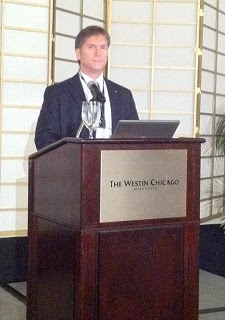
I’ve been very busy lately, lots of travel and presentations revolving around influence and persuasion. Several weeks ago I was in Chicago for the NAMIC (National Association of Mutual Insurance Companies) Personal Lines Convention. I followed that up with at trip to Penn State University where I got to address members of the Keystone Insurers Group. Next it was a small business owner’s event hosted by EasyIT in my hometown, Columbus, Ohio. As you read this it’s very likely I’m in Milbank, S.D., training State Auto field people. Then I’m off to Greensboro, N.C., next week for another Keystone conference. I get to finally catch my breath in late May!
When I address groups to talk about influence, early on I let them know I’m passionate about the subject for a couple reasons. First and foremost, I’ve seen the application of the principles of influence lead to success for me personally as well as for people I’ve trained. When an insurance agent tells me they landed a large account after trying for three years because they used what I taught them or another says they applied what they learned and it worked like magic you can understand we all feel pretty darn good.
Another reason I’m passionate about influence and persuasion is because understanding and ethically applying the principles of influence will not only help your career, it can help your personal life as well. After all, when you leave work you’re still interacting with people and quite often you’re making requests of them, hoping to hear, “yes!” Lots of training programs can help you succeed on the job but not too many can promise to make you better away from the office too.
Aristotle, a pretty smart guy, said persuasion was, “the art of getting someone to do something they wouldn’t ordinarily do if you didn’t ask.” That’s a pretty solid definition. After all, if someone is already doing what you want then there’s no need to ask, no need to persuade. The problem is, too often they’re not doing what you’d like. The challenge for you is how to make your request.
I would differ from Aristotle on one point; art vs. science. My definition of persuasion would, “the science of getting someone to do something they wouldn’t ordinarily do if you didn’t ask.” Social psychologists have been studying the science of influence for more than six decades now. Based in the vast research we know there are better ways – “Best Practices,” if you will – when it comes to making requests of others.
I’m not a social psychologist; I’m a sales coach and sales trainer. I immerse myself in books dealing with psychology with an eye towards how to take what I’m learning and apply it to the real world – professionally and personally. If you’ve followed this blog for any length of time then you know I write primarily about business applications but also devote a good deal to personal issues like parenting. I do this because I so clearly see the principles of influence helping in both areas.
Fortunately for me most people don’t know much about the science and are eager to learn. I opened by saying I’ve been on the road a lot lately and something caught my eye during my travels that I want to share with all of you as a clear way of demonstrating the application of influence could make a big difference.
I recently stayed at a hotel conference center called The Penn Stater. When I walked into my room I noticed a placard in the bathroom that encouraged guests to consider reusing towels to help the environment. That’s a worthy cause but unfortunately the hotel bungled away an opportunity to move more people towards that environmentally friendly action.
I wrote about a similar situation two years ago in an article called Cruising Along with Influence just after taking a Royal Caribbean vacation. Neither Royal Caribbean nor The Penn Stater took advantage of the science that tells us there are more effective ways to change behavior than just appealing to saving the environment for future generations.
A study was conducted on this very subject in an attempt to determine the most effective messaging to get hotel guests to reuse their towels on their first night staying at the hotel. In the study, door hangers were used just like they were with Royal Caribbean and The Penn Stater. In the study one door hanger used a message with only an environmental appeal, “Help Save the Environment,” followed by information on the importance of the environment. Going green is prominent today so that message was somewhat effective and towel reuse went up 37.2%.
A second message was tested, one that engaged the principle of consensus. The principle of consensus tells us people’s actions are influence by what others are doing. This door hanger read, “Join Your Fellow Guests in Helping Save the Environment.” Below the heading it mentioned 75% of guests had participated in the new towel reuse program at some point during their stay. This message was much more effective because towel reuse rate was 44.0% on the first night.
In slight variation of that second door hanger another message was tested, one that stated 75% of the guests in that particular room had participated. When that message was used the towel reuse went up to 49%! That’s nearly a 33% increase over the environmentally friendly message just because a few words were changed. If you knew you could change your message – at no cost – and get a 33% increase in response wouldn’t that be the smart thing to do?
This is just one simple example of how theory becomes practice. There’s no guarantee you’ll get the same boost as studies show but it’s almost guaranteed you’ll get better results than you’re currently getting because the science says so. And who knows, you might get lucky and have even better results!
I’ve been having a hard time with something lately — brushing my teeth. Some of you are thinking that’s gross but don’t worry, I brush several times a day and floss too. I guess my problem is really with the toothpaste container. Jane bought Colgate Total, fine toothpaste by the way, but it comes in a stand up tube. While it seems convenient to have the tube on the countertop so I can quickly grab it I don’t find myself doing that. It seems like every time I go to brush my teeth I open the left drawer at the bathroom counter. It’s a small irritation except that I make the same mistake over and over and over. Fortunately there’s a bright side — it inspired this week’s blog post.
Why do I keep making the same mistake time and time again? Simple; I have a set way of going about brushing my teeth that’s served me well for a long time and it’s a hard habit to break. You might say I have “fixed-action pattern.” A daily ritual like this makes my fixed-action pattern very apparent but lest you laugh at me beware because you have them too.In his best-selling book Influence Science and Practice, Dr. Cialdini talks about fixed-action patterns in the animal kingdom which are inborn to ensure survival. When it comes to people he wrote, “The automatic behavior patterns of humans tend to be learned rather than inborn, more flexible than the lock-step patterns of the lower animals, and responsive to a larger number of triggers.” He goes on the say, “we, too, have our preprogrammed tapes; and, although they usually work to our advantage, the trigger features that activate them can dupe us into playing the tapes at the wrong times.” In humans these patterns are developed because we eventually find what works best for us (toothpaste in the left drawer) and stick with it. It makes life easier because it simplifies decision making and saves time. They trigger an almost automatic response in many cases. For example, if you are looking to buy a new computer you might turn to someone you know (liking) because they know much more about computers (authority) than you or most salespeople do. Something like this usually works out well because it saves time, headaches and money. We’ve probably all done this at one time or another when looking for a computer, car, phone or some other relatively expensive item where you feel you lack sufficient knowledge.Of course there can be a downside too. As I wrote, the toothpaste thing is just a minor irritant but there are some people who prey on these automatic responses because they know they can get what they want before you realize what happened. One example was in the Influencers From Around the World article a few weeks ago by Marco Germani. He shared how the Italian prime minister used liking to sidestep criticism over allegations of improprieties with a 17 year-old girl. From what I gather Silvio Berusconi didn’t seem to suffer much for his actions. I’ve taken taekwondo for many years but I don’t intend to go beat up anyone. My goal was to learn how to defend myself because I know there are bad people out there who might just try to harm me or my family. Understanding the principles of influence, and your own mindless tendencies, can be your self defense against unethical people who would try to take advantage of you.As you read Influence PEOPLE, keep an eye on how you can ethically utilize the principles to create a win-win situation for you and those you deal with. At the same time keep an eye out for those who would seek to do you harm. In the end you might just help a lot of people and keep yourself safe.Brian, CMCT
influencepeople
Helping You Learn to Hear “Yes”.
In May I wrote an article on what I thought were the best ways to persuade people when you had a handle on their personality type. I came to find out there were no studies on influence approaches and personality types so I decided to conduct my own research in the form of an online survey in June.
In mid-July I published my findings in a series of articles. The information really resonated with readers and because the response was so overwhelming I decided to pull all the posts together so you could quickly find whatever information you wanted.
Influence Approaches for Different Personality Types – This was this initial article where I proposed what I thought would be the best influence approaches based on the personality type you were dealing with.
Personality Type and Decision Influencers – Invitation to Take the Survey – After realizing there was no research on this I constructed a survey and invited readers to share their opinions on what would persuade them to take action in different situations.
Survey Overview – Before presenting the details I gave people an overview of the survey, my intent, logic and some shortcomings I noticed.
The Thinker/Analytical Personality – This post looked at the logical, analytical personality type. Albert Einstein is a good person to picture when you picture this type of person.
The Facilitator/Amiable Personality – This article focused on the warm, friendly person. Sandra Bullock was who I thought of with this personality type.
The Expressive/Influencer Personality – This covered the outgoing, networking type of individual. Oprah Winfrey was who came to mind when I thought of people in this class.
The Driver/Pragmatic Personality – This last post explored the hard charging, decisive leader personality. Jack Welch, former CEO of GE, was a good person archetype for this category.
Survey Questions and Results – I ended the series by sharing the actual survey and detailed results for each question and each personality type.
I hope you find the information helpful as you interact with different types of people and attempt to persuade them. If you have questions just comment below and I’ll do my best to answer.
Brian, CMCT
influencepeople
Helping You Learn to Hear “Yes”.
In a few days most Americans will be celebrating Thanksgiving. There will be turkey, mashed potatoes, pumpkin pie and lots more food to go along with a day of family and football. It’s the day we pause to give thanks for all the blessings in our lives. Rather than write a regular article I want to take this time to give thanks to many people who’ve been a blessing to me. That’s the principle of liking at work! I encourage you to click on some names and perhaps send a Facebook friend request, follow someone on Twitter or connect with them on LinkedIn because they’re all good, supportive, helpful people. That’s a big reason for my thanks! It’s not that they’re just good to me; I think it’s their nature so here’s a chance to hook up with really good folks if you want to expand your social network. I have to start with my wife Jane and our daughter Abigail. If you follow me on Facebook or have read this blog for any length of time then you know they’re fodder for much of what I write. They’re always great sports about it and they give as good as they get. You should take a look at some of our exchanges because they can be quite funny. When it comes to this blog I’d like to start by saying thanks to Sean Patrick, Marco Germani, Yago de Marta and Hoh Kim. These guys continue to help my readers get a worldwide perspective on influence and persuasion. To see what they have to say tune in on the first Monday of each month for the Influencers from Around the World series. Here are some other people who’ve been very helpful with this blog. George Black got me going on this blog simply because he encouraged me. Next is Mike Figliuolo who’s been a great resource for all my blogging questions. On several occasions I’ve written guest posts for Mike’s blog, thoughtLEADERS, and he’s returned the favor writing some posts for me. Then there’s Michael Franzese who’s provided some very cool drawings for Influence PEOPLE and designed my logo. To see more of his work and read some of his thoughts check out FranzeseInklings. There are lots of Twitter friends who retweet my stuff consistently: James Sims, Marcy Depew, Matt Fox, Maureen Metcalf, Anthony Iannarino, Paul Hebert, Aaron Schaub, Steve Miller, Warren Davies, Jon Wortman, Jim Canterucci, Justin Bryant, Stella Collins, Eldon Edwards, and James Seay. To follow any of them on Twitter just click on their name. Special thanks also need to go to several coworkers. First there’s Debbie Conkel who’s proofread my work for more than 15 years now. She takes her own personal time to read through every blog post for me. Next is my boss John Petrucci. I could not work for a better leader and friend. Imagine the most supportive boss you can then multiply it many times over. And then there’s Nancy Edwards, someone I look to for mentoring. It doesn’t matter if we’re face to face, on the phone or communicating by email; Nancy encourages me every time we interact. When it comes to getting stuff done on the influence side, Chris Cibbarelli is my point person at Dr. Robert Cialdini’s office, Influence At Work. No matter what I need, no matter how quickly, Chris is always there for me. To say she’s a joy to work with would not be a strong enough statement. Finally, I want to say thanks to all of you reading this today. Readership has now reached nearly 150 countries! That’s not something I expected in my wildest dreams when I started blogging. The best gift I could give you to show my appreciation would be to help you find the kinds of online relationships I’ve found. That’s why I hope you will take time to click on some names, start some conversations and make some connections. I know you’ll be glad you did. I hope you have a wonderful Thanksgiving! Brian, CMCT
influencepeople
Helping You Learn to Hear “Yes”.
