Tag Archive for: Influence Science and Practice

Knowing Your Audience is a Key to Persuasion
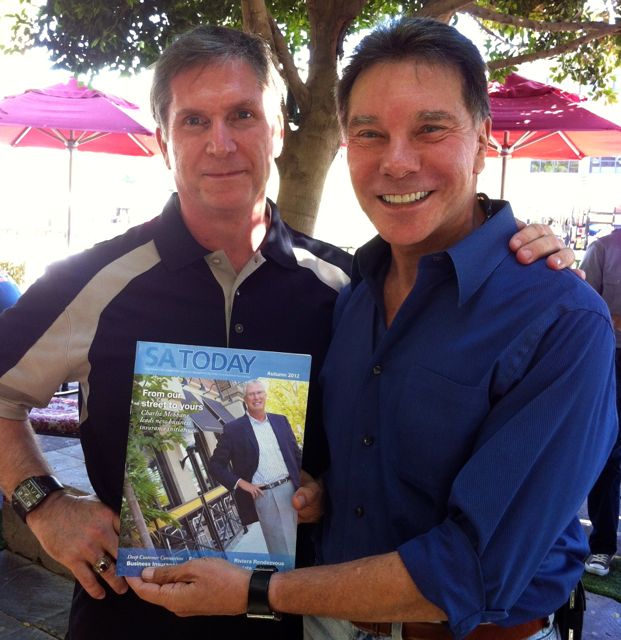
In late October, I was in Arizona to address the Arizona School Administrators on the science of influence. Jane and I went out early to enjoy the weekend in Scottsdale and spend time with friends. During our stay we had the good fortune to share lunch with Robert Cialdini, PhD., and his wife. The morning we were to dine, while on the treadmill, I pondered what we might talk about and what gem I might take away from our time together. In the midst of that run I came up with my own gem.
Understanding the science of influence isn’t a magic wand and it’s certainly no guarantee you’ll get everyone to do what you want. There are still plenty of times when I don’t get the response I want and even the master himself, Dr. Cialdini, doesn’t always get what he wants.
As the treadmill sped under my feet and my mind raced along I thought about a story Dr. Cialdini shares quite often when he speaks. Many years ago he was a member of a gym and one day he happened to lock his keys and wallet in the trunk of his car upon arriving at the gym. He asked Paul, the guy folding towels behind the front desk, if he could use the gym’s phone and was promptly told no. He persisted, explaining his situation and reminding Paul he’d been a member of the gym for years and that surely Paul recognized him. Paul didn’t budge from his original answer because of a bad experience with another member who abused the phone privilege the week before. Dr. Cialdini announced, “You’ve just lost a customer,” and walked out. Despite his best effort he was no better off and had to panhandle a quarter in order to call someone to come help him out.
A couple of principles of influence were at play in the conversation – liking and scarcity. Liking was at work because of Dr. Cialdini’s and Paul’s familiarity with each other. The connection obviously wasn’t strong enough because it didn’t persuade Paul to let him use the phone.
Scarcity was at play because Dr. Cialdini let Paul know he stood to lose something, a long-term customer. This didn’t move Paul either because he still didn’t allow him to use the phone.
As I thought about this it took me back to my day job – sales training with State Auto Insurance. In sales we place a lot of emphasis on knowing your customer because they’re not all alike and different things motivate different people. For example, at independent insurance agencies, a field rep wouldn’t want to talk about winning trips and earning a bonus to customer service reps because they usually don’t get to enjoy those awards. In fact, talking about those things can cause resentment. Understanding what motivates the CSRs then tailoring communications using the principles of influence will be far more effective.
Back to Dr. Cialdini and Paul. It’s my guess that Paul was probably a minimum wage guy and wasn’t about to possibly get in trouble by allowing anyone to use the phone after getting an earful from his boss the week before. Dr. Cialdini, likely caught up in the emotion of the moment, announced the gym would lose a customer but even that didn’t matter to Paul because it’s doubtful his pay was tied to customer retention. He was paid to follow the rules and guidelines.
So what could Dr. Cialdini have done differently? Setting emotions aside and understanding his audience might have changed his actions. Perhaps there was nothing that was going to get Paul to change on the phone issue but recognizing Dr. Cialdini as a gym member he could have allowed him inside where Dr. Cialdini might have used someone’s cell phone or borrowed a quarter from a familiar face. Either option would have been better than panhandling strangers to get the needed quarter.
I first heard this story many years ago and I’m not sure why it came to the surface at this time but whatever the reason, we should all be encouraged. Even the master fails sometimes so we should never let failure deter us. The right response should be to learn from the situation and resolve to try a different approach the next time. Do so and soon you’ll find yourself successfully persuading more often than not and that will lead to more professional success and personal happiness.
Brian, CMCT® 
influencepeople 
Helping You Learn to Hear “Yes”.

How is the Wealth Pie Divided?

I read an article in The Atlantic recently that was a bit shocking and eye-opening, titled “Americans Want to Live in a Much More Equal Country (They Just Don’t Realize It).”  The article focused on people’s ideal, actual estimate, and the reality of how American wealth is divided up amongst the population.
Let’s suppose there are 100 people in a fictitious society and the average “wealth” per person is $50,000, for a total of $5 million in wealth for the whole society. Of course that $5 million would not be divided evenly because some people do better than others whether through luck, perseverance, or a little of both. On the opposite end, some don’t do well for a host of reasons.
Speaking of how well people do, let’s divide the 100 people into five groups of 20, so we have the bottom 20%, the next 20%, the middle 20%, another 20%, and finally, the top 20%. My question for you would be this: how would you divide the wealth pie between the five groups? In other words, how much of the $5 million should each group get?
In the article referenced above, people were asked a similar question without referring to actual dollars. According to their answers, in an ideal society, the top 20% would get 32% of the wealth. That would translate into $1.6 million, or 60% more than everyone would get in an “even” split. Then they were then asked to estimate how much total wealth the top 20% actually had, and they guessed almost 60%, which would translate into $3 million of our $5 million pie.
So what was the actual split in America? The top 20% in our society have 84% of the wealth, or $4.2 million of the $5 million pie! More shocking than that, is what the bottom 40% have to split – a whopping .3%. That means in our fictitious society the bottom 40% would have $15,000 of the $5 million wealth to share among 40 people. You read that right, $15,000 to share among 40 people.
In the field of influence, we talk about the contrast phenomenon which tells us what is presented first, i.e., how things are ordered, can make all the difference in how people assimilate the information. On this subject, in an article I posted last year, I wrote:
“We would do well to always ask ourselves what we’re comparing to and whether or not it’s a valid comparison or the best comparison. For example, I heard on a conservative news channel the Illinois state legislature was considering a 66% increase in the state income tax. Wow, that should be cause for revolt in this economy! But here’s the perspective from the other side; the state income tax would only go up 2 percentage points. And here’s where both comparisons come from; the tax will go from 3 percent to 5 percent. That’s 2 percentage points, a 66% increase. I’m sure those opposed to the tax talked about a 66% increase whereas those in favor focused on the 2 percent change. Both are valid and both will elicit completely different responses! Compared to what?”
As people see the inequity in our country more clearly it’s a sure recipe for discontent and that discontent will manifest itself somehow. We saw the beginnings of that with the “We are the 99%” and “Occupy Wall Street” movements. I don’t think people expect everyone will get the same slice of the pie but many feel they have very little opportunity to better themselves because of the obstacles they face. On the other end there’s the old saying, “the rich get richer,” because wealth reinvested usually creates income without the obstacles so many people have to overcome.
With the presidential election coming up, both sides are talking about the same issues but in very different ways. How each candidate presents his case will impact how Americans think about the issues and ultimately vote. As we struggle with record deficits, there is quite a bit of talk about how to rein the deficit in. In the most basic terms we can collect more money through taxes, reduce government spending, or have some combination of the two. My encouragement to you is simply this; during the election season pay very close attention to what is presented and how it’s presented so you can make the most informed choice.
Brian, CMCT
influencepeople 
Helping You Learn to Hear “Yes”.

Can Your Name Impact Your Career Choice?

Nearly three years ago I wrote a post I called, Franzese or Frazetta: DoNames Really Matter? It was inspired by my friend Michael Franzese telling me his favorite artist was Frank Frazetta. I had a good chuckle about that because I know names can significantly impact how much we like someone, where we live, and even the career we choose.

In the study of persuasion we say this is part of the liking principle because we look more favorably on things we have in common with others. There’s also another name for this, Nominative Determinism, which is a “term for the theory that a person’s name can have a significant role in determining key aspects of job, profession or even character.”

If you pick up a copy of a book coauthored by Robert Cialdini, Ph.D., Yes!50 Scientifically Prove Ways to Be Persuasive, and flip to chapter 30 you can read more about this interesting phenomenon and some of the background on the studies for yourself.

Here’s the gist; statistically Dennis is more likely to become a dentist than Jerry or Walter. Lawrence also has a higher probability of being a lawyer than Bob or Tom. This also extends to places we choose to live and people we tend to associate with.

When it comes to names and careers it’s not that everyone named Dennis will become a dentist anymore than all people named Lawrence will become lawyers but statistically they have a much higher likelihood of choosing those careers than people with names wholly unrelated to those professions.

Why am I revisiting this topic? First for fun. I think this is interesting and people I speak with find it interesting too. They usually smile and laugh when I share more about it. I hope you do the same as you read more.

The second reason is because of something that caught my attention on the news. There was a story about a doctor named Lawrence Bone. That in and of itself is no big deal but he just so happens to be an orthopedic surgeon – a bone doctor – in Buffalo, N.Y.! I had to chuckle as I listened to the story.

Many years ago when Jane and I were looking for new countertops, I found it funny, and more than coincidental, that our salesman’s name was Dan Mason. How interesting that Dan Mason worked as a salesman for a company that sold marble countertops!

I got a real chuckle on this one. Some good friends let us know their daughter got a swimming scholarship to college and shared an article in the local paper. I clicked on the link they sent so we could read more and started to laugh when I saw her high school swim coach’s last name – Peterfish. Wow, a guy with “fish” in his name decided to coach swimming.

A friend at State Auto, Steve Ruble, works in our accounting department. In case you don’t know it, a ruble is a unit of Russian currency. I don’t know about you but I find it interesting that a guy with a last name having to do with money works with money.

Don’t you find it amazing that Marcus Webb was the director of The Amazing Spiderman? Get it – spider web.

Now long ago people’s names were associated with their livelihood. So last names like Farmer, Mason, Smith (for blacksmith), Woods, Hunter, etc., were common names for the people who worked in those trades. Those names have endured but in this world of so many choices it’s seldom that people have stayed in the family business.

I encourage you to pay attention to people’s names when you meet them because I’m sure you’ll spot these “coincidences” more than you might have imaged you would. If you come across some good ones please let me know. And last but not least, have fun with it.

To Question or Not to Question? That’s the Question!

To question or not to question? That’s the question! I recently had an uncomfortable discussion about politics. Although conventional wisdom is to steer clear of sex, politics and religion, it’s hard to avoid politics with a presidential election only months away.
Believe me, talking about sex would have been much more fun and less confrontational
than what I experienced.

During the course of the discussion a family member who is very well read and very smart asked me lots and lots of questions. Not having the passion for the subject, nor the desire to do the
in-depth reading on the various topics involved, I didn’t know the answers to the barrage of questions that came my way.
Frustrated I finally said, “Don’t ask me anymore questions you clearly know I don’t know the answer to. If you have something you want to tell me, just tell me.” Moments later came more
questions to which I replied, “You did it again. I told you I wouldn’t know the
answers so what would you like to tell me?”
Apart from understanding the
principles of influence, a couple of key components to being a master persuader
are knowing your audience and how best to engage them.
My family member clearly wanted to persuade me to see things from his viewpoint with the goal of getting me to
vote for his candidate. Despite his many facts, figures and detailed arguments I’m willing to bet he’s not very successful in his efforts with people because he doesn’t get the human element of persuasion. You see, everyone isn’t as logical and well read as he is but he operates as if they are. The reality is, people are not rational beings and like it or not, you have to understand how others think and what’s important to them if you want to persuade them.
For example, if someone is unemployed, then the economy is probably #1 for them because they want to get a
job. Give them a candidate who can make that happen and they’ll likely vote for him. Talking about military spending, health care, etc., aren’t  going to press the unemployed person’s hot button. That’s analogous to the salesperson who feels the need to tell you about every detail of a car when all you care about is good gas mileage and a sporty look.
The real crux of this post however is about questions in the persuasion process. When you attempt to persuade someone, good questions can be a tremendous help but only if used correctly.
Questions that open people up to share their past experiences, thoughts, feelings and values can be useful because they tap into the principle of consistency. This principle of influence tells us people feel internal and external psychological pressure to remain consistent in what they say and do. If I tell you the economy is most important to me then you can tailor your conversation to show why your candidate might be the best choice. The same could be said of any other topic related to the election. Get to know what matters to someone then you can speak to those issues.
However, when multiple questions are asked that people can’t answer, how do you think that makes them feel? I bet many of you are thinking of words like stupid, dumb or ignorant. Asking people
questions about your area of expertise might make you feel smart but it also can make other people feel ignorant. Do you think people appreciate being made to feel ignorant? Of course not. Do you think people feel compelled to take your side or do what you want after you’d make them feel stupid? Absolutely not.
And such is the case sometimes with intellectuals who lack the ability to read people and adjust their
communications accordingly. It doesn’t matter how smart you are if people can’t
understand you or if your communication style repels them. My relative isn’t alone in this by any means. I’ve seen countless people “shoot themselves in the foot,” so to speak, during their attempts to persuade people because they miss the human element.
Several years ago I wrote a series of blog posts on persuading personality types. Based on results I collected
from an online survey, it was clear you don’t persuade the Donald Trump (pragmatic) personality the same way you might the Oprah Winfrey (expressive), Sandra Bullock (amiable), or Albert Einstein (analytical). Master persuaders recognize the differences and adjust their communication accordingly.
To question or not to question? That’s really is the question! If you take the wrong approach you’ll do nothing except alienate people and hurt your chances to win them over. However, done the right way sometimes it can be far easier than you ever imagined. Pay close
attention next time and make the necessary adjustments if you want to enjoy more success.

Brian, CMCT
influencepeople 
Helping You Learn to Hear “Yes”.

How to Get Everything You Want in Life

Zig Ziglar,
a well known author, sales trainer and motivational speaker regularly told
audiences, “You can get everything you want in life IF you’ll just help enough
other people get what they want.” Wow! Essentially he’s saying just help enough
other people fulfill their dreams and your dreams can come true too. 

Zig might
not have been a social scientist but he clearly understood the power of
reciprocity. This principle of influence tells us people feel obligated to help
those who first help them. So back to Zig; help lots of people and lots of
people will want to help you.

Watch this
two minute video from my presentation at The Ohio State University and you’ll
gain more insight into why the principle of reciprocity is so powerful.  

Are you looking for a keynote speaker, training, or consulting on
how to apply scientifically proven principles of influence to your sales,
marketing, management or leadership?  If so, reach out to me
(BFA654@gmail.com or 614.313.1663) and we’ll talk about your specific
needs. 
Brian, CMCT 
influencepeople 
Helping You Learn to Hear “Yes”.

Dress for Persuasion Success

There’s an old saying you’re probably familiar with – Dress for Success. I can remember hearing that when I graduated from college and entered the business world more than 25 year ago. The basic premise was encouraging you to dress the part and feel the part. In other words, dress like a successful CEO and you’ll carry yourself like one, and then maybe, just maybe one day you’ll be a successful CEO.

That’s not bad advice because a study of persuasion confirms that dressing the part goes a long way when it comes to authority. The principle of authority tells us people defer to those who are viewed as experts and those who possess specialized knowledge. In times of uncertainty the power of authority is magnified greatly.
One way people make quick decisions about a person comes through something known as the “trappings of success.” Think about this picture for just a moment – a man wearing a well tailored navy blue suit, pressed white shirt with a power tie, a Rolex watch, gold pen and polished wing tipped shoes. Would you assume that man is successful? Most people do. The rapid thoughts that lead to that conclusion might go something like this – That’s an expensive looking suit, he probably paid someone polish those shoes, that’s definitely an expensive watch. He must have money or make a lot of money. He might be a VP or CEO.
Maybe those aren’t your exact thoughts but you know what I mean. Despite mom telling is to never judge a book by its cover we do make judgments about people based on dress. Expensive = Money = Success.
Several months ago Cathrine Moestue wrote about this and I’ve decided to reinforce the concept because of something that caught my attention a few weeks prior to her post. I’d left a restaurant after lunch wearing a nice sports coat and slacks. As I waited at the cross walk I looked left and right and saw no cars were coming so I crossed even though the signal flashed the don’t walk sign. There were two men casually dressed on the other side of the street who clearly had no intentions of crossing. However, as the saw me cross they had a momentary look that told me there were now contemplating doing the same. Seconds later it was evident they took my actions as their cue because they too crossed against the light.
They might deny they did so because I was well dressed as would most people. After all, what does wearing a suit have to do with persuading people to jaywalk? To test the theory about dress impacting authority and people’s actions, some social scientists arranged for a man to cross the street against the light and watched to see how many people would follow his lead over the course of a day. The man was dressed in casual attire one day and on another day they performed the same experiment only this time the man crossing against the light wore a suit.
Here’s the result – 350% more people took a cue from the man in the suit and jaywalked, breaking the law. You can literally say they followed suit when he was in a suit! I found it interesting that the two men I saw took their cue from me when I was dressed very business-like.
It needs to be stated that a suit may not always be the right attire to persuade because the audience needs to be considered. I work for an insurance company and one product we sell is farm insurance. The manager of that department rightly shared once that a company representative visiting a farm in a suit would not have as much credibility as the representative who dressed more like the farmer. Likewise, a tuxedo might indicate money but no one wears a tux to the office.
When considering your audience you want them to have a connection with you so dressing in a similar manner but one step up can assure you get the benefit of that bonding and an air of authority. If you happen to be overdressed you can usually find ways to tone it down a bit – like removing a tie or coat – but if you’re underdressed it’s hard, sometimes impossible to recover.
So here’s my persuasion advice: next time you go to an important meeting or presentation make sure you get the full benefit of authority by making the right choice of clothing. Doing so will add to your persuasive abilities but failing to do this might just be the reason you hear “No” instead of “Yes.”

Brian, CMCT
influencepeople 
Helping You Learn to Hear “Yes”.

Why I Love Social Media

With nearly a billion Facebook users worldwide and more that 500 million people on Twitter I think it’s safe to say social media is here to stay. It is obvious people want a medium to voice their opinions and to connect with others. What’s amazes me more than those stats are the people who still decry social media and only look at it from a negative perspective.

One definition of “social” is “characterized by friendly relations” and I for one can say I’ve made a lot of friends because of social media and strengthened other relationships that were already in place. I’m going to list some people this week and I hope it inspires you to connect with people on your preferred social media sites. I hope you can make the kind of connections I’ve made around the world because I know I’m better off for it.
Don Hadler and Greg Buckingham are two guys I knew – barely – in high school but now consider very good friends. It’s doubtful we would have built friendships were it not for reconnecting on Facebook.
Michael Franzese is another person I went to high school but didn’t know well. We connected online, found some common interests and try to help each other out. Michael showed me and Abigail an awesome time in Chicago earlier this year. If you like my Influence PEOPLE logo Michael designed it.
Speaking of Chicago, Keelan Kane reached out to me over a year ago when he saw my post about checking in at the Westin. I invited him to come have a drink with me and Jane and we made a friend.
No doubt you’ve seen Sean Patrick’s name on my blog because of his guest posts. Sean was instant messaging me on Facebook years ago which lead to connecting on Skype. Eventually Sean made a trip to the States to stay with us for a week. How cool is that!
In addition to Sean I met Cathrine Moestue, Yago de Marta, Marco Germani, and Anthony McLean online and now they guest write for my blog as well. I know if I travel to Norway, Spain, Italy or Australia I’ll have friends to welcome me. Of course, they have a friend and place to stay should they make it to Ohio.
I met Hoh Kim while going through Robert Cialdini’s certification process together. We certainly would have lost contact were it not for Facebook and Skype. Hoh also guest writes for my blog.
Stella Collins lives in Great Britain and runs her own communication company. I don’t remember how we first connected but we’ve Skyped on several occasions and it’s been fun to get to know her, learn from her and share ideas.
Dennis Gilbert and I went back and forth on Facebook exchanging comments then his travels brought him to Columbus. Jane and I shared a meal – and some beers – with Dennis and got to know him. Our time together made me want to interact with him even more.
Locally I’ve met many people because of social media. Mike Figliuolo really stands out because he’s always given me solid business and blogging advice. He’s the essence of what social media is all about.
I met Justin Bryant on Twitter. We had a misunderstanding but sorted it out and became friends in the process. A social media success story.
George Black reached out to me and we shared several lunches before he moved to Tennessee. If it weren’t for George I might not have ever started this blog. Thanks George!
Mark Abate saw me speak at Franklin University and reached out. Now we have great lunch conversations at Tommy’s Pizza. It also allows me to get my pizza fix in George’s absence.
Marcy Depew and I connected on Twitter then happened to attend a coaching event where we sat next to each other. In addition to some social events we share coffee often.
Merri Bame and I connected online too and now make it a point to get coffee and lunch dated on the calendar. She was kind enough to connect me to John Millen, who I thoroughly enjoy, and Amanda Thomas who allowed me to speak at her networking event recently. Thanks for being a connector Merri.
Barbara Grassey and I became friends on Facebook and have fun bantering back and forth. One time she saw posts about Jane and I playing a competitive round of golf so she reached out to Jane to cheer her on. I think she likes Jane more than me now but that’s okay, I would if I were her.
I’ve gotten to know many people I work with much better because of social media. There just isn’t enough time in the day to connect with everyone at work so keeping track of what’s happening through social media helps keep us connected and makes the times when we do get together much better. Aaron Schaub, Edwin Medina, Steve Miller and Kon Chittavong are just a few people who come immediately to mind.
Last I’ll mention my daughter Abigail. I get a glimpse of how she thinks and interacts with friends as I look at her on Facebook and Twitter. It’s a view my parents never really got with me and my friends. On the flip side Abigail has seen me in ways I rarely saw my parents. She sees my sense of humor and how I interact with friends. We both know each other better because of social media. Note to parents; getting on Facebook or Twitter isn’t about keeping track of your kids, it’s one more way to connect with them, know them and understand them better.
I hope you see many of these relationships never would have come about if it weren’t for social media. Many of the people I’m friends with I’ll never actually meet but that’s okay because I know I’m still better off for having met them online and I hope they feel the same way about me. So my encouragement to you is to reach out to people, maybe some of the folks I’ve mentioned, and take time to interact with them because really good things can happen when you approach social media with the right attitude.
Brian, CMCT
influencepeople 
Helping You Learn to Hear “Yes”.

Finding Another Gear

I was out for an early morning walk not too long ago and was startled when a big German Shepherd came running straight at me. It was apparent he didn’t want to play so I raised my hands to get ready for the inevitable when suddenly his owner appeared, called his name, and the dog turned back to his house.

The incident got my heart rate going and reminded me of a similar situation when I was in college. During the summer I worked at a golf course which was about 10 miles from my home. I didn’t have regular access to a car so I rode my bike to work most days. Riding home was a little dangerous because quite often I was riding around 10 or 11 at night on some very busy roads and a few that were not well lit.
Because riding at night wasn’t safe I tried to get home as quickly as possible. I made a game of it, setting a goal to always ride home faster than the night before. I tell you that so you’ll know I was pushing myself hard the whole time I rode. In fact, like most people who push themselves, I didn’t think I could go any faster every time I rode home. My perspective changed one night when I heard a large dog barking and it sounded really close! I was amazed at how much more I could push myself and at how fast I could ride when I summoned all my energy. It was as if all of a sudden I found a new gear!
So what does this have to do with influence? As I thought about the bike riding incident so long ago it made me think about teaching people influence. I believe most people work hard most of the time. They probably convince themselves they can’t work any harder or longer, much like I convinced myself I couldn’t ride any faster.
While I found I could ride faster, unfortunately my extra effort couldn’t be sustained for long because of muscle fatigue. The same thing applies at work. Although we can always work harder in any given moment, or longer some days, we can’t do so indefinitely or else burnout sets in.
Not to worry because I have good news for you! You don’t always have to work harder or longer to get better results. When you tap into scientifically proven ways to communicate you will get better results by weaving persuasion into what you’re already doing. That’s right; you don’t have to come up with a new sales process, new marketing campaign or any other new endeavor to take advantage of the science of influence. Just look at what you’re currently doing with your communication and see where you can apply the science of influence. I’ll give you a few personal examples.
Voicemail – I incorporate a branding message at the beginning of my message and use consensus in the middle when I say “I’m probably on the phone helping another customer.” The last thing you want is for people to hear, “I’m probably in a meeting or away from my desk.”
Email – My autosignature has my title and designations which is an application of the principle of authority. I also use my picture when I’m dealing with new people because a photo creates familiarity which taps into the liking principle.
Marketing – We regularly send marketing material to prospective insurance agencies in hopes of signing them up with State Auto. When we started alerting those prospects about our agency appointment goal, and where we were relative to that goal – an application of scarcity – we saw a noticeable uptick in agents responding to our marketing emails. Those extra communications become our opportunity to sell the merits of our company.
Each of those examples are probably the kinds of things you’re currently doing in your business. However, if you’re like me before I learned about persuasion, then you’re probably missing out on some golden opportunities that are right in front of you.
There’s a time and place for working harder and longer hours because success comes through hard work and a little luck at times. On the flip side there are also times when we need to slow down and work less because we can’t maintain the hectic pace all the time. Whether you’re in the phase of longer hours and harder work or a slower time, if you ethically employ the scientifically proven principles of influence you will get significantly better results immediately; finding another gear so to speak. I’m confident of this because science and personal experience back me up on it.
Brian, CMCT
influencepeople 
Helping You Learn to Hear “Yes”.

What Happens To Your Brain When You Are Being Influenced?

The science of influence is just that – science. When I talk about influence I’m not sharing someone’s good advice because all too often that advice might not have any application for you. For example, Donald Trump can tell you things he does to close the deal and those techniques might work for one reason, because he’s Donald Trump. Without the Trump name his good advice might be worthless for you.

When I share influence and persuasion with people, what I share is based on more than five decades of scientific studies done by social psychologists and behavior economists. Based on their studies and understanding of human psychology, if you apply their findings ethically and correctly you will see an increase in people saying “Yes” to your requests.
To highlight the science, when I spoke at The Ohio State University earlier this year I shared the results from a brain scan done on two dozen college students who were presented with information from an authority. I used this example because it illustrates the reality that physiological things happen to people. Click on the video below to watch a three minute clip and learn more about the impact persuasion has on people’s brains.

If you’ve viewing this by email click here for the video.
Are you looking for a keynote speaker, training, or consulting on how to apply scientifically proven principles of influence to your sales, marketing, management or leadership?  If so, reach out to me (BFA654@gmail.com or 614.313.1663) and we’ll talk about your specific needs. 
Brian, CMCT 
influencepeople 
Helping You Learn to Hear “Yes”.

An Interesting Thing Happened on the Way to Work…

An interesting thing happened on the way to work a few weeks ago. Highways running through downtown Columbus are undergoing major reconstruction so traffic patterns have changed, lanes are restricted and many familiar exits are closed. It makes for a much more tense morning drive than normal.

As I was getting close to my exit I saw a large red truck coming up the left hand lane and it was apparent the driver was going to drive up as far as possible before cutting over to the right a couple of lanes to make the exit. I have no patience for people who continually barge ahead to save a few minutes at the expense of the rest of us who patiently and safely wait our turn. I was fairly close to the truck and my thought was, “He’s not getting in front of me.”
When it came time for him to make his move he did exactly what I thought he’d do. And what did I do? I let him in … and felt okay about it despite my initial angst. This all happened because a principle of influence suddenly made me react differently than I expected to.
The red truck had a Semper Fi sticker on the back and some other Marine stickers so it was apparent the driver served in the military at one time. I was not a Marine but my dad was, having served in Vietnam in the mid-60s. Also, my neighbor Dan, whom I’ve known since he was about three years old, is a Marine who did a tour in Afghanistan not too long ago. And to top it all off, my daughter Abigail loves the Marines because her grandpa served and Dan is like a big brother to her.
All of this ran through my mind in an instant and suddenly I found my attitude and intended behavior toward the other driver changed. It all had to do with the principle of liking. This principle tells us people prefer to say “Yes” to those they know and like. Oftentimes liking is initiated through something as simple as finding similarity with another person. While I wasn’t a Marine, as noted above, I have a special place for them in my heart. When I meet someone who is or was a Marine I always tell them I’m the son of a Marine. So you can see there’s a common bond there.
This shows us just how powerful liking is because I already shared I didn’t appreciate his driving behavior. Quite often the principles of influence override our logical thinking and change our behavior. When I explain this to people sometimes they resist the idea that something outside their conscious compelled them to do something. We want to believe we’re fully in control of our decision making and actions but in reality we’re not. Dan Ariely, author of Predictably Irrational and more recently The Honest Truth about Dishonesty, explores in detail how we’re not logical beings and he shares many experiments in his books to back up that claim.
In Robert Cialdini’s best selling book, Influence Science and Practice, he points out several studies that show the influence liking has on sales. For example, when it comes to Tupperware sales, the social bond (i.e., liking) has twice as much impact on the decision to purchase than does the actual product preference. When it comes to insurance sales Cialdini wrote, “One researcher who examined the sale records of insurance companies found that customers were more likely to buy insurance when a salesperson was like them in age, religion, politics, and cigarette-smoking habits.” In each case, Tupperware or insurance, I’m certain a good number of people buying would adamantly deny the influence of liking but it’s hard to explain away the results.
I’m not going to encourage you to put bumper stickers on your car to let the world know your likes, dislikes and associations. Instead take this simple advice; when you get ready to meet someone, do a little homework to get to know them beforehand. When you learn you have things in common make sure you raise them to the surface early in the conversation because you never know, you may spot something like I did with the Marine and that might make all the difference between them saying “Yes” instead of “No.”

Brian, CMCT
influencepeople 
Helping You Learn to Hear “Yes”.