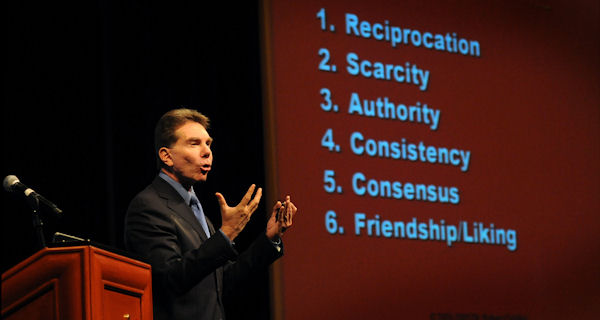
Tag Archive for: Influence Science and Practice

Influencers from Around the World – An Accountability Partner Can Help Your Life

Readers of Influence PEOPLE know Hoh Kim
because of his guest posts to the Influencers from Around the World series over
the years. Hoh is also a Cialdini Method Certified Trainer® (CMCT®) and I actually met him when we trained together under Dr.
Cialdini. In addition to his CMCT® Hoh has his masters in communication from
Marquette University. I encourage you learn more about Hoh by visiting his
website, The Lab h, and his blog, Cool Communications. You can also connect
with Hoh on LinkedIn, Facebook and Twitter.
Brian, CMCT® 
influencepeople 
Helping You Learn to Hear “Yes”.
An Accountability Partner Can Help Your Life
1,000
Places to See Before You Die
by Patricia Schultz is one of my favorite
books. It has been the ultimate travel guide for me for many years. What are
your “100 things to-do before you die” or perhaps more appropriately, “100
things to-do while you live”? If you need a reference, check the book 2 Do Before I Die: The Do-It-Yourself Guide
to the Rest of Your Life
by Michael Ogden and Chris Day. On your to-do list
could be driving from Boston to Seattle, quitting your job and opening a
restaurant, or countless other things.
Do you have a “10 things to do every day”
list? It’s easy! Here’s my example:
1. 30-minutes of exercise.
2. 30-minutes reading a classic book.
3. Help my wife.
4. Help one person outside of my home.
5. Plan for the next day.
6. Control my eating.
7. Not allow myself to be interrupted by SNS
or my blackberry too much.
8. Focus one important thing for the day.
9. Not hurt someone by saying something bad or
insensitive
10. Praise someone
You’ve probably heard of this kind of list
from friends or seen it in movies like “The Bucket List” with Jack
Nicholson and Morgan Freeman. Having your “lifetime 100 to-do list” can help
you live a more full life and your “daily 10 to-do list” can help you day by
day. But, having lists is not enough. You need one more thing if you really
want to achieve something on your daily life and lifetime – an accountability
partner.
Here is an example of what an accountability
partner means. Everyday at 10 pm I have a five-minute phone call with one of my
friends. The call is simple. We ask each other about the “daily to-do list” we’ve
shared beforehand and simply tell each other whether we fulfilled our 10 items
or not. In this case, the friend becomes your accountability partner.
I got this idea from an article where Marshall
Goldsmith, one of the best leadership coaches in the world, was interviewed.
The term “accountability partner” came to my attention in the article, which was written by
Natalie Houston.
Dr. Cialdini had said many times, “People need
to publicly commit in order to leverage the principle of consistency.” This can happen when trying to persuade
others and when persuading yourself. To better persuade yourself to do
something, you need to commit to that something publicly, and having an
accountability partner is an excellent way to do that.
So, why don’t you grab a pencil and notebook,
and start to develop your top 10 things you must do every day. Next, find your
accountability partner and commit to check-in with each other. It may sound
simple but, if you DO it daily, you will improve your life and experience more
happiness and joy.
Hoh Kim, CMCT®
Founder & Head Coach, THE LAB h
This Post Might Just Save Your Life!


This blog post might just save your life!
Well, not exactly. Truthfully, not even close. But you might be a little wiser
for having read it, so I hope you’ll stay with me for a moment and continue reading.
You might be wondering why I went with such a
sensationalized title. You could say it was manipulative, that I was just out
to get you to read, and you’d be right. So why is a guy who blogs about ethical
persuasion using a manipulative tactic? Simply to make this point – I’m so sick
of seeing manipulative headlines I decided to write about it. Here are some
that irritate me.
War on
Christmas
– Did you know there was a battle raging this past December and
many soldiers lost their lives along with innocent civilians? This headline was
especially prevalent on Fox News over the holidays. My dad was in Viet Nam and
I’m willing to bet he and other veterans who’ve seen combat would not use the
word “war” to describe the tactics used by groups who are opposed to Christmas.
Obama
Declares War on the Citizens That Resist PPACA
– Not only are we
having to defend our lives against the Christmas rebel soldiers, we have to
battle our own President! I saw this headline on LinkedIn. Again, the use of
the word “war.” Really, the government is firing bullets and lives are being
lost because of what Obama is doing? Please!
War on
Women

– I see this headline on Facebook a lot. I know women serve in the military and
now engage the enemy in combat but apart from that there’s no war on women.
Some people may be opposed to certain pieces of legislation but there’s no war.
Some of you are thinking this is no big deal. After
all we were taught, “Sticks and stones can break my bones but names will never
hurt me.” I’d counter with, “The pen is mightier than the sword.” You clearly
know when you’re being physically assaulted but it’s not always so clear when
it’s a mental assault. Whether or not you’re aware, those headlines impact
people’s emotions and thinking and that’s exactly why the authors use the words
they do.
Frank Luntz wrote a book about this very
subject called Words that Work. Luntz
polls people for a living to find out which words resonate most so he can help
his clients with their messaging. As you begin to pay attention to word choice
you can quickly tell which side of the issue a presenter is on. Let’s take a
look at a couple of good examples.
Illegal
Aliens vs. Undocumented Workers
– Illegal is bad because it’s breaking the
law. When we think of aliens it typically conjures up images of beings we must
defeat before they take over our planet. Together “illegal aliens” builds a
negative image and negative emotions. It leads to zealous thinking along the
lines of, “We don’t want those illegal aliens in our country!”
On the other hand “undocumented” isn’t so bad.
It makes it sound like someone lost his or her paperwork. That could happen to
anyone. Workers aren’t bad either. We need more good workers in this country
and we esteem a good work ethic. Together we have “undocumented workers” which
creates a different mental picture and softer emotions. If we can get the
proper paperwork they could help this country immensely because quite often
they’re willing to do jobs the average citizen doesn’t want to do.
But let’s be clear; in the end both sides are
talking about the very same thing. However, the word choice each uses builds
different mental images and those mental images are designed to arouse completely
different emotions. Both are trying to get us to form very different opinions
on the same issue.
Death
Tax vs. Estate Tax
– This is another great example. No one likes to pay taxes but
there’s a spectrum on which people fall when it comes to taxes. Some would like
to pay as little as possible and damn the consequences. Others see taxes as
necessary to build a strong society and infrastructure. The real question is
what word will we use with taxes.
Death is not a good image no matter how you
present it. Very few people want to die but when they do the last thing they
want to think about is the government reaching into their casket for one last
money grab. You mean even in death we can’t escape taxation? Outrage!
When you hear the word “estate” what do you
think of? If you’re like most people you think about rich people because
they’re the only ones who can afford to live on sprawling estates. Why should
their millions, or hundreds of millions, be passed on to some greedy spoiled
kids who did nothing to build that fortune? Does the world need any more Paris
Hiltons or Kardashian girls? With that imagery many people say, “Heck yea, take
as much as you can so the rest of us don’t have to pay as much!”
Again, two sides talking about the same issue
– taxing people’s accumulated assets when they pass on – using very different
words. They want to arouse emotions and ultimately actions.
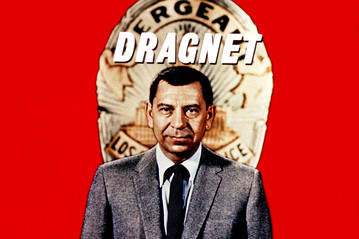
It’s not like Sgt. Joe Friday who used to say
in the television series Dragnet,
“Just the facts.” Watch Fox and MSNBC or CNN and you’ll think they’re from two
different planets despite talking about the same issues facing our country. Pay
close attention to the words used because there are many issues that impact each
of us – taxation, abortion, gun control, health care, etc. – and how we’re persuaded
to act will have to do in large part with how each side presents its case.
Brian, CMCT®
influencepeople 
Helping You Learn to Hear “Yes”.

How is Cool Influenced?


I read an article questioning whether or not
Apple had lost, or is losing, its cool. Why should Apple be any less cool than
it was several years ago? After all, it’s the most valuable company in the
world at the moment. Is it because Steve Jobs and his dynamic, rebel
personality are gone? I’m not so sure about that because as an Apple user I
think the company’s products are fantastic and I’d imagine long time users
would say the products are better than ever.

As I started to ponder “cool,” it brought to
mind an episode from The Office in
which Michael Scott was trying to plan a celebration of his 15-year anniversary
with Dunder-Mifflin. To do this he enlisted the help of Jim, Pam and Dwight. At
one point during the brainstorming session Jim said of Dwight’s idea, “Now
you’re trying too hard and that’s just not cool.” Dwight responded, “Then I
guess I just don’t know what cool is.”
This begs the question, “What is cool?” I’m
dating myself with this reference but for those who grew up in the ‘70s one of
the icons of cool was Fonzie from the television show Happy Days. Fonzie was cool because he was so different from
Richie, Potsy, Ralph and the rest of the cast. Part of Apple being cool is that
it’s always been different than its competition. The tough part about that in
business is you never stay different for long.
Samsung’s Galaxy phone has many of the same
features the iPhone has and it has some things you can’t get with the iPhone
like the bigger screen. Marketing the bigger screen taps into the principle of scarcity. This principle of influence tells us people value things and want
them more when they’re less available, unique or different.
I believe scarcity goes to the heart of cool.
Fonzie was cool because he was different, a one of a kind. Part of the cool
factor for Apple is how it stays ahead of the curve with technology and usually
offers you something, or a package of things, you can’t get elsewhere.
Consider this question. If everyone had
dressed like Fonzie in Happy Days would
we have seen him as being so cool? Probably not. If everyone has an iPhone do
you think people will view it as being quite as cool as years ago? Probably not,
even if the technology is better.
Like beauty, cool is also relative. A
beautiful woman will not stand out as much when every woman is beautiful. If
you doubt that consider beauty pageants where every woman is a knockout but most
contestants quickly fad into the background as the pageant progresses. However,
those same women in your office, at the mall, or on the street would turn heads
because in those environments they’d stand out compared to the population in
general. That’s scarcity again, along with the compare and contrast phenomenon.
Much of cool’s scarcity comes in based on what
it’s compared to. Kids think they’re cool compared to their parents but within
the group of teens at school some of those same kids may not be considered cool
at all.
Ever notice how celebrities continually
reinvent themselves? Think Madonna, the queen of reinvention! Part of the
reason celebrities change so much is because their cool factor wears off as their
looks and character traits become more commonplace.
So how do you use this to be more influential?
Two areas to consider are you as an individual and your company.
When it comes to you on a personal level what
makes you unique compared to your peers and competition? I’ve seen people whose
signature is a bow tie and others who always wear colored shirts. Both stand
out in the world of dark suits, white shirts and regular ties. Remember, cool
is up to you to make. Being a “nerd” became cool after Revenge of the Nerds hit movie screens. All of a sudden being
really smart was cool if you could use that in ways to benefit others.
When it comes to promoting your company what
makes it stand apart from the competition? Does your business card look like
everyone else’s? Boring! Remember, if you do everything like the competition
then nothing stands out and you get no cool factor. In recent years many
insurance companies have gone from boring and bland to  much cooler through humorous ads. No longer do
people think of them as giant companies run by a bunch of grey–haired, middle-aged
men. They have a much younger, hip feel based on their ads now.
Whether it’s you personally or your company it
comes down to this; take time to consider your uniqueness. Can you combine that
with your strengths and passion to stand apart from your peers? If you can
leverage that you’ll gain some cool and probably more customers because
everyone loves cool.

Brian, CMCT®
influencepeople 
Helping You Learn to Hear “Yes”.

New Survey on Decision Making

Several years ago I asked readers to participate in a survey to give some insight into what influences decisions based on personality type. The goal was twofold: to help people understand themselves better based on their personality type and more importantly, how best to influence others when you have a handle on their personality type.

The questions in that survey were a mix of business and personal scenarios. Many people felt they answered the questions differently depending on the setting presented – work or personal – so I’ve decided to do a new survey with a focus solely on business situations.

Would you like to participate in this new survey?It’s only 11 questions so it should take no more than two to three minutes so click here and take the survey. Look for a series of blog posts beginning sometime in June where I’ll share the results.Thanks, I appreciate your willingness to help!

Brian

Brian Ahearn, CMCT®
influencePEOPLE 
Helping You Learn to Hear “Yes”.

A Call to Lay Down Your Weapons of Influence

In America there’s a debate raging and millions of people are lining up on opposite sides of the issue. The debate has to do with constitutional rights vs. public safety. You probably know I’m talking about the gun control issue that’s come to the forefront of national attention after the Sandy Hook tragedy last year. At the center of the debate is gun ownership and in particular assault weapons.

This post has to do with that debate because it’s about weapons. If you’ve read Robert Cialdini’s classic book, Influence Science and Practice, then you know it was born out of his curiosity about why he was such a “patsy” when it came to the “pitches of peddlers, fund-raisers, and operators of one sort or another.” He wrote, “I wanted to find out which psychological principles influenced the tendency to comply with a request.” Thinking of himself as someone who was taken advantage of more than he cared to admit, a few sentences later he characterized these psychological principles as “weapons of influence” because quite often they were used against defenseless people. I say defenseless because manipulators understood the principles but their targets of influence didn’t and that gave manipulators a huge advantage. Cialdini held to this viewpoint so much so that at the end of each chapter ideas are presented on how you can defend yourself against the manipulative use of these weapons of influence.

Nearly 30 years have passed since Influence first hit bookstores and times have changed when it comes to people’s views on influence and persuasion. After selling nearly 2.5 million copies, people have embraced the idea that the psychology of persuasion can be used in an ethical manner to create more win-win situations than ever before. People have embraced the concepts from Influence so much so that it was named the top sales and marketing book in The 100 Best Business Books of All Time.

Considering the change in attitude toward influence I’m writing today to ask people to banish the “weapons” terminology from their vocabulary when referring to the principles of influence.

Why now? As I scanned my Twitter feed one morning I saw a post that referred to one of the principles of influence as a weapon of influence. All of a sudden it didn’t sit well with me and as I analyzed it all the thoughts I’m sharing here came to mind. If I knew what was meant by “weapons of influence” and didn’t care for it I wondered how others might perceive the terminology.

First, the weapons terminology doesn’t conjure up positive thoughts, particularly during this time of tense, heated debate around the subject. If we truly believe small changes (i.e., using certain words at particular times in specific situations) can make a big difference – indeed that’s what influence is all about – then I argue “weapons” can’t be helping our cause when it comes to teaching people about the ethical use of influence. Consider the following:

If you didn’t know anything about influence how likely would you be to attend a workshop where you’d learn about using weapons of influence? Some people will go but I suspect many will subconsciously make an automatic decision not to consider the workshop.

How might your customer feel if they found out you were using weapons of influence on them? It’s not likely they’ll believe you’re using those weapons to defend them. Rather, I suspect they’ll feel you’re using those weapons against them in an effort to defeat them and get what you want.

We all know things can be used for good or bad. Guns in the hands of our military are good when they help defend our freedom. They’re not so good in the hands of bad guys. However, as I noted at the beginning, with the national debate raging, using weapons terminology will provoke the wrong images and emotions for too many people.

I prefer talking about ethical influence. When I teach I encourage people to look for principles that are genuinely available to the situation they find themselves in. If they look hard enough they’ll find some just waiting to be used.

Next you want to incorporate the principles into your request in a way that’s truthful. In other words, don’t tell people there’s a time limit – scarcity – if there’s not. Don’t tell people how “everyone” is using your product – consensus – when they’re not.

And finally, look for what Stephen Covey called “win-win” situations. Your product, your price, your idea, whatever you may be trying to persuade someone about will not be right for everyone. Sometimes honestly pointing that out will get you recommendations because people will trust you – authority!

In closing I ask you to join me and lay down your weapons of influence and in their place pick up the tools of ethical influence that build. I encourage you to start thinking of the principles of influence as tools that can help build relationships, overcome doubts and motivate people to action. Will it make a difference? I believe it will, because small changes can lead to big differences.

Influencers from Around the World – Influence Yourself

This month’s Influencers from Around the World post comes from Yago de Marta. Yago has been a guest blogger at Influence PEOPLE for several years now. He’s from Spain but now spends the majority of his time in Latin America working with clients to help them speak more fluently and persuasively. To find out more about Yago visit YagoDeMarta.com or connect with him on Facebook, LinkedIn or Twitter. 

Brian, CMCT® 
influencepeople 
Helping You Learn to Hear “Yes”.

Influence Yourself

A lot of people ask themselves what they can or can’t do with influence techniques. I tell them that there are no set limits and that they can explore them in each sale or speech.
There will always be someone who will tell you what you can’t do. He will have his arguments but it doesn’t mean he has the reason. This article addresses this.
A year ago I was invited to give a speech in a very big auditorium in a city with about 1.5 million people in Latin America.  I have been in that country thousands of times but “each audience is different” and this city was “special.” When I entered in the auditorium I realized that it was too big and thought it would be difficult to fill the seats because the event hadn’t been publicized very much.
As people arrived they started taking places in the high part of the auditorium first. I was talking with the organizers (the mayor of the city and his team) and they were telling me that the people in their city were complicated and recommended I not make efforts to have them come closer. Apparently people in this city were not easy, a “tough crowd” you might say.
When almost everybody was in the hall, I was told to start my presentation and I realized that most of the people occupied the seats farthest from me. The mayor was about to introduce me to the audience and I asked him to ask people to get closer to the stage, so they’d be closer to me.
Then one of the strangest moments of my career happened. The mayor and his staff told me it was impossible to do this. He told me that he has been the mayor of this city for 20 years and that the people was too lazy to “move their asses” closer to hear me!
As you know, as you have heard and probably read a hundred times, you have to know your audience, your client. In this case, it was clear that the one that knew the audience was the mayor, not me. But, could it be limiting for my presentation?
I said to him, “Okay, no problem.  If there is no way to move them, I’ll solve it.”
The mayor introduced me, and gave me the microphone. I addressed the audience, “Good evening, it’s a great pleasure to be with all of you here today and I have something to confess to you; some minutes ago I asked your mayor if he could ask you to come closer to the stage to the front rows and fill the closest part of the auditorium. He answered me that it was impossible, that the people of this city are not likely to do that. Please, can you show him that he is mistaken?”
Suddenly, people all over the auditorium stood up and changed their seats to be closer to the stage.
That’s normal. When books talk about knowing the audience, they talk about knowing their ages, jobs, gender, but there is something easier and more powerful: you can know their motivations. You know their essence.
Maybe the mayor knew each person of his city, maybe he knew their names. But I knew why they were there.
It’s more important to believe in yourself than to believe in your audience. It’s more important to influence yourself than influence people.
You are learning and using many influence techniques and that’s what helps you accomplish whatever you want. But there is only one thing that you always have to remember – to know what people “really” want.
Yago de Marta
Speech & Media Training
www.yagodemarta.com
Méx. +52 1 (55) 59810879
Esp. +34 655 361 555
BBpin: 2A24B191
Skype: yagodemarta

A Call to Lay Down Your Weapons of Influence

In America there’s a debate raging and millions of people are lining up on opposite sides of the issue. The debate has to do with constitutional rights vs. public safety. You probably know I’m talking about the gun control issue that’s come to the forefront of national attention after the Sandy Hook tragedy last year. At the center of the debate is gun ownership and in particular assault weapons.

This post has to do with that debate because it’s about weapons. If you’ve read Robert Cialdini’s classic book, Influence Science and Practice, then you know it was born out of his curiosity about why he was such a “patsy” when it came to the “pitches of peddlers, fund-raisers, and operators of one sort or another.” He wrote, “I wanted to find out which psychological principles influenced the tendency to comply with a request.” Thinking of himself as someone who was taken advantage of more than he cared to admit, a few sentences later he characterized these psychological principles as “weapons of influence” because quite often they were used against defenseless people. I say defenseless because manipulators understood the principles but their targets of influence didn’t and that gave manipulators a huge advantage. Cialdini held to this viewpoint so much so that at the end of each chapter ideas are presented on how you can defend yourself against the manipulative use of these weapons of influence.

Nearly 30 years have passed since Influence first hit bookstores and times have changed when it comes to people’s views on influence and persuasion. After selling nearly 2.5 million copies, people have embraced the idea that the psychology of persuasion can be used in an ethical manner to create more win-win situations than ever before. People have embraced the concepts from Influence so much so that it was named the top sales and marketing book in The 100 Best Business Books of All Time.

Considering the change in attitude toward influence I’m writing today to ask people to banish the “weapons” terminology from their vocabulary when referring to the principles of influence.

Why now? As I scanned my Twitter feed one morning I saw a post that referred to one of the principles of influence as a weapon of influence. All of a sudden it didn’t sit well with me and as I analyzed it all the thoughts I’m sharing here came to mind. If I knew what was meant by “weapons of influence” and didn’t care for it I wondered how others might perceive the terminology.

First, the weapons terminology doesn’t conjure up positive thoughts, particularly during this time of tense, heated debate around the subject. If we truly believe small changes (i.e., using certain words at particular times in specific situations) can make a big difference – indeed that’s what influence is all about – then I argue “weapons” can’t be helping our cause when it comes to teaching people about the ethical use of influence. Consider the following:

If you didn’t know anything about influence how likely would you be to attend a workshop where you’d learn about using weapons of influence? Some people will go but I suspect many will subconsciously make an automatic decision not to consider the workshop.

How might your customer feel if they found out you were using weapons of influence on them? It’s not likely they’ll believe you’re using those weapons to defend them. Rather, I suspect they’ll feel you’re using those weapons against them in an effort to defeat them and get what you want.

We all know things can be used for good or bad. Guns in the hands of our military are good when they help defend our freedom. They’re not so good in the hands of bad guys. However, as I noted at the beginning, with the national debate raging, using weapons terminology will provoke the wrong images and emotions for too many people.

I prefer talking about ethical influence. When I teach I encourage people to look for principles that are genuinely available to the situation they find themselves in. If they look hard enough they’ll find some just waiting to be used.

Next you want to incorporate the principles into your request in a way that’s truthful. In other words, don’t tell people there’s a time limit – scarcity – if there’s not. Don’t tell people how “everyone” is using your product – consensus – when they’re not.

And finally, look for what Stephen Covey called “win-win” situations. Your product, your price, your idea, whatever you may be trying to persuade someone about will not be right for everyone. Sometimes honestly pointing that out will get you recommendations because people will trust you – authority!

In closing I ask you to join me and lay down your weapons of influence and in their place pick up the tools of ethical influence that build. I encourage you to start thinking of the principles of influence as tools that can help build relationships, overcome doubts and motivate people to action. Will it make a difference? I believe it will, because small changes can lead to big differences.

Brian, CMCT®
influencepeople
Helping You Learn to Hear “Yes”.

Don’t take it Personal. It’s Just Business.

“Taken” is a movie that tells the story of a
young girl who goes to Europe with a friend and is kidnapped. She’s sold into
the sex slave trade but fortunately for her, and unfortunately for the bad guys,
her father, played by Liam Neeson, is a badass ex-CIA type who is used to
solving problems in a ruthless way.

I’ll never forget Jane and I watching “Taken”
in the theater just days before we were about to put Abigail on an airplane to
see her Aunt Eva in New York City. Not the most comforting feeling to know there are
sick people out there ready to prey on the innocent and unsuspecting as you’re
about to send your 13-year-old daughter on her first solo trip!
As Neeson closes in on finding his daughter,
he finds himself at the party of a very rich businessman. The businessman has a
secret; despite being a father he is running a sex slave trade where people are
paying hundreds of thousands of dollars for young women. Neeson learns that his
daughter is at this house and is about to rid the world of this thug and just
before he does so there is a brief exchange:
Bad Guy – “Please understand it was all
business. It wasn’t personal.” [Hoping to be spared]
Liam Neeson – “It was all personal to me.”
[Shoots him]
For those of us in business, while not enduring
the kind of situation Neeson found himself in, we’ve probably heard something
similar countless times from much nicer people – “Don’t take it personal, it’s
just business.”

But the reality is this; we do take it personally.
Think about how people describe themselves so often:I’m a fireman.

I’m a salesman.
I’m a nurse.
I’m a …
Much of our being is wrapped up in what we do,
“I am.” That’s only natural because from about age 20 through 65, many people
will work upwards of 100,000 hours! We spend more of our lives at work than
with our loved ones so how can we not heavily associate our identity with what
we do? If that’s the case then it’s almost impossible not to take it personally.
So how do we avoid taking it personally? By
building relationships that are so strong they can trump almost all other
reasons to do business with us. Jeffrey Gitomer, a well-known author and sales
trainer puts it this way: “All things being equal, people want to do business
with their friends. All things being not so equal, people still want to do
business with their friends.”
Gitomer’s philosophy goes to what Robert
Cialdini calls the liking principle. This principle of influence reminds us that
people prefer to say, “Yes” to those they know and like. It’s a very powerful
tool when it comes to influence.
I’m a realist and know friendship won’t trump
everything. There’s a certain price for which people will switch. How big that
difference is depends on a lot. However, I bet many of you reading this can
think of times you’ve chosen to do business with someone despite their pricing
being higher because of the friendship you have.
Here’s some proof in case you’re a skeptic. A
study was done with students from Stanford University and Northwestern. The
students were given the task of negotiating a deal. Half of the students were
told to “keep it strictly business” while the other half were encouraged to get
to know their negotiating partner; exchange pictures, emails, etc.
Did getting personal make a difference? It
most certainly did! Five times more “strictly business” students got deadlocked
in their negotiations as compared to the “get to know your partner group.” That’s
right, five times more (30% vs. 6%). Would it be beneficial for your business
if you could seal the deal significantly more than you’re currently
doing…without having to spend more money? All it takes is a bit of effort and
conversation to do these two things:
  1. Take time to find similarities with people you
    do business with. Talking about what you have in common is an easy way to bond
    with another person.
  2. Look for things about the other person you can
    genuinely compliment and then compliment them. They’ll feel good about you and
    you’ll convince yourself they’re a pretty good person in the process.
Fortunately we don’t have to try solving our
business problems like Liam Neeson had to. Give these two simple ideas a try
and you’ll build better relationships — the kind that will make, “Don’t take
it personal, it’s just business,” a thing of the past.

Brian, CMCT®
influencepeople 
Helping You Learn to Hear “Yes”.

Lance Armstrong, a Modern Day Robin Hood? Hell No!

So last week, Lance Armstrong confessed to Oprah Winfrey that he did in fact use banned substances during his career. While this might be a surprise and disappointment to the general public, it wasn’t a shock to anyone inside the sport of cycling nor was it to most athletes. Whenever we see superhuman performances like winning the Tour de France seven times, Flo Jo smashing the 100-meter dash record by a half second, or Roger Clemons pitching at a Hall of Fame level well into his 40s, we should be very leery.

As I listened to Mike and Mike on ESPN radio driving to work they brought up the point that some people have equated Lance Armstrong to a modern day Robin Hood because he helped so many, despite breaking the rules. I say, “Hell no, he isn’t a modern day Robin Hood!”
First, Robin Hood was a fictional character. We see many fictional charters we wouldn’t tolerate in real life. Arnold Schwarzenegger plays some pretty cool action heroes in his movies but would we really tolerate such characters in the real world? Of course not, and it showed when his funny quips, best left for the movies or Saturday Night Live, got him in trouble on a number of occasions while governor of California. Remember the “girlie man” quote he made about budget opponents?
Robin Hood’s motive was all about helping the poor because they were oppressed by the local government and a corrupt sheriff. If you’ve followed Lance Armstrong over the years then you know Lance’s motive was Lance, pure and simple. With his notoriety he was able to help people but it was still about Lance, from the starting line to the finish line.
I heard one commentator say Lance knew he had to do this (confess), that he had no choice. He went on to say he also realizes it’s the right thing to apologize to those people whose lives he ruined. Did you notice it was about Lance first and the people he hurt second? If the right thing had been his motive then perhaps in the absence of the overwhelming evidence he would have approached those same people and apologized for what he’d done, then confessed to the world.
People have said, “But look at all the good he did.” Can’t the same be said for Joe Paterno when it comes to Penn State and their student athletes? Joe Pa had a very positive impact on both but this line of thinking is “the ends justifies the means.” In other words, it doesn’t matter what you do as long as you can point to how you helped others. Bernie Madoff donated millions to various organizations over the years and they benefited tremendously but did that make it right in terms of how he obtained his wealth? Ask the investors who paid his tab.
If there’s a silver lining for Lance Armstrong it’s twofold. First, he has advocates who will never leave him no matter what. Those people who benefitted from the LIVESTRONG foundation are among those. And don’t forget the millions he inspired to work hard at whatever their chosen profession or sport. When it came to inspiration he was like a real-life Rocky.
The second silver lining is the forgiveness of the American people based on the recency effect. Here’s a list of people who played their cards right and, while perhaps not attaining the same level of popularity and income they had prior to their scandals they’re still doing pretty well:
  • Tiger Woods is still the crowd favorite at PGA events.
  • Martha Stewart remains an icon for most homemakers.
  • Pete Rose might just make it into the Hall of Fame during his lifetime because of the legions of fans who believe it’s the right thing to do.

So what does all of this have to do with a blog on persuasion? Here are a couple of closing thoughts.

Aristotle said, “Character may almost be called the most effective means of persuasion.” Each of these people influenced legions of us to do things because of who we thought they were. Had we known the truth many of us might have made different choices on what to do with our time, money, effort, and adoration.
When I write about persuasion my bent is ethical persuasion because none of us wants to be manipulated nor do we want to be known as manipulators.  If something is the right thing to do then we shouldn’t have to resort to manipulation to get people to do what we want.
Let me leave you with this; Frank Sinatra sang, “I did it my way” and there’s a part of the “pull yourself up by the bootstraps” American mentality that loves this.  That is, until we find out someone’s “way” is to cheat and manipulate, because in the end the ends DOESN’T justify the means. If you want to look yourself in the mirror and feel good about who you are, do the right thing.
Brian, CMCT®
influencepeople 
Helping You Learn to Hear “Yes”.

PAVE Your Way to Success in the New Year

If you’re like many people then you’ll be making New Year’s resolutions shortly. And if you’re like most people you’ll be breaking those resolutions within days. In one study, 52% of people making resolutions were confident of achieving them, yet only 12% actually did so. It’s a shame because most of the goals people set are good ones! Here are some of the most popular New Year’s resolutions people make:

  • Spend more time with family
  • Lose weight
  • Start exercising
  • Quit smoking
  • Quit drinking
  • Get organized
  • Get out of debt

The list is admirable so why are these goals so difficult to achieve for the vast majority of people? There are probably as many reasons as there are resolutions, but we don’t need to spend time on them because you’ve probably heard just about all of them…and perhaps even used a few yourselves! As I’ve done in years past I’m going to share an influence technique that can help you PAVE the way to success in the New Year.

In the study of persuasion there’s a powerful motivator of behavior known as “consistency.” This principle says that people feel compelled to act in ways that are consistent with their prior actions, words, deed, beliefs and values. When we act in consistently we feel better about ourselves and people perceive us in a more favorable light, which adds to our authority.
We are going to take a look at consistency as it pertains to you and four simple things to strengthen its power in your life. These simple ideas will PAVE the way to your success because they’ll dramatically increase the odds that you’ll follow through on your New Year’s resolutions.
Public – Any time you make a public statement, whether verbally or in writing, you’re putting yourself on the line. The mere fact that another person knows your intention and might ask you how you’re coming along with your commitment is quite often enough motivation for people to follow through. Recommendation #1 – Share with another person or group of people, your New Year’s resolution and ask them to hold you accountable.
Active – You have to actively do something. Merely thinking about a resolution, just keeping it to yourself, will lead to the same results as people who don’t make resolutions. In other words, nothing will change. This came to light in a study with a group of students who wanted to improve their college grades. One group was asked to write their goals down, one group kept their goals in their heads, and the last group had no specific goal whatsoever. As you can imagine, the group with the written goals succeeded, with nearly 90% of students increasing by a full letter grade! With the other two groups the results were almost identical. In each group fewer than 1 in 6 students improved a full letter grade. It’s worth noting, they were all given the same study materials so they all had the same opportunity. Recommendation #2 – Make sure you have to take some active step. It could be as simple as buying a book to help you learn more about the changes you’re hoping to make.
Voluntary – This has to be YOUR goal, not someone else’s goal for you. If you’re trying to do something – quit smoking, lose weight, get in shape – it’s not likely your motivation will last if someone told you to do it. The goal has to come from you because if it’s forced on you it’s not likely your desire will last long. Samuel Butler said it best when he wrote, “He who complies against his will is of the same opinion still.” Recommendation #3 – Make sure it’s something you want to do.
Effortful – It was noted above that you have to actively do something. In other words, making the commitment should require some effort on your part. In fact, the more effort you expend setting up your goal, the more likely you are to succeed. Something as simple as writing down your resolution can make a difference, even if you don’t share it with anyone. But, taking the time to share it also fulfills the public requirement, which gives you more bang for the buck! Dr. Robert Cialdini puts it this way, “People live up to what they write down.” Recommendation #4 – Commit pen to paper and you’ll increase your chance for success significantly.
None of what I just shared is new but I’m willing to bet many of you have not tried the PAVE technique before. If you’ve been one to make resolutions in the past only to fail, then give this different approach a try. If you fail again you’re no worse off but this different approach might just be your key to success in 2013. Good luck and Happy New Year to all of you!

Brian, CMCT®
influencepeople 
Helping You Learn to Hear “Yes”.