Tag Archive for: psychology of persuasion

5 Reasons Why Starbucks is so Persuasive

What better place to write this post than sitting in Starbucks on a beautiful spring day. The smooth jazz is playing as the barista and others hustle behind the counter helping a diverse group of people who pop in and out for their daily fix. Of course, there’s also the smell of roasted coffee beans in the air. All the senses are engaged when you visit a Starbucks.

Coffee has gone from the Maxwell House and Folgers morning drink to something we enjoy 24 hours a day. That shift is due in large part to Starbucks. It’s amazing when you think about it because you don’t see Starbucks commercials on television and you don’t hear them on the radio. You won’t see them on billboards or magazines either. So how does a company do what Starbucks has done with no advertising? Here are my thoughts on why Starbucks is so persuasive.

Reason #1 – They create an experience when you walk into a store. Reread my opening paragraph and you’ll see what I mean. There’s no mistaking it; you know when you’re in a Starbucks. Oh sure, you can get good coffee at Panera, Cup ‘O Joe, McDonalds (or so they say) and other places but none of them feels cool like Starbucks. It’s enjoyable to sit and take it all in as you enjoy your favorite caffeinated drink. This differentiation is the principle of scarcity at work. You can’t get this feeling anywhere else.Not only is the service great inside, it’s excellent at the drive-through as my friend and LinkedIn guru Bob McIntosh points out his post Want Great Customer Service, Go to Starbucks.

Reason #2 – The baristas and others who work here really seem to enjoy their jobs and I don’t think it’s because they’re hyped up on caffeine. I’m not familiar with Starbucks’ hiring process but the company knows what it wants in an employee and does a great job hiring the right people. That’s a huge part of the Starbucks brand. When you walk in you’re greeted by multiple people asking how your day is going. They engage you in a way that makes you like them and as we all know, people like to do business with people they like. That’s the principle of liking and it makes you want to come back again and again.

Reason #3 – Something that stands out about Starbucks is how easily recognizable its cups are. It’s amazing how many times you see them when you’re out and about. It doesn’t matter if you’re in the airport, at the mall, out for a walk in the park or anyplace else. That’s Starbucks’ advertising – me, you and everyone else walking around with a Starbucks in hand! The more we see people with their Starbucks, the more it signals to us that it’s a great product. The principle of consensus tells us people look to others to get a sense of what’s appropriate behavior. Which would you assume is the better restaurant, the one with lots of empty tables or the one with a wait? Most people would assume the latter and so it is with Starbucks.

Reason #4 – Have you tried the Starbucks app? I think it’s one of the best apps available for your smart phone. You can put in your favorite drink so when you visit you hold the app up to the scanner and the barista knows exactly what you want. It has a store locator, which is great if you travel a lot like I do. You even get free songs from iTunes almost weekly, which is cool because it exposes me to music I probably wouldn’t go look for, or want to buy. This giving engages the principle of reciprocity, making us more likely to return the favor, so to speak, by purchasing coffee.

Reason #5 – But the smartest move Starbucks made with their app is the ability to load it with cash so you can pay by phone. It works just like having a gift card except you don’t need the gift card because you pay with the phone. The brilliance is once you’ve loaded the app you don’t feel like you’re actually spending money when you buy your coffee! After all, if I have $25 or $50 on my app I’ll go out of my way to use it versus perhaps stopping by some other coffee shop where I have to “pay.”

And think about this; it’s much easier for consumers to make a few, larger purchases by reloading the app occasionally as opposed to constantly pulling $5 or $10 out to pay each time you stop by a store. In other words, Starbucks has removed the pain of paying.

Is Starbucks for everyone? Of course not, but there’s no denying the company is an incredible success and that’s not by accident. Starbucks is very intentional in its attempts to persuade us to get our fix at one of its local establishments and I’d say it’s doing an amazing job.

Brian, CMCT®
influencepeople 
Helping You Learn to Hear “Yes”.

It Could Never Happen Today or Could It?


I got a strange birthday present this year
from my daughter Abigail; a book called Hitler Youth by Susan Campbell
Bartoletti. Abigail has been fascinated by what took place around World War II,
particularly the Holocaust, so couple that with her youth pastor recommending the
book along with my interest in psychology, and that’s how she came up with the idea.
The book details how Adolph Hitler and the
Nazis used the young German population to strengthen their cause and implement
their gruesome plans. The indoctrination of the German youth began in the early
1930s and went all the way up through the end of the war.
The children were so brainwashed between
school, the Hitler Youth organization and summer work camps that many had more
loyalty to Hitler and the state than to their own parents. Some children even
turned their parents in to Nazi authorities when they heard them say derogatory
things about Hitler or the Nazis!
For decades people have wondered how any human
being could have witnessed what was going on and not done something. Even
worse, how could anyone have willingly participated in such evil?
It’s easy for us to think the atrocities that
occurred under Hitler could never happen in this day and age because we have social
media and people would take action immediately. Sadly, that’s not the case. The
world was aware of genocide in Rwanda with the nightly news and did little to
stop it until hundred of thousands were slaughtered. More recently we only
need to look at the North Korean regime.
Five decades ago Stanley Milgram, a social
psychologist from Yale, wondered how people could have willingly participated
with the Nazis, so he set out find an answer.
Milgram conducted a series of experiments in
the early 1960s to find out how subjects would respond to an authority figure. The principle of authority tells us people defer to those with expertise and those in positions of power. As you might imagine, most people predicted the average American wouldn’t harm another person, but during a “learning experiment” Milgram found
that two-thirds of his subjects willingly administered a series of 30
progressively stronger shocks to a learning partner. The final shock was 450
volts, enough voltage to kill a person!
During the experiment no threats were used, there
was no prior history with the experimenter to consider, nor was anyone’s career
on the line. What turned these normal people into willing participants in
torture? Believe it or not, all it took was a man in a white lab coat – a
perceived authority – insisting that participants continue with the experiment.
Many protested, some to the point of near emotional breakdown, but two out of
three participants administered all 30 shocks.
Are we much different today than we were in
the early ‘60s? In a much milder form, the Milgram experiment and many other
interesting scenarios such as bullying have been replicated in recent years on the
NBC television show What Would You Do?
Various studies show most people believe
themselves to be better looking than the average person, and smarter, kinder
and, I bet, more heroic. You probably believe you are and I’ll be honest, I
believe I’m all those things too. Because of our high self-esteem we’d like to
believe we would have immediately done the right thing if we’d been in Nazi
Germany or someplace else where we witnessed something horrific. But the odds
are against us, because human nature hasn’t changed much during the past
century.
It’s become commonly documented that all too
often people don’t help one another when they see someone in need and the more
people there are around, the less any one person feels the need to help. This
is sometimes called the “bystander effect” or “diffusion of
responsibility.” If you doubt this consider, Catherine Susan “Kitty”Genovese, the woman who was stabbed to death in New York City in 1964 in full
view, or within earshot, of many people who did nothing to help her.
So what can you and I do? On a personal level,
having just read this you’re probably thinking, “I’d never do that” and that’s
a good first step. The principle of consistency tells us people want their
words and deeds to match. By telling ourselves we wouldn’t do such a thing
we’re raising our awareness that should something like that occur we’re more
likely to recognize it and take appropriate action.
Something that strengthens our resolve when it
comes to consistency is to make a public commitment. The more public we are
about our views on right and wrong, good and bad, and what we’d do, the more
likely we are to follow through on those actions.
Here’s the good news – quite often other
people know the right thing to do but are afraid to act. However, when one
courageous person takes a stand it emboldens others and before you know it you
can have a movement of good against evil. And the sooner we act, the easier it
will be to stamp out something before it seems too big, too imposing to deal
with.
Brian, CMCT®
influencepeople 
Helping You Learn to Hear “Yes”.

Parenting and the Garden of Eden


Our daughter Abigail is just finishing her
junior year of high school. It’s hard to believe before the year is over she’ll
be 18 years old, officially an adult in the eyes of the law. I still remember
looking at her in her crib thinking, “I can’t believe she’s been with us 100
days already.”


I’ve learned so many things raising her,
especially when it comes to coaching and influencing others. We’ve been blessed
because she’s a wonderful person with an unbelievable heart for people.
This may seem like a paradox but we have
almost no rules and yet we almost never have to discipline her. You might think
someone with no rules would be a loose cannon, especially during the teen
years, but it’s been exactly the opposite.
Pondering this made me think how prohibiting
certain things can sometimes have the opposite of the intended effect, making
the person want to break the rules all the more. It reminds me of God
prohibiting Adam and Eve from eating from the Tree of the Knowledge of Good and
Evil. Once the tree was deemed off limits, Eve viewed something that was there
all along – the tree smack dab in the middle of the garden – in a new and
different way.
For those who’ve raised kids you know the
moment you tell them they can’t do, touch, taste, or listen to something, that
seems to be all the want.
I believe scarcity is at the root of the
issue. This principle of influence tells us people want more of what they can’t
have.  So tell a kid they can’t watch a
movie and their curiosity is piqued as they begin to wonder, “What’s so bad in
the movie that mom and dad don’t want me to see it?”
When comes to parenting I really knew we were
on the right track several years ago when my mom relayed a conversation to me
that she’d had with Abigail. My mom was talking about rules when Abigail would
get her license and Abigail told her she really didn’t have any rules. Of
course my mom insisted she did and Abigail replied, “No grandma, I really don’t
have any rules but I wouldn’t do anything
to break my parents trust
.” Wow! I don’t think I could have asked for any
more than that.
How did we get to that point? I think two
things contributed significantly – time and communication.
As an only child we devoted lots of time to
Abigail. Jane gave up a successful career in insurance to stay home and raise
her. Losing her income necessitated other sacrifices too but they were all more
than worth it.
I made it a priority to be around as much as
possible to attend school events and participate in lots of father-daughter
activities like the YMCA’s Indian Princess program. When Abigail graduated from
that program we participated together in taekwondo for many years. It was
normal for us to hop in the car and go do something together multiple times a
week.
In the midst of all that time together I made
it a point to talk with Abigail a lot
and always gave her room to share her thoughts and feelings. As my good friend, and life coach, Dennis Stranges once said, I helped her find her voice so she felt free to
share whatever was on her mind and whatever was going on in her life.
When you have conversations like we had you go
beyond rules – do this, don’t do that – and spend time talking about the whys
behind the things we’d ask her to do or refrain from.
As she showed good judgment we kept extending
responsibility and emphasized that we’d continue to give more as she displayed
more responsibility. It feeds on itself in a very positive way and everyone
wins.
When I say we don’t have rules there are certainly
things we don’t want her to do, such as have sex, drink, try drugs or
participate in other activities that could be harmful to her. However, rather
than lay down rules, she knows if we ask (not tell) her to do something or
refrain from something that we have her best interests at heart. Consequently
things that worry so many parents during the teen years have been non-issues
for us.
So my advice to parents would be threefold – 1)
spend lots of time with your kids, 2) communicate with them, and 3) try
refraining from rules and instead discuss the whys behind what you ask of them.
The earlier in their lives you begin the better but it’s never too late to
start. And remember; give them the freedom to express themselves, even if you
don’t fully agree with their likes and dislikes. Doing so will build trust and
that’s where they’ll be open to what you have to share and that’s where you
might be able to persuade them into good behavior rather than trying to force
it.
Brian, CMCT®
influencepeople 
Helping You Learn to Hear “Yes”.

2 Simple Keys to Building Great Relationships

Why does engaging reciprocity help relationships? When you do something for another person, they usually appreciate the effort, and in the midst of that, they experience good feelings towards you. Those good feelings are a result of endorphins kicking in, and their thoughts about you are positive.

A word of caution – don’t do things to build a “bank” of favors. We can all think of people we know who keep mental accounts, and it usually makes us suspicious when they do something for us.

I’ve encountered people like that, and I find myself more focused on “what do you want” instead of appreciating what they’re doing.

Liking is the other relationship principle. We know we like people who like us, and it makes everything easier when we have to deal with them. Getting people to like you is fairly easy. If you connect on things you have in common, that’s a great way to start easy conversations and build from there.

I always think of my wife, Jane, when it comes to this principle because whenever she sees someone wearing Pittsburgh Steelers clothing, she says, “Go Steelers.” In the blink of an eye, they’re talking, and you’d think they’d known each other for years.

Another simple way to engage liking is to share compliments with people when you note something praiseworthy. All too often, people have good thoughts about others but don’t share them. You’ll get those endorphins flowing with the other person if you offer a sincere compliment. As Abraham Lincoln said, “Everyone likes a compliment.”

Now here’s the real key to liking and reciprocity – focus on the other person and their best interests, not your own. When it comes to reciprocity, become the kind of person who genuinely wants to help others.

The more people sense you have their best interests at heart, the more open they’ll be to your offer to help. Don’t worry about what you’ll get in return, just give because the more you help people, the more they’ll want to help you. That’s why Zig Ziglar famously said, “You can get everything you want in life if you would just help enough other people get what they want.”

How do we focus on the other person with liking? Simple – don’t try to get them to like you, do what you can to like them. The same things that will make people like you will make you like them. If you find you come from the same hometown, have the same pets, root for the same team, etc., it becomes easy for you to like them.

As you see praiseworthy traits – and verbalize them – you begin to convince yourself the other person is really a good individual. When the other person begins to sense you truly like them, that’s when everything changes.

The bottom line is this – look for ways to give and connect that are in the best interest of others. They’ll appreciate it, respond positively, and it will have the same effect on you. It will truly be a win-win for everyone.

Brian, CMCT®
influencepeople 
Helping You Learn to Hear “Yes”.

Influencers from Around the World – An Accountability Partner Can Help Your Life

Readers of Influence PEOPLE know Hoh Kim
because of his guest posts to the Influencers from Around the World series over
the years. Hoh is also a Cialdini Method Certified Trainer® (CMCT®) and I actually met him when we trained together under Dr.
Cialdini. In addition to his CMCT® Hoh has his masters in communication from
Marquette University. I encourage you learn more about Hoh by visiting his
website, The Lab h, and his blog, Cool Communications. You can also connect
with Hoh on LinkedIn, Facebook and Twitter.
Brian, CMCT® 
influencepeople 
Helping You Learn to Hear “Yes”.
An Accountability Partner Can Help Your Life
1,000
Places to See Before You Die
by Patricia Schultz is one of my favorite
books. It has been the ultimate travel guide for me for many years. What are
your “100 things to-do before you die” or perhaps more appropriately, “100
things to-do while you live”? If you need a reference, check the book 2 Do Before I Die: The Do-It-Yourself Guide
to the Rest of Your Life
by Michael Ogden and Chris Day. On your to-do list
could be driving from Boston to Seattle, quitting your job and opening a
restaurant, or countless other things.
Do you have a “10 things to do every day”
list? It’s easy! Here’s my example:
1. 30-minutes of exercise.
2. 30-minutes reading a classic book.
3. Help my wife.
4. Help one person outside of my home.
5. Plan for the next day.
6. Control my eating.
7. Not allow myself to be interrupted by SNS
or my blackberry too much.
8. Focus one important thing for the day.
9. Not hurt someone by saying something bad or
insensitive
10. Praise someone
You’ve probably heard of this kind of list
from friends or seen it in movies like “The Bucket List” with Jack
Nicholson and Morgan Freeman. Having your “lifetime 100 to-do list” can help
you live a more full life and your “daily 10 to-do list” can help you day by
day. But, having lists is not enough. You need one more thing if you really
want to achieve something on your daily life and lifetime – an accountability
partner.
Here is an example of what an accountability
partner means. Everyday at 10 pm I have a five-minute phone call with one of my
friends. The call is simple. We ask each other about the “daily to-do list” we’ve
shared beforehand and simply tell each other whether we fulfilled our 10 items
or not. In this case, the friend becomes your accountability partner.
I got this idea from an article where Marshall
Goldsmith, one of the best leadership coaches in the world, was interviewed.
The term “accountability partner” came to my attention in the article, which was written by
Natalie Houston.
Dr. Cialdini had said many times, “People need
to publicly commit in order to leverage the principle of consistency.” This can happen when trying to persuade
others and when persuading yourself. To better persuade yourself to do
something, you need to commit to that something publicly, and having an
accountability partner is an excellent way to do that.
So, why don’t you grab a pencil and notebook,
and start to develop your top 10 things you must do every day. Next, find your
accountability partner and commit to check-in with each other. It may sound
simple but, if you DO it daily, you will improve your life and experience more
happiness and joy.
Hoh Kim, CMCT®
Founder & Head Coach, THE LAB h

This Post Might Just Save Your Life!


This blog post might just save your life!
Well, not exactly. Truthfully, not even close. But you might be a little wiser
for having read it, so I hope you’ll stay with me for a moment and continue reading.
You might be wondering why I went with such a
sensationalized title. You could say it was manipulative, that I was just out
to get you to read, and you’d be right. So why is a guy who blogs about ethical
persuasion using a manipulative tactic? Simply to make this point – I’m so sick
of seeing manipulative headlines I decided to write about it. Here are some
that irritate me.
War on
Christmas
– Did you know there was a battle raging this past December and
many soldiers lost their lives along with innocent civilians? This headline was
especially prevalent on Fox News over the holidays. My dad was in Viet Nam and
I’m willing to bet he and other veterans who’ve seen combat would not use the
word “war” to describe the tactics used by groups who are opposed to Christmas.
Obama
Declares War on the Citizens That Resist PPACA
– Not only are we
having to defend our lives against the Christmas rebel soldiers, we have to
battle our own President! I saw this headline on LinkedIn. Again, the use of
the word “war.” Really, the government is firing bullets and lives are being
lost because of what Obama is doing? Please!
War on
Women

– I see this headline on Facebook a lot. I know women serve in the military and
now engage the enemy in combat but apart from that there’s no war on women.
Some people may be opposed to certain pieces of legislation but there’s no war.
Some of you are thinking this is no big deal. After
all we were taught, “Sticks and stones can break my bones but names will never
hurt me.” I’d counter with, “The pen is mightier than the sword.” You clearly
know when you’re being physically assaulted but it’s not always so clear when
it’s a mental assault. Whether or not you’re aware, those headlines impact
people’s emotions and thinking and that’s exactly why the authors use the words
they do.
Frank Luntz wrote a book about this very
subject called Words that Work. Luntz
polls people for a living to find out which words resonate most so he can help
his clients with their messaging. As you begin to pay attention to word choice
you can quickly tell which side of the issue a presenter is on. Let’s take a
look at a couple of good examples.
Illegal
Aliens vs. Undocumented Workers
– Illegal is bad because it’s breaking the
law. When we think of aliens it typically conjures up images of beings we must
defeat before they take over our planet. Together “illegal aliens” builds a
negative image and negative emotions. It leads to zealous thinking along the
lines of, “We don’t want those illegal aliens in our country!”
On the other hand “undocumented” isn’t so bad.
It makes it sound like someone lost his or her paperwork. That could happen to
anyone. Workers aren’t bad either. We need more good workers in this country
and we esteem a good work ethic. Together we have “undocumented workers” which
creates a different mental picture and softer emotions. If we can get the
proper paperwork they could help this country immensely because quite often
they’re willing to do jobs the average citizen doesn’t want to do.
But let’s be clear; in the end both sides are
talking about the very same thing. However, the word choice each uses builds
different mental images and those mental images are designed to arouse completely
different emotions. Both are trying to get us to form very different opinions
on the same issue.
Death
Tax vs. Estate Tax
– This is another great example. No one likes to pay taxes but
there’s a spectrum on which people fall when it comes to taxes. Some would like
to pay as little as possible and damn the consequences. Others see taxes as
necessary to build a strong society and infrastructure. The real question is
what word will we use with taxes.
Death is not a good image no matter how you
present it. Very few people want to die but when they do the last thing they
want to think about is the government reaching into their casket for one last
money grab. You mean even in death we can’t escape taxation? Outrage!
When you hear the word “estate” what do you
think of? If you’re like most people you think about rich people because
they’re the only ones who can afford to live on sprawling estates. Why should
their millions, or hundreds of millions, be passed on to some greedy spoiled
kids who did nothing to build that fortune? Does the world need any more Paris
Hiltons or Kardashian girls? With that imagery many people say, “Heck yea, take
as much as you can so the rest of us don’t have to pay as much!”
Again, two sides talking about the same issue
– taxing people’s accumulated assets when they pass on – using very different
words. They want to arouse emotions and ultimately actions.
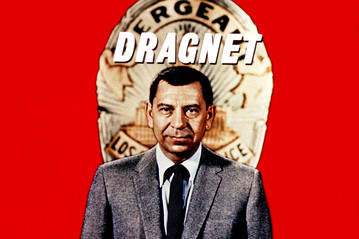
It’s not like Sgt. Joe Friday who used to say
in the television series Dragnet,
“Just the facts.” Watch Fox and MSNBC or CNN and you’ll think they’re from two
different planets despite talking about the same issues facing our country. Pay
close attention to the words used because there are many issues that impact each
of us – taxation, abortion, gun control, health care, etc. – and how we’re persuaded
to act will have to do in large part with how each side presents its case.
Brian, CMCT®
influencepeople 
Helping You Learn to Hear “Yes”.

How is Cool Influenced?


I read an article questioning whether or not
Apple had lost, or is losing, its cool. Why should Apple be any less cool than
it was several years ago? After all, it’s the most valuable company in the
world at the moment. Is it because Steve Jobs and his dynamic, rebel
personality are gone? I’m not so sure about that because as an Apple user I
think the company’s products are fantastic and I’d imagine long time users
would say the products are better than ever.

As I started to ponder “cool,” it brought to
mind an episode from The Office in
which Michael Scott was trying to plan a celebration of his 15-year anniversary
with Dunder-Mifflin. To do this he enlisted the help of Jim, Pam and Dwight. At
one point during the brainstorming session Jim said of Dwight’s idea, “Now
you’re trying too hard and that’s just not cool.” Dwight responded, “Then I
guess I just don’t know what cool is.”
This begs the question, “What is cool?” I’m
dating myself with this reference but for those who grew up in the ‘70s one of
the icons of cool was Fonzie from the television show Happy Days. Fonzie was cool because he was so different from
Richie, Potsy, Ralph and the rest of the cast. Part of Apple being cool is that
it’s always been different than its competition. The tough part about that in
business is you never stay different for long.
Samsung’s Galaxy phone has many of the same
features the iPhone has and it has some things you can’t get with the iPhone
like the bigger screen. Marketing the bigger screen taps into the principle of scarcity. This principle of influence tells us people value things and want
them more when they’re less available, unique or different.
I believe scarcity goes to the heart of cool.
Fonzie was cool because he was different, a one of a kind. Part of the cool
factor for Apple is how it stays ahead of the curve with technology and usually
offers you something, or a package of things, you can’t get elsewhere.
Consider this question. If everyone had
dressed like Fonzie in Happy Days would
we have seen him as being so cool? Probably not. If everyone has an iPhone do
you think people will view it as being quite as cool as years ago? Probably not,
even if the technology is better.
Like beauty, cool is also relative. A
beautiful woman will not stand out as much when every woman is beautiful. If
you doubt that consider beauty pageants where every woman is a knockout but most
contestants quickly fad into the background as the pageant progresses. However,
those same women in your office, at the mall, or on the street would turn heads
because in those environments they’d stand out compared to the population in
general. That’s scarcity again, along with the compare and contrast phenomenon.
Much of cool’s scarcity comes in based on what
it’s compared to. Kids think they’re cool compared to their parents but within
the group of teens at school some of those same kids may not be considered cool
at all.
Ever notice how celebrities continually
reinvent themselves? Think Madonna, the queen of reinvention! Part of the
reason celebrities change so much is because their cool factor wears off as their
looks and character traits become more commonplace.
So how do you use this to be more influential?
Two areas to consider are you as an individual and your company.
When it comes to you on a personal level what
makes you unique compared to your peers and competition? I’ve seen people whose
signature is a bow tie and others who always wear colored shirts. Both stand
out in the world of dark suits, white shirts and regular ties. Remember, cool
is up to you to make. Being a “nerd” became cool after Revenge of the Nerds hit movie screens. All of a sudden being
really smart was cool if you could use that in ways to benefit others.
When it comes to promoting your company what
makes it stand apart from the competition? Does your business card look like
everyone else’s? Boring! Remember, if you do everything like the competition
then nothing stands out and you get no cool factor. In recent years many
insurance companies have gone from boring and bland to  much cooler through humorous ads. No longer do
people think of them as giant companies run by a bunch of grey–haired, middle-aged
men. They have a much younger, hip feel based on their ads now.
Whether it’s you personally or your company it
comes down to this; take time to consider your uniqueness. Can you combine that
with your strengths and passion to stand apart from your peers? If you can
leverage that you’ll gain some cool and probably more customers because
everyone loves cool.

Brian, CMCT®
influencepeople 
Helping You Learn to Hear “Yes”.

New Survey on Decision Making

Several years ago I asked readers to participate in a survey to give some insight into what influences decisions based on personality type. The goal was twofold: to help people understand themselves better based on their personality type and more importantly, how best to influence others when you have a handle on their personality type.

The questions in that survey were a mix of business and personal scenarios. Many people felt they answered the questions differently depending on the setting presented – work or personal – so I’ve decided to do a new survey with a focus solely on business situations.

Would you like to participate in this new survey?It’s only 11 questions so it should take no more than two to three minutes so click here and take the survey. Look for a series of blog posts beginning sometime in June where I’ll share the results.Thanks, I appreciate your willingness to help!

Brian

Brian Ahearn, CMCT®
influencePEOPLE 
Helping You Learn to Hear “Yes”.

Influencers from Around the World – 5 Tips for Influencing Business with Email

This month’s Influencers from Around the World post comes to us from theother side of the world, from Australia’s only Cialdini Method Certified Trainer, Anthony McLean. Anthony heads up the Social Influence Consulting Group. I encourage you to connect with Anthony on FacebookLinkedIn and/or Twitter.

Brian, CMCT®
influencepeople 
Helping You Learn to Hear “Yes”.


5 Tips for
Influencing Business with Email


We all know that influencing via email can be a struggle.
In multicultural countries that do business transnationally this is especially
the case. So how do we set about influencing people, especially for business,
over email?
The Science of Persuasion provides us with a number of
hints in this regard:
1. Have a Cracker
of a Headline!
The problem with too many emails is that the subject line
is cryptic and doesn’t grab the attention of the recipient.
You know what subject lines are likely to get opened and
which ones won’t.  Those that answer the
“What’s In It For Me” (WIIFM) will get a greater open rate.  For example if I say,

“Here’s your opportunity to seize an influx of resources”
or

“Hey, I have a $100 for you.”

Which one would you open?
If you need to be a little more formal provide your
subject line with the data for identification and action such as:

FOR ATTENTION: Immediate Review of Budget

FOR APPROVAL: New Contract

REMINDER: Tender Submission Due Tuesday

Using reported facts from the media or headlines from the
news shows the email is timely and perhaps includes something important that
the recipient may have missed, such as the following:

“Reserve Bank Drop Rates – What it means for your mortgage”

“Media Regulation – the unintended impact on business”

President Obama’s team tested a number of subject lines until they struck on the one that tapped into the intrinsic motivation (Consistency) of their supporters but also showed what
they stand to lose (Scarcity) – all in four words “I will be outspent.”
But remember you can’t use the same headline over and over
again.  Test to find the ones that get
the best reaction but change them regularly.
Test new headlines and avoid becoming predictable.
2. Make it
Personal
A research study between college students found that those
who started a negotiation task over email with no period of interaction, i.e.,
they got straight down to business, ended up in a stalemate 30% of the time.
Those students who were first asked to introduce themselves and provide some
personal details including their hobbies, their chosen field of study, their
hometowns and so on, only stalled 6% of the time.  The thing to note here was the negotiation
task was exactly the same.  The only
difference was the group who was more successful at reaching a resolution
personalised the interaction before getting down to business.
Therefore even though you may be writing an email to a
customer that is no excuse for it to be overly formal and boring.  Research the person, use your relationship
data and personalise the email.  This
goes for the headline and the body of the email.
Write it as if you are writing to a friend.  Don’t use templates or long messages.  Make personalised comments at the outset that
shows you have made an effort for them and it isn’t a generic email (see point
3). For example,

Hi Brian,I hope you had a great weekend.  We finally got some sunny weather and all
that did was make it harder to come back to work today.

The reason for the mail is I read an article and
immediately thought of you.  Have a look
at paragraph three; it links perfectly with your current project.

www.socialinfluenceconsultinggroup.com.au/blog

Call me once you’ve read it, as there are some nuances I
want to walk you through so it doesn’t cost you anything.

Thanks,

Anthony

Statistics on personal subject lines and messages show
that they can have twice the response rate of traditional messages.  One project was even successful in achieving
a 127% increase in open rates over their normal approach.
Finally sign the email.  A personal signature, even a digital one, has
a big impact on personalising your emails.
3. Give
In contacting your clients, think what is important to
them. What will make their lives easier? Why would they continue to open your
emails? Don’t subject them to mass email blasts. Take the time and show them
that you have made the effort to personally send them the email.
Give them content that is meaningful, customised and
expected. This effort will drive reciprocation in effort and cultivate a stronger
working relationship in the process.
Remember though, to be unexpected, don’t give all the
time.  Be selective who you share your
information with and highlight its exclusive nature when it is the case.  Give them what is truly valuable and they will
give you business and loyalty, but you need to go first though.
If you have a large database, apply the Pareto or 80/20
Rule.  For the top 20% of your database,
i.e., those who engage, buy more products, advocate your services, etc.,
personalise your approach to them and give them more.  For the other 80% a standard one-size-fits
approach may apply.  If however someone
steps up to the 20%, let them know, make them feel special and tell them you
would like to give them a more personalised service because of how important
they are to you.  Your emails will do the
rest.
4.Call to action
Your email should always have a call to action making it
clear what you want the recipient to do. Whether it is in the subject line or
in the body of the report, it must also always be in the final sentence of the
email.
Never create a call to action and then take them off in a
different tangent, as the call to action will be lost.

Hi Jill,I am really looking forward to your briefing on Thursday.

In preparation for the meeting can you please provide a
copy of the presentation for the leadership team no later than 2 p.m. on
Wednesday along with a short video synopsis explaining your take on the current
staff leave policy?

I hope your new team is performing well and really
embracing the new technology platforms we have introduced.  It is making a
big difference to other parts of the business.

T.H.E. Boss

The final comment about technology can open the door for a
conversation on that issue while the actual focus of the email was introduced
in paragraph two – the presentation on the company’s leave policy.
Always leave the reader primed to carry out the action you
have requested.  If it is asking for
business we would recommend not doing that over email because if they say “No”
it is harder for you to make a concession thereby reducing the chances they
will reciprocate and make a concession and accept your alternative.
5. Time Your
Email
Sometimes the greatest decider of your email being opened
and action taken upon it is the time of the day it is sent. The best indicator
is to review when the recipient has most frequently opened and/or replied to
emails in the past.
Research has shown the best times of day for emails being
opened are as follows:
8 a.m.
9 a.m.
3 p.m.
8 p.m.
Further we also know that emails have the greatest open
and action rate in the first hour after they are sent.  Therefore when sending important emails ensure
you send them in the hour prior to the above listed times but focus on morning
and early afternoons for most attention.
Remember these are open times for your recipient so if you
have a global database perhaps scheduling software will help you to land at
just the right time.
Please note when
opening emails at 8 p.m. you may get opened but if you are asking for
considerable action it may be held over until the following day and then in the
morning the newer emails are now sitting on top of yours perhaps rendering it
to inbox oblivion.
 
Review
Finally you must review your efforts and ensure that the
strategy employed achieved the desired results.  If it didn’t, why?  What can you improve
for next time?
Sometimes “the best email is a phone call.”
However if you need to send an email, grab their
attention, personalise it as much as appropriate but don’t overdo it.
Give only things that are meaningful and ensure the call to action is clear.We can employ all six of Dr. Cialdini‘s Principles of Persuasion in
the body of the email; however the above 5 tips for influencing business with
email will give you the structure to start and test you email success.
Anthony, CMCT®


Influential Mad Men

I became a fan of the television series Mad Men a few years ago during the show’s fourth season on AMC. Over the holidays, thanks to Netflix, I went back and watched the first three seasons so I could fill in lots of holes on different characters.

The show revolves around a mysterious character who goes by the name of Don Draper. I say, “goes by the name of” because that’s not his real name. Part of the appeal of the series for me is that it takes place in an advertising agency back in the 1960s. That’s the decade when I was born so I remember many of the products they pitch.

Another reason for the appeal is that at its core, advertising is persuasion. Advertising is all about changing people’s behavior, trying to get them to buy the products being advertised. Throughout Mad Men, you learn that most people don’t respect Don Draper and the rest of the characters they encounter because of what they do. In the late ‘50s and early ‘60s, advertising was seen as Madison Avenue types trying to get unsuspecting people to buy things they didn’t really need or want.

There’s some truth to that last statement however, because we’re so saturated with ads today the advertising onslaught seems normal to us. In an article titled PermissionMarketing, which was written for the magazine Fast Company, William C. Taylor told readers, “This year, the average consumer will see or hear one million marketing messages – that’s almost 3,000 per day.” Here’s a scary thought – that quote is now 15 years old! If the average American consumer was exposed to a million marketing messages in 1995, how much more are we exposed to today with the explosion of the Internet and cable television? Just think about all the ads you see on Facebook, LinkedIn, Twitter and other social media sites that didn’t exist 15 years ago. It’s overwhelming!

Can you possibly take in all the information from millions of marketing messages, rationally analyze it then make the most informed choice? Nobody can, so to help navigate the tidal wave of information that comes our way we use mental shortcuts. By that, I mean when we hear certain reliable bits of information we sometimes act upon it, nearly to the exclusion of other information, so we can move on to whatever else is competing for our attention.

This is where the Robert Cialdini’s principles of influence come into the decision-making process. These principles describe psychological scenarios where it’s easier for us to say “Yes.” For example, the more you know and like someone the easier it is to say “yes” to them. In advertising we sometimes come to feel as if we know certain spokespeople in commercials. Progressive’s Flo character is a good example. The more people feel they know and like Flo the more likely they are to get a Progressive quote. This is the principle of liking.

The principle of reciprocity clearly shows you’re more likely to help someone who’s first helped you in some way or given you something. This is why you get “freebies” at the grocery store and in the mail. Those “freebies” make it more likely we’ll buy from the company that’s given those “gifts” to us.

In advertising another big way we’re influenced is through the principle of consensus. When we believe something is a best seller, that everyone else is buying the item, we become more likely to purchase it too. An example here would be touting a book that’s made the New York Times’ Best Seller list. Once we hear that single fact it legitimizes that the book is probably pretty good and worth buying. After all, can hundreds of thousands, or millions of readers all be wrong?

Spokespeople are sometimes used in advertising because they convey authority and we’re more likely to listen to so-called experts. If I tell you a certain golf ball added 20 yards to my drive would that be enough for you to buy the ball or do you think a golf pro like CoreyPavin telling people how great the new golf ball is would sell more? Most people would listen to Corey Pavin because he won the U.S. Open and has finished in the top five of the other three major golf championships during his career. This is the principle of authority in action.

Advertisers often tap into the principle of consistency to get us to buy. They tie the virtues of their product into what we’ve said or done in the past or relate the product’s attributes to our deeply held values. For example, most breadwinners want to provide for and protect their families. Advertising that shows how a particular life insurance product will allow a family to continue living in the lifestyle they’re accustomed to should the breadwinner pass away will sell more easily because it ties into the value of family protection.

And finally there’s the principle of scarcity. This principle of influence tells us people want things more when they’re becoming less available. This principle is probably most familiar to us because we see it continually when we’re hit with ads telling us “Sale Ends Sunday,” “While Supplies Last,” or “One Day Only!” This is also the reason gun sales skyrocketed after the Sandy Hook tragedy. People were afraid if they didn’t buy a gun now they might not be able to in the future.

If you take the time to watch Mad Men (season premier is April 7 on AMC) you’ll see the principles employed at every turn as they build out advertising campaigns for clients. Of course, all you need to do is pay attention to regular advertising that comes your way and you’ll see all the same principles at work. When you recognize them simply ask yourself if you’re making the best decision possible or if you’re only acting because of one piece of data at the expense of other, perhaps more relevant information. Do this and you’re sure to make better decisions over the long haul.


Brian, CMCT®
influencepeople 
Helping You Learn to Hear “Yes”.