The Psychology of the Sale

I’m a big reader but that wasn’t always the case. In fact, as strange at this sounds, as a kid I hated reading and writing. I say it’s strange because now I write all the time and I read about a book a week. For me, part of a great weekend is spending time at Barnes and Noble with Jane, Abigail and a cup of Starbucks coffee (Venti coffee of the day, cream and sugar). And if there happens to be a sale I’m the kind that will use the coupon no matter what.

In January I received an email with what I thought was a unique coupon from Barnes and Noble. What I thought was unique may not be to some of you more “professional” shoppers, but nonetheless it prompted me to want to write about the psychology of the sale this week.
There was the standard expiration date on the coupon, 1/30/11. That’s no big deal because we’re all used to seeing that. The expiration date incorporates scarcity, the principle of influence that tells us people tend to value things more when they believe they are rare or diminishing. The simple fact that the sale has an end date will prompt many people to stop by the store if for no other reason than to just look. Of course, a good percentage of people will end up using the coupon and buying when they might not have otherwise. This isn’t unique but it is part of the psychology of the sale.

What I found unique was the potential savings. Most of the time we simply see a percentage we can save when we get a coupon. It may be 10% off an entire purchase, 20% off of one item, or buy two and get one free. I could go on for quite some time with all the variations but you get the point. What was unique about this coupon was that it said I could save 10%, 15%, 20%, 30%, or possibly 50% off one item! The catch was; I wouldn’t know until I got to the register.

So now scarcity becomes a little more important because what if I miss out on saving 50%? That would really stink, especially for a book lover so I might as well go and see how much I could save.Would you have gone to the store to save 10%? Maybe or maybe not. Sometimes I do, sometimes I don’t. How about 15%? Perhaps you go. I always give it strong consideration. At 20% you might start think it could be too good to pass up, so the odds that you visit the store are pretty good. It’s not too often I miss a 20% off sale on books. When you get the 30% coupon you can imagine loads of people make it a point to stop by the bookstore. I know I’ll go out of my way to drop by. With a 50% coupon nearly every book lover will stop by because there’s always something worthwhile still on the reading list and it’s easy to justify buying a book for half price. I am definitely in that group!But still, you don’t know how much you’ll save. You know at 30%, and certainly at 50% off, you can find that book you’ve been wanting to read — the hardback edition because you like hardback books — and you can justify the additional cost because of the extra savings you’ll get…even if you’re not sure how much you’ll save.You get to the front of the line and eagerly anticipate your savings as you hand the cashier your coupon. She scans it and bingo, you saved 50%! Life is good! But wait, you know there will be very few people who get 50% off. The truth is most people will save only 10% and as the percentage of savings goes up the odds that your coupon will be one of those big winners goes down.Are you going to tell the cashier you don’t want the book after all and return that $25 or $35 book because you only saved 10%? I bet the vast majority of people won’t. First reason I bet you won’t is consistency. This principle of influence tells us people like to be consistent. Driving to the store to buy a book then not buying it feels wrong to most people. After all, you’ve spent gas money driving there and at $3.15 a gallon people are changing driving habits so you don’t want to waste that trip. In addition to the gas, you invested time driving there and browsing in the store so you convince yourself saving 10% isn’t too bad…even if knowing that ahead of time might not have gotten you out the door.The other factor that comes into play is compare and contrast. I see this happening two ways. First was the structure of the coupon. When you start by reading the 10%, 15% and so on, by the time you get to 30% and 50% the savings seems even larger by comparison and that gets your hopes up. Compare and contrast also comes into play when you save 10%, let’s say $2.50, and you rationalize that saving another $2.50 would have been nice but not necessary, especially after your time and effort are taken into consideration.So there you have it, a little bit of the psychology of the sale. There are quite a few things going on in the mind of the potential customer and the reality is, most people are completely unaware of how those outside influences are impacting their behavior. Martin Lindstrom, author of Buy-ology, says 85% of our actions are driven by non-conscious thinking. Most people don’t really know why they do what they do but having a little more insight can hopefully help you make the right decision when it comes to a sale.Brian, CMCT
influencepeople
Helping You Learn to Hear “Yes”.


Influencers from Around the World – New Guest Bloggers

I’m very excited to introduce readers to a couple of new guest bloggers for the Influencers from Around the World series that’s featured on the first Monday of every month.
Anthony McLean hails from “Down Under” and has the distinction of being Australia’s only Cialdini Method Certified Trainer (CMCT). His background is unique, having spent more than a dozen years as a police sergeant and an intelligence officer, he now uses the skills he learned on the job in his study of behavioral intelligence, the role of emotions and most importantly, influence and the science of persuasion. He’s currently the Executive Director of New Intelligence.
Dr. Cialdini had the following to say about Anthony, “In front of a group, Anthony McLean is positively magnetic, drawing from his audience’s levels of attention, comprehension, and insight that are remarkable. What a competitive advantage it is to have him as a teammate!”
Referring to the Principles of Persuasion (POP) workshop in Australia, Anthony said, “There are those in the marketplace who currently deliver Dr. Cialdini’s work as experts, albeit from an Influence: Science and Practice book bought from Amazon. Once I experienced the POP for myself, I thought it important that the Australian market be provided the opportunity to see what the Cialdini Method Certified Training is all about; and it’s important to communicate to clients that it’s beyond the book, and it brings the science to life in a process that will guide participants far beyond their persuasion endeavors. Not only do we offer access to the most comprehensive science in the field, we also have a network of like minded trainers, authors and practitioners, drawn from different cultures and localities which provide an Influence network to our clients that are not available to others.”
In addition to his CMCT certification, Anthony is one of only two accredited trainers in the southern hemisphere with the Paul Ekman Group in the field of emotion and micro expressions. Paul Ekman is the inspiration for the character Cal Lightman on Fox’s hit television show Lie to Me.

I’ve read the newsletter Anthony shares with his POP graduates and was so impressed I asked if he would share some of his wisdom from Down Under with all of us. If you’d like to learn more about Anthony you can find him on Facebook and LinkedIn.

Cathrine Moestue is an organizational psychologist who lives in Oslo, Norway. She too is a Cialdini Method Certified Trainer (CMCT) and like Anthony she is unique because she is the only person in Scandinavia to have received this certification from Dr. Cialdini.

Dr. Robert Cialdini says this about Cathrine, “She has the rare ability to deliver seminar material in a way that is both hard (because she obviously knows the facts) and soft (because of her graceful presentational style). As a result, audiences respond eagerly to her message.”

Cathrine worked many years in the advertising industry as a creative consultant then as a manager before earning her psychology degree at the University of Oslo. She has taught classes in the Psychology of Perception at Westerdals School of Communication and held seminars at the University of Oslo on conflict management, work psychology, stress and health in organizations.
Today she owns her own company, Moestue Consulting, and delivers seminars and coaching on her favorite topic – Ethical Influence – to both individuals and large international companies such as Telenor and Siemens.

As is the case with the other guest bloggers, you can also connect with Cathrine on Facebook and LinkedIn.
With the addition of our new friends you now get to hear perspectives on persuasion from Australia (Anthony McLean), Ireland (Sean Patrick), Italy (Marco Germani), Scandinavia (Cathrine Moestue), South Korea (Hoh Kim) and Spain (Yago de Marta). I know you’re going to enjoy reading what Anthony and Cathrine have to share about ethical influence from their unique vantage points in the world. Look for Cathrine’s first article on March 7th.
Brian, CMCT
influencepeople
Helping You Learn to Hear “Yes”.

Compared to What?

I read an interesting book at the beginning of the year, the Armchair Economist by Steven E. Landsburg. I picked it up because I enjoyed another book he wrote, More Sex is Safer Sex. I have to admit, there is something to be said for a title grabbing your attention, especially when it has sex in it but purports to be a book on economics. Both books explore everyday situations from an economic perspective. I’m going to guess lots of people would disagree with many of Landsburg’s conclusions and might even find some of them offensive; like certain people having more sex makes us all a little safer or how we might be better off putting computer hackers to death rather than some murderers. Agree or disagree, his books are thought provoking and much more interesting that traditional economics where they typically just chart supply and demand.

I don’t agree with all of Landsburg’s theories and that’s what prompted this post. In the Armchair Economist he wrote about a game college students could play to learn about life. He concluded writing, “They [students] would learn that your success in life is measured not by comparison with others’ accomplishments but by your private satisfaction with your own. They would learn that in the Game of Life there can be many winners, and one player’s triumphs need not diminish anybody else’s.”Oh if we only lived in such a world. But the reality is we don’t and that’s evidenced by the fact that dissatisfaction quite often comes because we compare ourselves to others. We are a world full of “haves and have nots” and that causes problems. The Apostle James addressed this nearly 2000 years ago when he wrote, “You lust and do not have; so you commit murder. You are envious and cannot obtain; so you fight and quarrel.” (James 4:2-3) All this taps into what Robert Cialdini calls the contrast phenomenon. Everything is relative based on what you compare it to and how you position that comparison. The key is to understanding this is to ask, “Compared to what?”For example; you might be perfectly happy with your salary…until you find out the person sitting in the cubical next to you makes $10,000 more! On the flip side you might be unhappy with your pay…until you learn you’re the second highest paid person in your position in your department or company. Compared to what?Or maybe you’re happy with your car because it’s so much nicer than that old clunker you were driving. You were perfectly happy…until you saw your neighbor’s fully loaded brand new BMW. Compared to what?I saw a commercial for the
movie Hall Pass that illustrates this well. In one scene a group of guys are staring at a group of girls. One girl stood out because she was taller and prettier than the others. Then one of the guys tells the others, “Tall blonde, right here. She surrounds herself with less attractive women to make her look like a 10.” As the guys move their hands so they can’t see the other girls the tall blonde doesn’t look so hot after all. Of course the film makers use make up to emphasize the point but don’t think there aren’t some people out there who wouldn’t purposely hang out with other less attractive people just to stand out. Compared to what, or who?We would do well to always ask ourselves what we’re comparing to and whether or not it’s a valid comparison or the best comparison. For example, I heard on a conservative news channel the Illinois state legislature was considering a 66% increase in the state income tax. Wow, that should be cause for revolt in this economy! But here’s the perspective from the other side; the state income tax would only go up 2 percentage points. And here’s where both comparisons come from; the tax will go from 3 percent to 5 percent. That’s 2 percentage points, a 66% increase. I’m sure those opposed to the tax talked about a 66% increase whereas those in favor focused on the 2 percent change. Both are valid and both will elicit completely different responses! Compared to what?
I wrote a blog post last year called The Secret to Happiness where I shared this bit of wisdom, “Happy is the man who wants what he has.” Happiness comes not from looking at others and desiring what they have but looking and what you have and learning to appreciate it. Always remember to ask, “Compared to what?”
Brian, CMCT
influencepeople
Helping You Learn to Hear “Yes”.
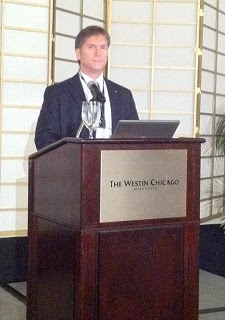
 

Influencers from Around the World – The Unavoidable Influence of Death

This month’s Influencers from Around the World article is from Yago de Marta. If you’ve been a reader of Influence PEOPLE for any length of time then you’ve no doubt read some articles by Yago. I think you’ll find his perspective on influence and death intriguing. I encourage you to check out his website and reach out to him on Facebook, Twitter and LinkedIn.

Brian, CMCT
influencepeople
Helping You Learn to Hear “Yes”.

The Unavoidable Influence of Death

Some months ago a very popular person from my hometown died. His name was Jose Antonio Labordeta. The purpose of this article is not to remember his life because media all around the world, especially in Spain, have already done that. The article that appeared in The Guardian (UK) made me ponder the following questions about death’s influence on the living:
What involves death that makes it so influential? Why does death go beyond our daily affairs and routines? What is the mechanism of death’s influence?In Labordeta’s case there is an element which allows us to follow his influence. In 1975 he composed “Song to Liberty” (Canto a la Libertad). At that moment and many times since there were people who proposed this song as the regional anthem of this area, Aragón. And from that time forward the song was sung in different historical events.
However, on September 19 Labordeta died and from that moment on everything changed. Google tells us about the great number of people who attended his funeral. Maybe some of them had never heard of his songs but the crowd of people shows us the way individuals and associations mobilized to make “Canto a la Libertad” the anthem of Aragón.At this moment the song hasn’t officially become the anthem so it’s difficult to give a final valuation on the way Labordeta’s death will influence his works. Nonetheless, we do observe most of Robert Cialdini’s principles of influence in death and that’s what this article is really about.
Reciprocation: Yes, it’s true that the dead cannot give us anything to invoke reciprocity but in some way, if we show ourselves to be understanding and kind with the dead, we hope others will show empathy with us when we die. One of the most common activities of the human mind is to wonder, “Who will come to my funeral?” Taking this idea, if we are kind with the dearly departed then we think people will be kind with us when we pass on.Commitment and Consistency: From childhood on, we are told to be respectful of the dead. This has happened since the origins of humankind. This expectation causes a kind of fixed attitude toward death in our minds throughout life. Even when we are older, if somebody dies we show ourselves to be sad and sorrowful. We are that way partly because we are expected to act like that.Social Proof (Consensus): This is very remarkable in the case of film or pop stars. Regardless of whether you liked or disliked Michael Jackson’s music, or regardless of the fact that some months before he died many people thought he was a pedophile, when he died almost everyone felt something different; they felt a little sad and depressed. And most people around the world felt similarly. Knowing and seeing how others felt was like a multiplier effect.Liking: We are going to die, every single one of us. Such is life. This obvious idea is what makes us identify with a person who dies. We don’t always identify in the same way, but every time somebody dies around us we get this feeling. Further, the mirror neurons come into effect, when we identify with the person who has just died. We tend to be more empathetic, softer and kinder.Authority: Myths are built in death. It happens this way with famous painters, writers and even politicians. Death tends to make the principle of authority grow. When somebody dies, his or her personality reaches highest levels because we are more respectful with the dead. It could also be because of traditions or culture, but respect is a form of authority.Scarcity: There’s nothing in our whole life that creates more scarcity than death. When we die everything we could have said, made, painted or sung seems to be not enough. Life is short and limited. Before dying we can keep on painting, singing or doing whatever we please but from the moment of death it is no longer possible. And so there you have from my perspective, how we are all influenced by death. Death’s influence, like death itself, is unavoidable. Yago


Does Celebrity Advertising Really Work?

A few weeks ago a friend, Paul Hebert, tweeted me to get my opinion on what Robert Cialdini might say about an article from The Consumerist titled “Study: Putting Celebrities in TV Ads only Makes them Worse.” Some of the ads featuring celebrities that scored worst included:

  • Tiger Woods “Did You Learn Anything” (Nike)
  • Lance Armstrong’s “No Emoticons” (Radio Shack)
  • Kenny Mayne’s “Good Segment” (Gillette)
  • Dale Earnhardt Jr.’s “Coverage at the Right Price” (Nationwide)
  • Donald Trump’s “Making Timmy a Mogul” (Macy’s)

The end of the article stated, “The bottom line is that good ads stand on their own, and this study empirically shows that a celebrity has little to no impact on an ad’s effectiveness. In fact, regardless of gender or age, ads without celebrities out-performed ads with them.” Why does Madison Avenue typically use famous people when advertising? Generally, because it works. And let’s not forget that ads are ultimately rated on one thing – sales. Now that’s not to say that some ads don’t fail because there are always winners and losers, but I think it would be a mistake to conclude from the report, at least based on these ads, that celebrity endorsements don’t impact our buying decisions. As I looked at the list a few thoughts hit me. First, Tiger Woods has virtually no appeal at the present time, so I discount that ad entirely. Prior to his fall from grace, I’m sure many of the ads featuring Tiger were very successful because people either wanted to be like Tiger or at least play golf like Tiger. What stood out about the other ads was what I’ll call a lack of connection. What I mean is, I’m not going to see myself as Dale Earnhardt Jr. because I buy Nationwide’s auto insurance. Nor am I going to feel like Lance Armstrong if I shop at Radio Shack. I think the appeal of celebrity advertising comes primarily in a couple of ways:

  1. Association through the liking principle. Again, I won’t feel like Dale Earnhardt Jr. because I buy the same auto insurance, he does but I might feel a connection with him if I wear the same ball cap, use the auto parts he does, or put on the Wrangler jeans he wears. If I see him as cool, then I might just feel a little cooler myself wearing what he wears or using some of the products he uses. The same can be said of Lance Armstrong. I’m not going to feel like Lance because I got my batteries or iPod from Radio Shack, but I might associate with him if I drink the same energy drink during a hard workout or follow his training routine and diet (at least a little).
  2. Authority comes into play big time when persuading. Going back to Lance, he’s an expert when it comes to fitness, endurance and more specifically biking. If he endorses products in those areas, then I assume he uses them and because of that I assume they’re probably really good. After all, he’s the greatest biker of all time so there’s very few others whose word carries as much weight as his. End result, I buy what he uses and recommends. But again, I don’t see him as having expertise in electronics. And the same goes for Kenny Maynes; I don’t view him as an authority when it comes to razors.

So, my point is this; I believe celebrity advertising can be extremely effective if it’s done right. Throwing famous people in ads for no reason other than their celebrity is a recipe for failure. However, choose a celebrity for a product where people want to feel like the celebrity in some way and you might have a winner on your hands. By the same token, if the celebrity has credibility with certain products, then I think you’re on your way to a winning campaign going that route too.

Brian Ahearn, CMCT
influencePEOPLE
Helping You Hear “Yes”

“I Know, I Know” – The Illusion of Knowledge

If you have a teenager, or have raised one, then no doubt you’re familiar with the phrase, “I know!” It seems like no matter what you say the response is almost always the same, “I know!” You might say, “Clean your room,” and it’s met with, “I know!” Or how about this, “You need to study before you can go out,” and they say, “I know!” If only we were as smart as our kids because they seem to know everything. I recently read an interesting book, The Invisible Gorilla, by Christopher Chabris and Daniel Simons. In it they talked about something called “the illusion of knowledge.” This describes the tendency of people to think they know more than they really do. For example, almost everyone who drives a car would say they know how a car works, but they really don’t. It’s readily apparent when raising teenagers that we are all subject to the illusion of knowledge to one degree or another. When it comes to getting people to do what you want – and hopefully avoiding the dreaded “I know!” – I have a persuasion tip that can help. Here it is; stop making statements and start asking questions. Pretty simple and yet very effective. Questions are more effective when trying to persuade another person than making statements, because asking questions engages the principle of consistency. This principle of influence tells us people generally feel better about themselves when their words and deeds match. Psychologically it’s hard on most people when they appear inconsistent to others and as a result they feel bad. Have you ever had to back out on your word and felt bad? We all have and we sometimes feel a little bad even if our reversal is completely justified. We usually go to great lengths to avoid feeling bad so we live up to our word. When you ask someone a question and they say “yes,” social psychology studies show the likelihood that they’ll do what they said they would goes up significantly. And it’s not very hard to do. Here are some examples: Statement – I need the board report by Friday.
Question – Can you get me the board report by Friday? Statement – You need to empty the dishwasher.
Question – Will you empty the dishwasher? While it’s a simple concept it’s sometimes hard to put into practice. In fact, most of the principles of influence are easy to understand because people can easily recall a time when they unknowingly used a principle successfully or responded to someone who used a principle on them. However, knowing and doing are two different things and when I lead the Principles of Persuasion workshop, participants always struggle to actually put the principles into practice. My advice is to take some time periodically to think about how you’re communicating; analyze a conversation after the fact to see where you might have used some questions rather than making statements. Or better yet, before you hit the send button on your next email do a quick reread specifically to see where you could change statements to questions. I started this post talking about kids and the illusion of knowledge. While the point of this week’s article wasn’t the illusion of knowledge, reading about it triggered my thoughts for this post and I can highly recommend the book. One last thing to tell you, engaging consistency through questions will also make it much harder for your teenager to say “I know!” in response to your questions. If you’re like me that alone would be worth the price of admission. Brian, CMCT
influencepeople
Helping You Learn to Hear “Yes”.

Changes Coming to Influence PEOPLE

I decided to have an extra post this week to let you know about a few things to keep an eye out for on Influence PEOPLE this year. I hope you’ll find them interesting ways to continue learning about ethical influence.
First is something that’s not entirely new but will be presented in a different manner. For quite some time now I’ve been recording influence tips and blog posts on a site called CinchCast. I realize different people have different learning styles so I started these recordings for those of you who are auditory learners. What I’ll be doing differently this year is embedding the audio recording into the blog post. If you scroll down past my signature you’ll see the CinchCast recording for this post. Just click on the button and you can listen to the blog rather than read it.
In the near future I’m hoping to post some video clips from the presentation I gave at Franklin University on Influential Leadership. That will give you an opportunity to see and hear why influence is all about people as well as learn a little bit about each of the six principles of influence. On the topic of video, I’m also planning to do a video blog at least once a quarter.
Finally, I’m looking at the possibility of adding a few more guest writers from around the world so we can continue learning how influence and persuasion work in other cultures.
I hope you find these changes interesting ways to keep things fresh while you continue to learn about influence and persuasion. If you have ideas for the blog or would like to see certain topics or questions addressed feel free to leave a comment below.

Brian, CMCT
influencepeople
Helping You Learn to Hear “Yes”.

The Upside and Downside of Fixed-Action Patterns

I’ve been having a hard time with something lately — brushing my teeth. Some of you are thinking that’s gross but don’t worry, I brush several times a day and floss too. I guess my problem is really with the toothpaste container. Jane bought Colgate Total, fine toothpaste by the way, but it comes in a stand up tube. While it seems convenient to have the tube on the countertop so I can quickly grab it I don’t find myself doing that. It seems like every time I go to brush my teeth I open the left drawer at the bathroom counter. It’s a small irritation except that I make the same mistake over and over and over. Fortunately there’s a bright side — it inspired this week’s blog post.
Why do I keep making the same mistake time and time again? Simple; I have a set way of going about brushing my teeth that’s served me well for a long time and it’s a hard habit to break. You might say I have “fixed-action pattern.” A daily ritual like this makes my fixed-action pattern very apparent but lest you laugh at me beware because you have them too.In his best-selling book Influence Science and Practice, Dr. Cialdini talks about fixed-action patterns in the animal kingdom which are inborn to ensure survival. When it comes to people he wrote, “The automatic behavior patterns of humans tend to be learned rather than inborn, more flexible than the lock-step patterns of the lower animals, and responsive to a larger number of triggers.” He goes on the say, “we, too, have our preprogrammed tapes; and, although they usually work to our advantage, the trigger features that activate them can dupe us into playing the tapes at the wrong times.” In humans these patterns are developed because we eventually find what works best for us (toothpaste in the left drawer) and stick with it. It makes life easier because it simplifies decision making and saves time. They trigger an almost automatic response in many cases. For example, if you are looking to buy a new computer you might turn to someone you know (liking) because they know much more about computers (authority) than you or most salespeople do. Something like this usually works out well because it saves time, headaches and money. We’ve probably all done this at one time or another when looking for a computer, car, phone or some other relatively expensive item where you feel you lack sufficient knowledge.Of course there can be a downside too. As I wrote, the toothpaste thing is just a minor irritant but there are some people who prey on these automatic responses because they know they can get what they want before you realize what happened. One example was in the Influencers From Around the World article a few weeks ago by Marco Germani. He shared how the Italian prime minister used liking to sidestep criticism over allegations of improprieties with a 17 year-old girl. From what I gather Silvio Berusconi didn’t seem to suffer much for his actions. I’ve taken taekwondo for many years but I don’t intend to go beat up anyone. My goal was to learn how to defend myself because I know there are bad people out there who might just try to harm me or my family. Understanding the principles of influence, and your own mindless tendencies, can be your self defense against unethical people who would try to take advantage of you.As you read Influence PEOPLE, keep an eye on how you can ethically utilize the principles to create a win-win situation for you and those you deal with. At the same time keep an eye out for those who would seek to do you harm. In the end you might just help a lot of people and keep yourself safe.Brian, CMCT
influencepeople
Helping You Learn to Hear “Yes”.

People Buy Based on Emotion and Justify with Logic

In sales it’s common to hear, “People buy based on emotion then justify after the fact with logic.” If you’re in sales that’s not a newsflash but it’s worth exploring little more because the implications go beyond sales when it comes to your ability to influence people.

Feelings are incredibly powerful and no matter how much we’d like to believe we’re rational creatures who occasionally act emotionally, the truth is, we’re actually emotional beings who occasionally act rationally. Economists would have us believe that people always act in a rational manner, trying to maximize gain, but if you’ve read Dan Ariely’s work, Predictably Irrational orThe Upside of Irrationality, then you know quite often people don’t act in rational ways and don’t always maximize their gain.

Why is this so often the case? I believe it’s because of how we’re wired; how our brains work. When I say the word “elephant” if you’re like most people you have a picture of an elephant in your mind. Your picture might be an African elephant with tusks, a smaller Asian elephant without dusks, the lovable Dumbo, or perhaps an elephant toy you played with as a child. Whatever the case, you had a picture in your mind and that’s because we translate words into pictures.
Next in the process come feelings. Your elephant picture might generate certain feelings for you. Perhaps you had memories of a movie you saw and remembered seeing an elephant, maybe you thought of a trip to the zoo, or you had feelings because of the toy you played with. Those thoughts turned into a picture which led to some feelings for you.It’s those feelings that ultimately lead to action. So the process is this; words create pictures, picture lead to feelings, and feelings culminate in actions. Understanding that to be the case we’re confronted with
the reality that the words we use can make a big difference in influencing people’s behavior.
I was in Indianapolis towards the end of 2010 to conduct a sales skills workshop and we spent time on this very topic. I put up some word sets and asked people questions like the following:

Which do you prefer; buying or owning?
Which appeals to you more; spending or investing?
Would you rather buy a cheap car or an inexpensive car?

If you’re like the vast majority (more than 9 in 10) who took an online survey I conducted, or those who participated in my workshop discussion, then you prefer owning things, investing your money and you’ll buy the inexpensive car, not the cheap one. Why were the results so lopsided? Simple, the preferred words translate into more positive feelings despite the fact that in each case both words might be used to mean the same thing.People typically say they prefer to own something rather than to buy it because that word makes them think about the pleasure of possessing and using something as opposed to pulling out their wallet to pay. Don’t you think the smart salesperson will talk about the benefits of owning their product or service instead of buying the product or service? Sure they will!When it comes to investing rather than spending it’s because people see that as a way to grow their money whereas spending feels like sending you money away forever. When it comes to budgeting you might have a better chance of getting some things approved by talking about “investing in” as opposed to “spending on” because investing will make your budget committee a little more focused in their potential return.Lastly, cheap conjures up thoughts of poor quality but inexpensive simply means something doesn’t cost much. So the unsuspecting person trying to sell their car only hurts their chances to make the sale because they advertised the price using the word cheap.Again, words lead to pictures
which generate feelings that prompt behavior. With that understanding you need to pause, consider your audience and consider your message. What will they think and feel because of the words you use? I’m not going to tell you everyone will react as you want because you use a few different words here and there but sometimes all it takes is moving a few more people to ultimately make a big difference. A few extra sales could make the difference in being #1 instead of #2, or winning an incentive contest. Or perhaps one more person on the budget committee will see the value in your suggestion resulting in you getting the green light. You can bank on this; making some strategic changes won’t hurt your chances to persuade but they might increase them significantly.Brian, CMCT
influencepeople
Helping You Learn to Hear “Yes”.

Influencers from Around the World – Berlusconi and the Principle of Liking

To start the New Year the Influencers from Around the World post is from my Italian friend Marco Germani. I had the pleasure of talking to AND seeing Marco the day after Christmas. I didn’t go to Rome, instead we used our iPhones. I also got to “meet” his wife Monika and their six month old son Martin. Technology is amazing! I’m sure you’ll enjoy Marco’s insights on how the principle of liking helped a famous politician in his native Italy. Feel free to reach out to Marco on Facebook, LinkedIn and Twitter.Berlusconi and the Principle of LikingHe did it again. I am talking about one of the most famous prime ministers of the world, often for all the wrong reasons, my fellow-countryman Silvio Berlusconi. I guess his fame crossed the ocean and even in the U.S., people are aware of his tendency to have affairs with teenage girls and being caught. This already cost him his marriage and a number of scandals in the press. I guess President Clinton in comparison was a saint, or at least a bit smarter in not being caught so often. A few weeks ago, a 17-year old girl called Rudy, confessed to the press she has been invited several times in the previous months to attend parties with Silvio and friends and she gave to the press sordid details of what was going on in the Presidential Palace during those nights. Hot stuff, I tell you! Let’s see how Silvio took advantage of the principle of liking to turn the public opinion in his favour, even in a very compromising and critical situation.
When informed of what the girl just said, he didn’t try to deny it. He didn’t get upset or promise legal battles to his political enemies, who this time also were paying a girl to speak false against him and destroy his political figure. He stated instead: “I love life, I love women, I am like this, this is my nature.” Surprisingly, a majority of the public in Italy took Silvio’s side and, most surprisingly still, many Italian women started to defend him! What happened? Two different effects:
1) By not trying to lie or deceive Italian people, Silvio appeared as an honest, sincere person, who was not afraid to display his weaknesses and, by the way, is loving life and loving women really a weakness? 2) Many men, who also cheat on their wives or have affairs, saw their behaviour legitimized by an authority figure; i.e., the prime minister. If the highest official of the Italian government can do it, why can’t I? Maybe I am not so evil, this is ordinary behaviour, and everybody does it in the end. Women also, are often very intrigued by a man who can’t control his passions and must feed them continuously, even putting his political power in danger because of them. Power attracts women and a person with power who passionately loves women is a strong attraction for many of them. One famous Italian actress, Lory del Santo (the former wife of Eric Clapton, by the way), publicly proposed to Silvio as a lover, after his statements, writing a poem to him and telling him she could bring him to unattained before heights of pleasure. By using the principle of liking, Silvio saved face again and avoided the risk of being swept away by the scandal. Probably he did it on purpose, maybe not. What counts is that it worked!MarcoSome people have emailed me about the ethics on this article. Here’s what Marco shared with me: First of I all, it is my duty as an Italian citizen to specify that, culturally, in Italy it is NOT OK for the nation’s leaders to have this kind of behavior. Let us not forget we have the Pope and Rome has been the hearth of Catholic Church in the world for centuries now, which should give some hints about the morals standards over here…. On the other hand, I personally see the study of the principles of persuasion as a science, whose objective is to understand them and, at the same time, being able to use them and defend ourselves from them when used in an unethical way (like in this case). Knowing that Berlusconi is using the principle of liking, gives us the option to understand what he’s doing and seeing it for what it really is, beside the natural feeling of liking we can feel toward him, given by the power of this principle. In my article, I never say what he did was right or wrong, I am only observing it as a scientist, and then everybody can draw their own conclusions.Brian, CMCT
influencepeople
Helping You Learn to Hear “Yes”.