Acknowledging People Who Need Acknowledging

All too often when a book is written and people are acknowledged for their roles, readers skip by. I know I have and I bet you have too. I don’t want that to be the case with my new book, Persuasive Selling for Relationship Driven Insurance Agents.

In this week’s post I want to share who I acknowledged in the book so they get their 15 minutes of fame and know how much I appreciate them. Not only that, if you’re considering writing a book you might just want to reach out to some of these people for help. They’re fabulous!

Jane and Abigail are my wife and daughter. Part of my personal mission statement reads, “I want to earn my family’s respect and be the kind of husband and father they can be proud of.” I hope writing this book adds to that. 

Anthony Iannarino for writing the foreword. He is a sales guru and I’m glad to call him friend.

John Petrucci was a coworker and boss for many decades. I cannot overstate how much I learned from John when it came to sales, leadership, and integrity. I was thankful to call him boss and more thankful to call him friend.

Nancy Edwards introduced me to Robert Cialdini’s work. She had no idea how sharing a video would change the course of my career and life. I’m thankful she remains a friend, coach, and editor of this book.

Robert Cialdini is both friend and mentor. You’ve seen his name throughout the book. Coming in contact with his work then him as a person changed my career and life. I’m grateful to him for all that he’s done.

The INFLUENCE AT WORK team of Bobette Gordon, Cara Tracy, and Eily VanderMeer have been incredible resources and friends over the years.

Clyde Fitch was an executive vice president at State Auto Insurance until his retirement. He was a consummate salesman who reminded us, “It’s all showbiz,” and encouraged us to “Go forth and do God’s work.” His “Clyde-isms” still resonate with me and that’s why a few made their way into this book.

Loring “Pud” Mellein encouraged me to get back into the field to interact with agents on their turf so I could better understand them and the challenges they faced. Pud also reviewed this book and gave me feedback based on his 40 years of insurance industry experience.

Jeffrey Pollock is a business coach who helped me think through aspects of this book when I felt stuck. Specifically, he helped me realize I could turn the book into a workbook of sorts for my Persuasive Selling Workshop.

Barbara Grassey is my book coach. She helped my first book reach Amazon best-seller status and become a top 100 influence book. I turned to her again for help marketing this book.

Michael Franzese created the cover for my first book. It received so many compliments that I had to ask him to come up with the cover for book #2. You can find him at Franzeseink.

Katlynn Henry worked for me when I ran The State Auto University. Because of her creativity and dedication to her craft during those years I asked her to create the online resources for this book.  

Dave Saliaris, Nick Glimsdahl, and Alan Demers are in a mastermind group with me. They continually checked in on the progress of the book and encouraged me to keep at it which was tougher than I thought it would be during the Covid pandemic. 

A special thanks to the following people who took time to read the book, give me testimonials and much needed feedback: Al Jannett, Rick Miley, Mark Blackburn, Dean Hildebrandt, Jason Cutter, Steve Berry, Tony Burkhart, Tyler Simmons, David Baily, Kurt Hetherington, Tory Pachis, and Meg McKeen.

Ann Strausburg is my mother. When I wrote my first book she always kept a copy with her. When people would ask what she was reading she would brag about her son. Now she has a second book to keep with her at all times.

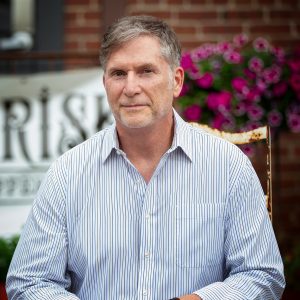
Brian Ahearn is my father. As a youngster he set an expectation that I would always put forth my best effort and never quit. That came in handy when I hit sticking points with this book. He passed away months before I finished the book but I’m sure he would have enjoyed it and been proud.

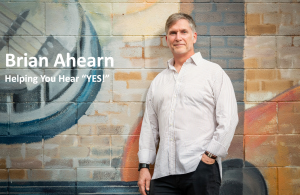
Brian Ahearn, CMCT®, is the Chief Influence Officer at Influence PEOPLE, LLC. An author, TEDx speaker, international trainer, coach and consultant, he’s one of only 20 people in the world personally trained by Robert Cialdini, Ph.D., the most cited living social psychologist on the science of ethical influence.

Brian’s book, Influence PEOPLE: Powerful Everyday Opportunities to Persuade that are Lasting and Ethical, was named one of the 100 Best Influence Books of All Time by BookAuthority. His LinkedIn Learning courses on sales and coaching have been viewed by more than 100,000 people around the world. His newest book, Persuasive Selling for Relationship Driven Insurance Agents, reached Amazon bestseller status in several insurance categories.

Persuasive Selling is Available!

No doubt you’ve seen mention of my newest book, Persuasive Selling for Relationship Driven Insurance Agents. I’m excited to let you know it’s available on Amazon in paperback and Kindle!

I also have a bonus for anyone ordering the book before February 5 … free access to my LinkedIn Learning course on persuading different personality types, a $34.99 value! Once you order the book just email purchase verification to BookLaunch@influencepeople.biz.

The book is for more than just insurance agents. Anyone, agency or company, in the insurance industry will benefit from the tips I share. Why? Because we all have to sell ourselves and our ideas. Even if you’re not in insurance you’ll benefit from understanding how to ethically persuade at every step in the sales process and how to DEAL with different personalities.

Whether or not you buy a copy for yourself, I’d like to ask a favor. You could help me promote the book by doing one or more of the following:

  • Buy a gift copy for someone you know.
  • Mention the book on your social media sites.
  • Forward this blog post to anyone you know in the insurance industry…especially your insurance agent. 😊

My first book, Influence PEOPLE, was named one of the Top 100 Influence Books of All Time and was an Amazon bestseller. Neither would have happened without support from readers like you. I’m hoping for even bigger things with Persuasive Selling so anything you do to spread the word would mean a lot.

Thank you!

Brian 


Persuasive Selling – My Story

The following is the opening to my new book, Persuasive Selling for Relationship Driven Insurance Agents. It’s my story about getting into insurance immediately after college. I hope you enjoy and consider getting a copy of Persuasive Selling for yourself and/or someone you know.

My Story

I’ve never met someone who said, “When I was a kid all I ever wanted was to be in the insurance industry.” Not one, including me. So how did a kid who grew up dreaming of playing pro football or becoming the next Arnold Schwarzenegger end up spending more than 30 years in the insurance industry?

As I was finishing my college degree, Travelers Insurance offered a job in my hometown, Columbus, Ohio. I knew nothing about insurance but liked what I heard during my interviews. The late Dean Williams, a Regional Vice President at the company, was so passionate about insurance that he reminded me of my high school football coach. I wanted to work for someone like that! Although I still knew next to nothing about insurance, the more I thought about staying near family, friends, and the girl I was dating, the more appealing the opportunity became.

I was hired as an underwriter, a role well-suited for my analytical mind. Travelers paid me to make its risk selection decisions for homes, autos, jewelry, and other personal items. Within a few years I’d moved to the commercial side of the house, making underwriting (risk selection decisions) for businesses of all types and sizes. After four years with The Travelers I jumped ship and landed with State Auto Insurance where I continued on the commercial underwriting side for a few more years.

My career progressed to the sales department. This was quite ironic because truthfully, I thought sales was a bunch of crap! I’d been beaten down for years by insurance agents over price and had come to believe all that mattered was price.

Fortunately, I met John Petrucci, who was the VP of Sales. John eventually ascended to an Executive VP role at State Auto Insurance. My learning went into overdrive. I learned more about sales in one year from John than I had in my first 10 years in the business. I started to realize what you say, and how you say it, could make a big difference when it came to winning a sale.

During my first decade in the industry I came to know insurance was a noble profession. I use the word “noble” because we do two very important things: we help people and we help the economy. When it comes to people, we help individuals, families, and businesses get back on their feet after something bad has happened. Helping people in that way is a very good thing, something to be proud of.

How does insurance help the economy? The guarantee insurance companies make on behalf of insured clients gives lenders comfort to loan people big chunks of money to open businesses, purchase new homes, and buy cars, to name a few. Because of those guarantees, a ripple effect moves throughout local communities: more businesses are opened, homes are built, people are employed, building materials are sold, etc. Indeed, insurance is a noble industry and has become a vital part of our country’s economic prosperity.

Then something life-changing happened in 2003…

Brian Ahearn, CMCT®, is the Chief Influence Officer at Influence PEOPLE, LLC. An author, TEDx speaker, international trainer, coach and consultant, he’s one of only 20 people in the world personally trained by Robert Cialdini, Ph.D., the most cited living social psychologist on the science of ethical influence.

Brian’s book, Influence PEOPLE: Powerful Everyday Opportunities to Persuade that are Lasting and Ethical, was named one of the 100 Best Influence Books of All Time by BookAuthority. His LinkedIn Learning courses on sales and coaching have been viewed by more than 100,000 people around the world.

How The Hell Did We Get Here?

Wednesday, January 6th, is a day we won’t soon forget. As much as we’d like to forget, it will be etched into American history as one of our darkest moments. I woke up from a short nap that afternoon, checked my phone and couldn’t believe what I saw – Americans storming our nation’s Capital Building! Like so many others, I turned on the television and was riveted in a way that I’d not been since 911. All I could think was how sad I felt and how embarrassed I was for our country. 

Like many of you I wonder; how the hell did we get here? Below is my take based on the psychology I understand and my world view. There’s no way to explain everything in a short blog post but I hope you’ll read through to the end so you can give thought to how you can help start the healing.

Rationalization Machines: We All Think We’re Right

I think it’s fair to say based on much of the research from social psychology and behavioral economics, we are not rational beings. We’re rationalization machines who act and then justify our actions. 

I’ve no doubt those who entered the Capital Building rationalized their actions as patriotic. Many will equate their cause with those who led the Boston Tea Party. Of course, that’s a matter of viewpoint. Many more Americans looked at their behavior labeling them terrorists and insurrectionists. 

Prior to the protests this summer, I think it’s fair to say the vast majority of Americans looked at Martin Luther King with pride believing his cause was righteous. However, many of those same individuals, when confronted with people trying to further social justice today, vehemently object. They will rationalize why now is different than it was in MLK’s day. It’s one thing to look back on history but entirely different to live through it. 

Just know this; whomever you’re dealing with directly, or watching from a distance, they will rationalize their behavior. It may not make sense to you but it makes complete sense to them. 

Mob Mentality: Social Proof Gone Astray

Social proof is the human tendency to look to others to see how to behave in certain situations. Understanding this natural human response, are we surprised that large scale protests are now breaking out from Trump supporters?

Beginning with the death of George Floyd, we’ve seen more and larger protests than ever across the nation. Estimates are, anywhere from 16-25 million people have taken to the streets. While the cause for racial equality is righteous, and most protestors were peaceful, we cannot deny what we saw when it came to looting and destruction in many cities. Unfortunately, peaceful protestors were painted with the same broad brush as those who broke the law. Now, many peaceful Trump supporters will be painted with the same brush.

The events happening across the country since May have sent clear signals when it comes to social proof:

  • When protests are big enough, even a show of force cannot quell them. 
  • Protestors can occupy some areas – CHAZ in Portland for example – with little or no consequence.
  • Attacks and destruction on certain places and structures don’t matter much because they’re just buildings and statues.

If you don’t think this is a real phenomenon I urge you to read Influence Science and Practice. In the chapter on social proof Robert Cialdini details how high profile suicides and school shootings lead to more suicides and shootings. Unfortunately, I think a similar pattern has emerged with protests turning violent. 

Perhaps now you understand how one side views the other and thinks, “If they can do it so can we.” We seem to have lost our way when it comes to operating within the confines of a peaceful democracy. 

Blatant Hypocrisy: You Can’t Have It Both Ways

Consistency is a rule of human behavior where people feel internal and external pressure to live up to their word. Not doing so is considered hypocritical and hypocrites lose their persuasive appeal. 

Laws, curfews, and other societal rules are meaningless when enough people decide they won’t comply or believe they are exempt for certain reasons. 

  • Witness mass protests at the same time we’re told not to get together with loved ones or attend religious services. Either gatherings are dangerous or they’re not but it cannot be that some are condoned while others are not. This falls squarely on the shoulders of our leaders.
  • Speaking of leaders, too many have told us one thing but done another. Examples include California Governor Gavin Newsome going out to dinner when no one else could, Speaker of the House Nancy Pelosi and Chicago Mayor Lori Lightfoot went to salons when no one else was allowed, and Donald Trump claiming he’s the law and order president but does nothing to reign in his most zealous followers. This list could go on and on with people from all sides. 

What leaders say and do matters! If they set the right example perhaps more people would follow their lead.  

Tit For Tat: The Ugly Side Of Reciprocity

Reciprocity, that natural feeling you have to give back to someone in the same manner as you received, is usually positive. Someone smiles at you or compliments you and it’s likely you smile in return or pay back the compliment. 

However, the ugly side of reciprocity happens when someone says or does something you don’t like. You return the insult or bad behavior almost reflexively without thinking. As I wrote about last fall, it’s a sick cycle and as a nation we’re in the middle of it. 

  • Chants of “Not my president” from disappointed democrats in 2016 will likely be met with similar sentiments from many disappointed republican voters when Joe Biden is sworn in on January 20th.
  • Trump supporters treated those who disagreed with them horribly, including verbal and physical assault at some rallies. Should we have been surprised then when people wearing MAGA gear were assaulted by those on the left?
  • Republicans held the presidency, Senate and House in 2016 and told those on the left, “Elections have consequences.” The tables have turned and this election will have consequences. 

It’s undeniable what goes around comes around. While it may feel good for the side that’s winning, it serves to slow or stop the healing and unification we so desperately need right now.

What Can You Do?

You may think you’re not part of the problem but that’s irrelevant at this point. The big question is: Will you be part of the solution? I certainly don’t have all the answers but I believe this; it’s going to start with dialogue. 

Dialogue is how relationships are formed and others are mended. Dialogue helps bring an end to conflict and sometimes it is how conflict is avoided altogether. I regularly talk with friends who are black so I can understand their perspectives and struggles. Trust me, if you’ve not had an in depth conversation with someone who is different from you, be it race, religion, sexual orientation, or politics, then you cannot truly understand them and their struggles. 

I also communicate with people on both sides of the aisle, republican and democrat, who hold different views than I do. In no case am I trying to convince them of anything. My goal, as Steven Covey said, is to “seek first to understand, then be understood.” 

I encourage you to start a dialogue. Do so with someone you know and trust. It should be someone who will not judge you when you ask sincere questions and who will allow you the freedom to share your views.  

Brian Ahearn, CMCT®, is the Chief Influence Officer at Influence PEOPLE, LLC. An author, TEDx speaker, international trainer, coach and consultant, he’s one of only 20 people in the world personally trained by Robert Cialdini, Ph.D., the most cited living social psychologist on the science of ethical influence.

Brian’s book, Influence PEOPLE: Powerful Everyday Opportunities to Persuade that are Lasting and Ethical, was named one of the 100 Best Influence Books of All Time by BookAuthority. His LinkedIn Learning courses on sales and coaching have been viewed by more than 100,000 people around the world.

Quarterly Newsletter

2020 is hindsight and I think we’re all happy it’s in the rearview mirror! Given the pandemic the first three months of the New Year will be very hard but with the advent of vaccines and prospect of warmer weather ahead I think there’s reason for hope.

Despite Covid, I hope there were bright spots in 2020 for you. While we wish it hadn’t happened, all we can do is choose how we will respond. On the business front, not knowing with the future holds in terms of travel and in person workshops and keynotes, I’ve converted a spare bedroom in our home into a studio to film courses and do live training events. You’ll see more about that in the weeks and months ahead. What are you doing differently in 2021 given the world you find yourselve in?

Sincerely,
Brian

What’s Influence PEOPLE all about?

  • Why – Help you enjoy more professional success and personal happiness.
  • How – Teach you the science of ethical influence.
  • What – Speak, write, train, coach, and consult.
  • Who – Clients are primarily leaders, salespeople, business coaches, insurance professionals, and attorneys.

Starting a business then facing a pandemic in year #2 isn’t something I anticipated but with a pivot to virtual I was very fortunate. Despite the pandemic my second year was a good bit better than my first year so I’m very thankful for that. One last time I’d like emphasize this truth; we can’t change the circumstances we find ourselves in but we can choose how we respond. I hope you find ways to make 2021 better than you might have imagined and maybe, just maybe it will be your best year so far.

Here’s What’s New

Blog Posts

With the conclusion of 2020 I completed my 12th year blogging. April 17, 2021 will be the actual 12 year anniversary. For the past dozen years there have been weekly blog posts from me or guest writers. That’s a lot of writing! I hope what you’re reading each week is helping you. All of the blog posts are chronologically listed and tagged on my website. To search for any old posts click here.

Podcasts

I continue to be a guest on lots of podcasts. Another dozen or so shows were posted during the fourth quarter. Each show is hashtaged with #Influence, #Sales, #HR, #Marketing, etc., to help you locate shows that are most relevant for you. Click here to start listening.

Writing

My second book, Persuasive Selling for Relationship Driven Insurance Agents, is in the final stages of formatting. I’m shooting for January 12th as the pre-order date with the book being available on January 27th. Fingers crossed! The book also serves as the basis of a one day workshop for insurance companies and insurance agents. If your organization is interested in learning more about the workshop reach out to me.

Another way I used my 2020 pandemic lockdown time was to keep writing. I’m excited to share that I’m nearly halfway through book #3. The Influencer: Secrets to Success and Happiness follows the life of John Andrews as he learns about what it takes to enjoy professional success and personal happiness through relationships. The book is a completely new writing style for me because it’s a story format. I’ve never had so much fun writing! I know I’m on to something good because, after listening to part of the book my wife Jane said with surprise, “I can’t be you wrote that!”

Best of…

Each quarter I share interesting content with readers. With an uncertain future socially and economically, sharpening your skills is the best way to invest in yourself. My old high school football coach drilled into us, “Luck is where preparation meets opportunity.” Continually working on your skills is the best way to prepare for opportunities that might come your way. Below are great books to read, podcasts to listen to, and shows to watch.

Books

When: The Scientific Secrets of Perfect Timing by Daniel Pink. I’m a big fan of all of Pink’s books and read this book right away when it came out in 2018. Pink explores how understanding timing can help you in a variety of ways. In the opening writes, “This is a book about timing. We all know that timing is everything. Trouble is, we don’t know much about timing itself. Our lives present a never-ending stream of ‘when’ decisions—when to change careers, deliver bad news, schedule a class, end a marriage, go for a run, or get serious about a project or a person. But most of these decisions emanate from a steamy bog of intuition and guesswork. Timing, we believe, is an art. I will show that timing is really a science.” When is an excellent book but don’t just take my word for it. With more than 1200 Amazon reviews and a 4.5 star rating lots of other people feel the same way about the book as I do.

Online Influence: Boost Your Results with Proven Behavioral Science by Bas Wouters and Joris Groen. Full disclosure, Bas Wouters is a friend. However, my recommendation for the book comes because of his expertise in the science of influence. Like me, Bas is one of only a few dozen Cialdini trainers in the world. He teams up with Joris, a psychologist who specializes in translating human sciences into practical design guidelines for the online world. That’s a powerful combination! If you’re looking to improve your online presence and getting more yeses then this is the book for you. Many times I found myself setting the book down so I could tweak my website with ideas I was getting.

Podcasts

Leadership Lab Podcast is the brainchild of Patrick Leddin, Ph.D. Dr. Leddin is a former Army Ranger, author and professor at Vanderbilt. What I love about his approach is that he combines real world experience with research. But the show isn’t just his view on leadership. He has a variety of interesting guests on the show to explore very specific aspects of leadership.

Insurance Business Talk Podcast is hosted by Paul Lucas. If you’re in the insurance industry this is a show you want to sign up for because all of the interesting guests and ideas have direct application to your daily activities. Paul lives in London so guests and ideas come from all around the world.

Watch

Justice: What’s the Right Thing to Do? is a 24-part PBS series hosted by Harvard professor Michael Sandel. Each 30-minute episode shows Sandel lecturing and interacting with his students. It will challenge your thinking! While it’s not all about racial justice, the topics explored will force you to look at and think differently about a variety of topics. I first watched this series many years ago over Christmas break and it remains one of my most enjoyable learning experiences ever.

Brian Ahearn, CMCT®, is the Chief Influence Officer at Influence PEOPLE, LLC. An author, TEDx speaker, international trainer, coach and consultant, he’s one of only 20 people in the world personally trained by Robert Cialdini, Ph.D., the most cited living social psychologist on the science of ethical influence.

Brian’s LinkedIn Learning courses on sales and coaching have been viewed by more than 100,000 people around the world. His blog, Influence PEOPLE, is read by people in 200 countries across the globe.

PAVE the Way for New Year’s Resolutions

The following is a chapter from Influence PEOPLE: Powerful Everyday Opportunities to Persuade that are Lasting and Ethical. This chapter is particularly appropriate just before New Year’s Eve. I hope it helps you get 2021 off to a great start.

PAVE the Way for New Year’s Resolutions

If you’re like many people, then you make New Year’s resolutions; and, if you’re like most people, you break your resolutions within a week or two. According to one study, more than half the people who make resolutions are confident of achieving them, yet only about 10% do so.

That’s unfortunate because most resolutions are good! Here are some of the most popular New Year’s resolutions:

  • Prioritize family
  • Lose weight
  • Begin exercising
  • Quit smoking
  • Reduce debt
  • Get organized
  • Stop drinking

The list is admirable so why are these goals so difficult to achieve for nine out of 10 people? There are as many reasons as there are resolu- tions and dwelling on those reasons would not be as beneficial as giv- ing you scientifically proven ideas that can help make next New Year’s different. I’ll share an influence technique that can help you PAVE the way to success in the New Year.

In the study of persuasion there’s a powerful motivator of behavior known as the principle of consistency. This proven rule tells us people feel internal and external psychological pressure to act in ways that are consistent with their prior actions, words, deeds, beliefs and val- ues. When we act in consistent ways we feel better about ourselves and other people perceive us in a more favorable light. Mahatma Gandhi put it this way, “Happiness is when what you think, what you say and what you do are in harmony.”

There are four simple things you can do with consistency to help you keep your resolutions. These easy to implement ideas will help you PAVE the way to success because they’ll dramatically increase the odds that you’ll follow through on your New Year’s resolutions – or any other personal changes you want to make.

Public – Whenever you make a public statement, whether verbally or in writing, you put yourself and your reputation on the line. The mere fact that another person knows your intentions and might ask you how you’re doing, often motivates you to follow through.

This came to light in a study with a group of students who wanted to improve their college grades. One group was asked to share their goal with some people. One group kept their goals in their heads and a third group made no specific goal whatsoever. As you might guess, the group with the publicly stated goals succeeded, with nearly 90% of students increasing their grades by a full letter grade! With the other two groups the results were identical and poor. In each group fewer than one in six students improved by a full letter grade. It’s worth noting, they were all given the same study materials so they all had the same opportunity to better their GPA.

Recommendation #1 – Publicize! Share your New Year’s reso- lution with another person, or group of people, and ask them to hold you accountable.

Active – You have to actively do something. Merely thinking about a resolution, just keeping it to yourself as some sort of secret, will lead to the same results as people who don’t make any resolutions. In other words, nothing will change. However, when you do a few things, you build momentum towards your goal. Each active step gets you closer to success.

Recommendation #2 – Make sure you have to take some active steps. It could be as simple as buying a book about the changes you hope to make or writing your goals down and posting on your mirror.

Voluntary – This has to be your goal, not someone else’s goal for you. If you’re trying to do something – quit smoking, lose weight, get in shape – it’s not likely your motivation will last if someone basically forced you to do it. The goal has to come from you because if it’s imposed it’s not likely your willpower will last long. Samuel Butler said it best when he wrote, “He who complies against his will is of the same opinion still.”

Recommendation #3 – Make sure it’s something you really want to do – of your own free choice.

Effort – It was already noted that you have to actively do something. In other words, making the commitment should require some effort on your part and the more effort you expend setting up your goal, the more likely you are to succeed. Something as simple as writing down your resolution in a journal can make a difference but don’t stop there. Share it with others to fulfill the public requirement, which gives you more bang for the buck!

Recommendation #4 – A little more effort, like committing pen to paper in a daily journal, will increase your chances for success significantly.

How can you Influence PEOPLE? Sometimes the person you need to influence is yourself! Try to PAVE the way to your success and enjoy the results. If you’ve failed at your resolutions, or other types of personal change, then why not give the PAVE approach a try?

  1. Public – Share your resolutions with others.
  2. Active – Take some active steps.
  3. Voluntary – Make it your goal and own it.
  4. Effort – Remember, more effort equals more commitment.

Brian Ahearn, CMCT®, is the Chief Influence Officer at Influence PEOPLE, LLC. An author, TEDx speaker, international trainer, coach and consultant, he’s one of only 20 people in the world personally trained by Robert Cialdini, Ph.D., the most cited living social psychologist on the science of ethical influence.

Brian’s LinkedIn Learning courses on sales and coaching have been viewed by more than 100,000 people around the world. His blog, Influence PEOPLE, is read by people in 200 countries across the globe.

6 Reasons Santa is the Greatest Salesman Who Ever Lived

Each year around Christmas I share a variation of this post. Enjoy and Merry Christmas!

Santa Claus is the greatest salesman who ever lived!

Why do I believe Santa is the ultimate salesman? To start, he has a couple of success stories most of us can’t compete with. First, he’s successfully run the same family business for hundreds of years. There’s something to be said for stability, especially over the long haul.

Second, Santa has a client base that expands every year — no matter the state of the global economy.

Can your business make those claims?

But those aren’t the reasons I believe Santa is the greatest salesman who ever lived. Contrary to what you might think, his success doesn’t come from his business savvy. After all, consider the obstacles he has to deal with.

  • Business attire: Santa obviously doesn’t buy into the “dress for success” philosophy. Power suits are fine but a red suit and hat, both lined with fur, is a little over the top in today’s casual business environment.
  • Delivery system: Santa’s remains way behind the times here. His “One Day Delivery” is literally that – you get your packages one day a year. He doesn’t seem to notice in today’s economy people want what they want, when they want it, and that usually means now. But the real problem behind “One Day Delivery” might just be his delivery method. I think you’d agree the U.S. Postal Service, FedEx, or UPS would be much more efficient than eight tiny reindeer pulling a small sleigh.
  • Manufacturing: Some say Santa’s operation is too labor-intensive to survive much longer. After all, he’s competing with Wal-Mart, Amazon, Apple, and other giant organizations. In today’s marketplace, how can any business can get by without automating? Perhaps if he automated a process or two he’d have enough inventory to open this store more than one day a year.
  • Efficiency: I realize Santa gives his product away for free but that doesn’t mean it costs him nothing. He has all those elves and reindeer to take care of. Food and lodging are bad enough but health care costs have to be crushing his profit margin! And, what about worker’s compensation costs? If he automated at least he’d save a little money and might be able to take Mrs. Claus on a nice vacation – somewhere warm for a change!
  • Branding: All companies change their branding to fit the times and Santa might want to consider doing the same. After all, “Ho, Ho, Ho, Merry Christmas!” has gotten a bit old and stale over the centuries.
  • Orders: I think Santa could fill orders much faster if only he’d set up a website. And how about replacing all those last minute letters with email, text, instant messaging, or a Twitter account? It has to be painfully slow for him to read all those handwritten letters.

So, all this begs the question, “Why is Santa so successful…in spite of himself?” In business if you continually land new customers and retain the old ones then you’re doing something right. Here are six reasons Santa continually attracts new customers and retains all his current ones:

  1. He loves his job! Perhaps, “Ho, Ho, Ho,” is his corporate culture and not just some slick branding slogan.
    – Could you do the same job day after day, year after year, for most of your life, and remain so upbeat and jolly?
  2. He genuinely cares for his customers. His goal is to meet everyone’s needs and all he hopes for in return is to see joy on their faces. He personifies what it means to be customer focused.
    – Do you get joy from serving your customers?
  3. He gets to the personal side of selling. Granted he’s not always accessible but he doesn’t expect clients to come to him. When he’s at his absolute busiest, with his deadline approaching and delivery date nearing, he can be seen everywhere talking with his customers. How he can be in so many places at one time I’ll never know.
    – How often do you initiate contact with your customers, even when it’s inconvenient for you?
  4. He creates an experience. A toy is just a toy, except when it’s from Santa. Because it only comes once a year and will be found under the tree on Christmas morning it creates anticipation and builds excitement! That’s so much better than getting something online or from some mail order catalog.
    – Do you create an experience for your customers?
  5. He adds value. When people hear the word “free” they often think “cheap” or wonder, “What’s the catch?” Even though Santa gives his products away we love what he gives us mostly because it comes from him. Don’t you have a few things you value above all others because of the person who gave it to you?
    – Do your customers see you adding value?
  6. He delivers on his promise. Santa does what he says and always delivers; no excuses, no extra charge, always on time!
    – Can your customer count on you to be that consistent?

So there you have it, six reasons behind the success of jolly old St. Nick. Did you notice that everything Santa does is within your power to do with your customers? That’s right, there’s no reason you can’t do the same things Santa does. And here’s some welcome news for most of you – you don’t have to wear a silly red uniform while you do those things!

I hope you enjoyed this post and that you and your loved ones have a very Merry Christmas and Happy New Year!

Brian Ahearn, CMCT®, is the Chief Influence Officer at Influence PEOPLE, LLC. An author, TEDx speaker, international trainer, coach and consultant, he’s one of only 20 people in the world personally trained by Robert Cialdini, Ph.D., the most cited living social psychologist on the science of ethical influence.

Brian’s LinkedIn Learning courses on sales and coaching have been viewed by more than 100,000 people around the world. His blog, Influence PEOPLE, is read by people in 200 countries across the globe.

5 Lessons I’ve Learned During My Entrepreneurship Journey

Just over two years ago, November 2018, I left the safety and security of my corporate role to pursue Influence PEOPLE full time. I’m amazed at how quickly those years have passed! 

I’ve reflected on the transition quite a bit lately and thought I’d share a handful of lessons I’ve learned. If you’re considering a similar move I hope sharing some of my experience helps you. 

1. Start Planning

I’d been in corporate America 30+ years, ever since graduating college. I started Influence PEOPLE in 2008 because it’s what I knew I would eventually do with my career. 

I’m thankful I planned ahead! For example; I had a website, started my first book, had been blogging for a decade, and built my social media presence all by the time I stepped out on my own. It was overwhelming enough to make that transition so I cannot imagine juggling all of that on day one. 

Takeaway. There’s a proverb that says, “Plant your fields then build your house.” That’s good advice if you want to step out on your own. Start sowing seeds into activities that will pay dividends over the long haul. For example, you can build your social media presence, begin blogging, start a podcast or look to get on podcasts, get going on your website, and many other “infrastructure” activities. The first steps are the hardest but they get easier once you get in a groove.

2. Be Courageous

I’ll be honest, it can be scary stepping out on your own. I remember laying in bed after telling the CEO that I would be leaving. That night my exact thought was, “Have I just f–ed my family?” Thoughts about the cost of healthcare and other unknowns flooded my mind as I tried to sleep. I still wake up periodically when certain thoughts hit and it’s no use trying to get back to sleep.

I think no matter how confident someone may appear, it’s natural to have doubts. I take comfort in this Bible passage, “I do believe. Help my unbelief!” No matter how much confidence, faith, or belief you may have, you can always have more. Courage isn’t the absence of fear or doubt; it’s the willingness to do what’s called for in spite of how you may feel.

Takeaway. Be truthful with yourself and others about how you’re feeling. But, don’t how you’re feeling stop you from doing what you know is right. This is especially important when it seems like no one is returning your calls, replying to your emails, or texting you back. Keep plugging away!

3. Pace Yourself

When I left State Auto Insurance some people thought I retired. That’s a laugh! Whenever someone innocently made that comment my reply was, “I didn’t retire. I work harder now, put in longer hours, and work more days than I ever did in my corporate roles.” 

When you’re on your own there’s never a shortage of things to do! For example, I’m getting ready to launch book #2, am knee deep in book #3, will be building out more online training, and I’m going to put a “studio” in my home to give better presentations, all while I continue marketing to current and prospective clients.

Takeaway. If you had the energy and ability you could work 24 x 7 x 365 when you’re on your own. But the reality is nobody can do that so you need to pace yourself and create a schedule that allows you to rest, recharge and stay connected. 

4. Be Ready to Pivot

When people ask how business is, I jokingly say, “Great considering we’re in a pandemic.” While 2020 wasn’t what I…you…anyone…expected, I’m very fortunate that year #2 was a good bit better than my first year. Not many businesses can say that right now. Even in normal times many new businesses fail after a year or two.  

Like so many businesses, I’ve had to pivot in a way I never anticipated. There were no conferences to go to and in person training all but dried up. Nobody knows when either will come back so I’ve decided to put a studio in my home so I can give the highest quality online training and virtual keynotes. Thank you David Avrin and Mark Henson for the inspiration and advice on this one.

Takeaway. Nothing stays the same and nobody knows what the future holds. Look at what other businesses are doing and ask yourself if you can take some of their ideas or activities and use them in your business.  

5. Enjoy the Ride

While insurance remains my focus, I’ve enjoyed working with clients in pharma, oil & gas, healthcare and other industries. I’ve met people from around the world, learned new things and have had fun applying what I’ve learned over the decades in new ways. What I’m most thankful for and have enjoyed most are the people I’ve met along the way.  

Takeaway. All work and no play can make for very dull days. Leaving the safety net of a business to strike out on your own means you’ll need to rely on new people to help you. That means building new relationships which can be fun and exciting. Trust me, there are lots of good people who want to help and work with you. 

Conclusion

I’ll end by sharing a couple of resources I found very helpful as I got ready to make my move. Dorie Clark’s books Entrepreneurial You and Reinventing You will help you think through many aspects of branding yourself and stepping out on your own. 

Brian Ahearn, CMCT®, is the Chief Influence Officer at Influence PEOPLE, LLC. An author, TEDx speaker, international trainer, coach and consultant, he’s one of only 20 people in the world personally trained by Robert Cialdini, Ph.D., the most cited living social psychologist on the science of ethical influence.

Brian’s book, Influence PEOPLE: Powerful Everyday Opportunities to Persuade that are Lasting and Ethical, was named one of the 100 Best Influence Books of All Time by BookAuthority. His LinkedIn Learning courses on sales and coaching have been viewed by more than 100,000 people around the world.

Keep an eye out for Persuasive Selling for Relationship Driven Insurance Agents in January 2021.


Persuasive Selling – What is Pre-suasion?

January 27th is the targeted release date for Persuasive Selling for Relationship Driven Insurance AgentsSelling isn’t confined to those with “sales” in their title. Company underwriters must sell their decisions so these concepts are for them! Claims adjusters know settling a claim is definitely a persuasive conversation, so these ideas will help them settle claims fast, fair and friendly. 

In short, if you’re an insurance professional you will benefit from understanding how to apply influence throughout all phases of the sales cycle. If you’re not in the insurance industry, I’ve no doubt you’ll still benefit from understanding the intersection of influence and selling – especially for people in the financial services industry. To whet your appetite, below is another short excerpt from the book.

What is Pre-suasion? 

Imagine there are three buckets in front of you: a red bucket with scalding hot water, a blue bucket with icy cold water and a green bucket with room temperature water. If you put your right hand in the red bucket with the hot water then immediately put that hand into the green bucket with room temperature water, your hand will suddenly feel cold. But, if you put your left hand in the blue bucket with cold water then plunge it into the green bucket, that hand will feel hot. So one hand feels cold but the other feels hot even though they are both experiencing the very same temperature water. What you did beforehand, literally, impacted how you experienced what came next. That physical example applies to the mental as well.

In his New York Times best-seller Pre-suasion: A Revolutionary Way to Influence and Persuade, author Robert Cialdini writes, “pre-suasion is the process of arranging for an audience to be receptive to a message before they encounter it.” I like to call it “setting the stage” for more effective influence. What can you say or do beforehand that might make it easier for someone to say yes before you even attempt to persuade them? This is where it’s important that you have a high level understanding of how the brain works when it comes to attention, mindset and triggers. 

Attention

Limited

Phone numbers were originally seven digits because most people couldn’t remember more than seven numbers. I don’t know about the validity of that but it is true that most humans have a hard time holding much information in their working memory. According to the latest research it’s not seven items but more like three or four things unless you practice extensively. If you’ve ever gotten off the couch, walked into a different room to get something, only to forget what you were looking for, then you’ve experienced the limits of your working memory coupled with distractions.

Memory is like a muscle in one respect – you can improve it with training. Humans may have a certain amount of natural strength and endurance but through exercise, like weightlifting or running, we can get stronger and increase our aerobic capacity for endurance. The same can be said of your working memory. Through training and certain techniques you can learn to hold lots of information in your working memory but it’s not easy. It’s probably a good bet most people you interact with have not been to the memory gym.

Consider this quote from Henry Ford: Thinking is some of the hardest work there is and that’s why so few people do it.”Your brain is only about 2% of your bodyweight but takes up around 20% of your daily calories. When it’s engaged in active, cognitive thinking it ramps up its usage by 400%. To say your brain is an energy hog is an understatement! Using your brain is some of the hardest work there is so your brain is always looking for shortcuts to save precious calories. 

If you think back over the course of evolution, the calories our ancestors conserved when their brains “powered down” might have been the calories they needed to farm, fight or flee. While survival may not be on the line today as it was for our ancient relatives, the human brain, and its limits, operate essentially the same today as it did 40,000 years ago.

Remember, attention is very limited so do whatever you can to grab it and hold it! 

Focus

If learning how limited your attention is depresses you, then brace yourself for this news: despite what you may believe, you cannot multitask. That’s right, it’s a fallacy to think you can watch ESPN, read texts and have a conversation with someone all at the same time. When you engage your brain with multiple tasks it’s never really doing three or four things simultaneously. It tackles one task then switches your attention to another. Granted, it may switch so fast that you feel like you’re doing multiple tasks at the same time but according to science you’re not. You’re engaged in task switching and every time you switch there’s a brief period where your brain isn’t focused on either task. Consider it a dead zone.

This switching is analogous to texting while driving. When you take your eyes off the road to read a text, even briefly, bad things can happen. The more you continually switch from texting to driving and back to texting, the higher the likelihood of an accident. Science also reveals, the more you engage in task switching the more mistakes you will make. On top of the mistakes, it will also take longer to complete the tasks you’re engaged with. Not a good return on your effort.

To be most efficient and accurate, focus on one thing at a time. Once you’re finished, or reach a good stopping point, then make a conscious choice to switch to something else. Do so and you’ll make fewer mistakes and save yourself a lot of time over the long haul.

It’s not enough to grab someone’s attention. Have them focused on the right concepts and your chances of getting to yes will improve greatly.

Importance

Our brains are funny in that, once we focus our limited attention on something we give the object of our focus more importance than it actually deserves. Nobel Prize winner Daniel Kahneman, one of the foremost experts in the world on the human brain and decision making, put it this way: “Nothing is ever as important as you think it is while you’re thinking about it.”

Here’s an example you may relate to. You’re getting ready for a beach vacation and hear a story on the news about a shark attack. You turn to your partner and say, “The kids aren’t getting in the water!” It seems like a wise decision – why risk it? – until you step back and analyze it. You and your kids stand a much greater chance of being hurt or killed in a car accident than being attacked and killed by a shark. Despite that reality, you get in cars every day without a second thought as to the dangers. When your limited attention gets focused on something, you cannot see the forest for the trees.

Knowing that someone’s limited attention focused correctly will add to the importance of your proposal, think about exactly what you want foremost in the prospective customer’s mind. 

Brian Ahearn, CMCT®, is the Chief Influence Officer at Influence PEOPLE, LLC. An author, TEDx speaker, international trainer, coach and consultant, he’s one of only 20 people in the world personally trained by Robert Cialdini, Ph.D., the most cited living social psychologist on the science of ethical influence.

Brian’s LinkedIn Learning courses on sales and coaching have been viewed by more than 100,000 people around the world. His blog, Influence PEOPLE, is read by people in 200 countries across the globe.


The Importance of Saying “Thank You”

This is a chapter from my book Influence PEOPLE: Powerful Everyday Opportunities to Persuade that are Lasting and Ethical. I thought it appropriate to share on the heels of Thanksgiving. I hope you and your loved ones had a happy holiday.

Sincerely,

Brian

The Importance of Saying “Thank You”

You just read about correct ways to respond to “Thanks” and now it’s time to learn about the importance of saying “Thank you.” The genesis for this was the television show 60 Minutes.

In the 60 Minutes episode, Anderson Cooper interviewed Marcus Luttrell, the author of Lone Survivor, the account of four Navy Seals who were ambushed during a recon mission in Afghanistan. Luttrell was the lone survivor on that fateful day in 2005.

Cooper also interviewed retired Vice Admiral Joe McGuire. According to the Vice Admiral one of Luttrell’s comrades, Lieutenant Mike Murphy, placed a call for help after he and his three fellow Seals had been shot. Murphy had to expose himself on a rock to place the call even though he knew he’d likely be killed in such a vulnerable location.

He made the call and said, “We could really use your help.” He was told by command, “Help is on the way.” Then Vice Admiral McGuire said he admired Murphy because, having been shot and knowing he’d probably die radioing for help, he finished the call by saying, “Thank you.” The Vice Admiral said of Murphy, “That is just the kind of man he was.” Did you catch that? Lieutenant Mike Murphy actually took time to say “Thank you” in the middle of a firefight knowing he might die!

As I noted in the previous section, how you respond to “thank you” can make a big difference in your ability to persuade others. On the flip side, expressing gratitude, saying “thank you,” is every bit as important. If Lieutenant Murphy could find the time to express thanks, then you and I can certainly do so no matter how busy we might be.

Giving thanks taps into reciprocity, the principle that tells us people feel obligated to do something for those who’ve first done something for them. “Thank you” is one of the first phrases you might have learned as a child. It’s a good bet your parents taught you thanking others is the right thing to do after someone did something for you.

Unfortunately, showing gratitude – good manners – seems to be slipping these days. I write that because of the responses I get when I say, “Yes, thank you,” or “No, thanks.” When I thank people, it stands out because politeness seems to be in short supply. While that might be a sad commentary on the state of society, the good news for you is your “Thanks” will stand out in a positive way.

During my career there was a time when I “stopped the presses” to help someone accomplish a task of huge importance to them. It involved several people on my end and was a disruption in normal processing but we got it done. What stayed with me all these years later was the fact that the person we helped never thanked us or acknowledged we’d gone out of our way to help even though we didn’t have to.

I realized I didn’t work for thanks. I was paid well and was expected to do my job. However, the company culture at the time was one in which associates recognized extra effort by expressing sincere appreciation. I knew in my heart if that person ever wanted my help again, I’d do my job but the passion wouldn’t be the same as it would be for others who genuinely appreciated my help.

When you recognize people for their effort it builds relationships. That’s important because people prefer to say Yes to those they know and like according to the principle of liking.

When people do something you genuinely appreciate, let them know. “Thanks” and “Thank you” go a long way but I’d encourage you to go a bit further. Thank the other person and, if warranted, tag it with a bit more and be specific about why you appreciate their help.

  • “Thanks, I really appreciate what you did.”
  • “Thank you. It means a lot to me that you would…”
  • “You have been so helpful. Thanks a lot!”

How can you Influence PEOPLE? Start making “Thank you” a habit. Each response noted above takes just a moment of reflection and a few extra seconds. If Lieutenant Murphy found the time during the fight of his life, can’t you? Even if you’re dealing with someone you might not see again, at a minimum you might just brighten his or her day. If you are dealing with someone you interact with regularly, effective thank you’s will build a stronger, more productive relationship and it will make future attempts at persuasion much easier.

Brian Ahearn, CMCT®, is the Chief Influence Officer at Influence PEOPLE, LLC. An author, TEDx speaker, international trainer, coach and consultant, he’s one of only 20 people in the world personally trained by Robert Cialdini, Ph.D., the most cited living social psychologist on the science of ethical influence.

Brian’s LinkedIn Learning courses on sales and coaching have been viewed by more than 100,000 people around the world. His blog, Influence PEOPLE, is read by people in 200 countries across the globe.