Tag Archive for: Influence PEOPLE

Persuading Personality Types: The Thinker/Analytic

Today we begin to dig into the survey results for the different personality types starting with the thinker/analytical group. People that predominantly fall into this category are generally systematic, well organized and deliberate. They appreciate facts and information presented in a logical manner and get satisfaction from organizing and completing detailed tasks. Analytical people can be viewed as cautious, highly structured people who adopt a rule-oriented approach to life. Words that describe the thinker/analytic include: controlled, orderly, precise, disciplined, deliberate, cautious, diplomatic, systematic, logical and conventional.

In the survey, 48 people (18%) participating fell into this category making it the smallest of the four groups. When compared to the average response rates, analytical people tended to respond most to the principles of authority and consistency.

Consistency

This was no surprise to me. The analytic spends time thinking before acting or talking so they will probably be confident in what they’re doing or saying. Tap into prior words or deeds and you can move them to act. When it came to consistency, one question that really stood out was: You get invited to a wedding and it’s the same weekend you planned to start your family vacation. The couple mentioned the date when they set it but you forgot about it when you planned this vacation. You decide to go and the biggest reason is:

The answer that had to do with consistency – You told them, “Absolutely we’ll be there,” when they mentioned it shortly after setting the date – was far and away the top choice for all personality types but even more so for the analytic. Nearly every analytic, 94%, said that would be their reason for attending the wedding. With two other questions, at least half of the analytics responded by choosing the answer that was associated with consistency. Their response rate was much higher than the other three groups. The questions and answers were:

Q – Which would be most likely to get you to go out to dinner?

A – You’ve told your friends you want to spend more time with them so here’s your chance.

Q – Someone at work needs your help. You’re hesitant at first because you’re pressed for time before your vacation. You decide to work overtime and help mostly because:

A – The person mentioned how valuable your input was on a similar project a few months ago and you want to maintain that reputation.

Authority

Authority was a big motivator for each group except the influencer/expressive. So what stood out for the analytical person? As you might expect, someone who thinks a lot and deeply will carefully consider the claims of an expert. The survey results show they were more motivated by answers that had an authority bent than each of the other groups. A few questions (buying a car and buying a laptop) had high authority responses from each group. In fact, the drivers and amiables were a little more motivated by authority than were the analytics when it came to answering these questions. My take on that interesting fact is that analytics are probably already comfortable with their technical knowledge of these items.

However we look at it, when it comes to spending relatively significant amounts of money most of us like to look to those who are more knowledgeable than we are. The question that caught my eye for the analytics was:

Q – You’re trying to decide about whether or not to leave the company you’ve been at for more than 10 years for a new opportunity. Which plays into your decision most?

A – You read in several business magazines it’s one of the top companies to work for.

Nearly 70% of analytics said this would be their reason for working at the new company compared to just over half the people in the driver and amiable groups. Only 43% of influencers were motivated by this answer. By contrast, the scarcity answer – you know they only hire a handful of people each year into this prestigious training program – was far less motivating for the analytical people than the other groups. The average response rate for all people was 35% but only 21% of analytics chose this answer. Maybe analytical types aren’t so motivated by prestige and exclusivity?

When it came to the remaining four principles of influence – reciprocity, liking, consensus and scarcity – I was surprised to see reciprocity was the most impacting principle. In my original article on this subject my hypothesis was that consensus would be most influential because I thought analytics would like to “play the odds” and go with the crowd like we used to see on “Who wants to be a Millionaire?” However, what should not come as a surprise is the fact that reciprocity motivates everyone, just not to the same extent, because most of us are raised being taught to say “thanks” when someone does something for us. Some parents take it farther and teach kids to “return the favor.”

Conclusion

When I conduct a Principles of Persuasion workshop I emphasize that people should look for naturally occurring principles. You never want to force something and come across as a manipulative salesperson. Understanding what motivates different personality styles allows you to prepare in advance then naturally structure your requests in a way that will help you be most persuasive. When it comes to persuading the analytical/thinker type, look for opportunities to incorporate authority and consistency into your presentation. By all means, if reciprocity, liking, consensus and scarcity naturally present themselves then work them in and you’ll have the best chance to succeed.

Brian
influencepeople
Helping You Learn to Hear “Yes”.

Persuading Personality Types: Survey Overview

In May I wrote an article I called “Influence Approaches for Different Personality Styles” which turned out to be one of my most-read blog posts to date. In that article I shared four basic personality types:

  1. Driver/Pragmatic
  2. Expressive/Influencer
  3. Facilitator/Amiable
  4. Thinker/Analytical

After defining each I made some suggestions on what I thought would be the best influence approaches for each of the different personality types. To the best of my knowledge there was no research on the subject of persuasion and personality types so I decided to gather my own data using a blog post titled “Personality Types and Decision Influencers – A Short Survey.” I wanted to find out how people thought they might respond in different situations to different influence approaches.

I gathered data from 265 respondents, sliced it, diced it and looked at it every way I know how. Although I’m good with numbers and spreadsheets I decided to bring in the help of an expert with numbers. Alex Timm is a young intern at State Auto and to say Alex is insanely smart is not going far enough. He’s a triple major at Drake University – studying math, accounting and actuarial science – and going into his senior year he’s got a 4.0 GPA! If that’s not enough, he’s already passed three parts of his actuarial exam. I’m being really nice to Alex because I might end up working for him someday. You can find Alex on LinkedIn.

Here’s what Alex had to say about the survey, “I am very surprised to see such a strong statistical significance in the results. This especially applies to the effects of consensus on the expressive personality type. In fact, with this group you would see results this extreme less than 1% of the time if there had not been any sort of relationship!”

What I plan to do this week is share the results of the survey so you’ll be better equipped to persuade people based on their personality type. Today I just want to give you some background on what I did and why. Then each day this week you’ll see a new post that focuses on a different personality type.

Let me start with this disclaimer – I’m not a professional pollster, nor am I a behavioral psychologist. This was not an experiment; rather it was simply an attempt to find out how people thought they might respond in different situations to specific influence approaches.

I recognize when asking people which personality style they think they are there will be some bias. By that I mean, there will be people who classified themselves as one personality type when in reality, if they took a profile, might realize they are different than what they thought.

I can tell you from personal experience, when I took a personality survey during my first job I thought for sure I was a Driver/Pragmatic because I was very focused, very motivated and driven when it came to just about anything I participated in. However, when I took the survey I realized I wasn’t a Driver/Pragmatic, although I had some of those traits. I actually had more of an Analytical/Thinker bent and when I took a similar survey nearly 25 years later I still fell into the predominantly in the Analytical/Thinker category.

Having shared that potential flaw, I’m willing to bet most people were fairly accurate because the personality descriptions I shared were pretty detailed.

Because this was my first attempt at an extensive survey I definitely learned a lot. For example, as I analyzed the results I clearly saw some answers were duds because so few people chose them. Another thing I might do differently in the future would be to have questions specifically geared towards personal situations and different ones for the work environment. I had a few people tell me none of my answers would be compelling enough for them to take action in some instances. Unfortunately no survey will be able to address valid reasons for every participant.

My goal was to find out which answer would potentially have the most impact on a decision. But remember, this is just at amateur’s attempt to try to get a handle on something where there’s not been any research.

Let me tell you a bit about the survey itself. The survey was exactly the same for each personality type. By steering people to a particular survey it allowed me to gather data by personality type very easily.

Each survey had 10 questions with three possible answers.

  • Answer “A” was always an opportunity for someone to choose a relationship answer where they would have been taking action based on liking or reciprocity.
  • Answer “B” dealt with uncertainty so the answer either had to do with consensus or authority.
  • Answer “C” was related motivation which meant the choice was either based on consistency or scarcity.

The way I laid it out there were five questions where each of the six principles of influence was a potential answer. Let’s look at the first question so you can get some insight into what I was looking at and analyzing. After each personality type you’ll see the percentage that chose each answer.

“There’s a popular movie out, one you’ve been thinking about seeing. Which would be most likely to get you to go?”

  • A. A couple of good friends are going. (liking)
  • B. Critics are giving it two thumbs up. (authority)
  • C. It’s only in theaters till the end of the weekend. (scarcity)

While each group was clearly motivated by liking, the most popular answer with each group, the Expressive/Influencer (68.3%) and Facilitators/Amiable (74.1%) were statistically much more motivated by this answer than the Driver/Pragmatic (59.4%) and Thinker/Analytical (60.4%).

Another couple of notable things about this question were the Thinker/Analytical (27.1%) were more motivated by answer “B,” which had to do with authority, than were the other groups. The Driver/Pragmatic (22.9%) were far and away more motivated by scarcity than the other groups.

One question does not a survey make but aggregating the data to look for trends is what allowed Alex and I to spot things we think you’ll find helpful when it comes to persuading people after you have a handle on what type of personality they are. So hang on with me for the next four days as we dig into each of the personality types. If you have questions or feedback feel free to comment below and I’ll do my best to answer you.

Brian
influencepeople
Helping You Learn to Hear “Yes”.

“Consistency, thou art a jewel,” Shakespeare

“Consistency, thou art a jewel,” is a well known quote sometimes ascribed to William Shakespeare. Whether or not it originated with him isn’t nearly as important as the reality that consistency can be a jewel when it comes to your ability to persuade people.

As a principal of influence consistency tells us people want to be seen as consistent in what they say and what they do because generally people feel better about themselves when their words and deeds match. That simple understanding gives you a great opportunity to persuade people because if you can align what you are asking for with something someone has previously said or done then the odds of hearing “Yes!” increase dramatically.

When I teach the 2-day Principles of Persuasion workshop it’s not uncommon for people to misapply the use of consistency during the learning process. This happens when they think about their own consistent behavior and try to use that as a lever to get someone to say “Yes!” You consistently doing good work, good deeds, being on time, etc., are great attributes, but that’s really not the application of consistency as a principle of influence. Going back to our definition, the principle tells us that other people want to be seen as consistent in what they say and what they do. Therefore we need to align our requests to match their prior words or deeds to increase our odds for success.

When you’re consistent in the things you say and do that builds credibility for you in the eye of others. It enhances your personal authority and becomes a reason someone might ask for your assistance. For example, if you’re a consistently high performer at work people come to depend on you. Or, if you’re always meeting deadlines people see you as a go to person when they need something done right away. Those can help your career immensely but that’s not applying the principle of consistency because in neither situation are you trying to persuade the other person.

However, when you need to make a request of someone else, tapping into their prior actions can be a powerful way to get them to do what you want. As an example, if a customer talks about how much they like your company, or a particular product, those would be perfect to incorporate into your request to get them to try a new product. Consider the following: “Sally, I really appreciate you sharing all the things you liked about our Bass-O-Matic. It makes me feel great to hear how happy you are with it. Since you’ve enjoyed it so much I naturally thought you’d want to be one of the first to try the Bass-O-Matic 2.” While Sally might try the new product without you referring to her prior words you’d have a much better chance of making the sale by reminding her of how satisfied she was with the prior purchase.

So maybe you’re thinking, “This sounds good but I don’t know if it will really work.” Influence People relies on science rather than good advice so here’s a study that was done that shows how potentially powerful consistency can be.

On a beach in the New York City area some social psychologists arranged to have a person lay down a blanket near a stranger then set a radio on the blanket. Next the person got up to take a walk on the beach and soon after they left, someone associated with experiment came along and “stole” the radio. The experimenters wanted to see how often the unsuspecting person would say or do anything about the robbery they were witnessing. On day one only four out of 20 people said or did anything about the theft in progress.

The experiment was repeated on day two, doing everything exactly the same except for one thing. On the second day, just before the person was to head off for a walk, the person turned to the stranger near them and asked if they would, “watch my things.” Naturally everyone agree to this simple request. Now, when the thief came along 19 out of 20 people intervened and a few people even tried to physically restrain the would-be thief!

Think about this for a moment; the only difference between day one and day two was a simple question. How would you feel if the person came back, saw their radio gone and asked, “What happened to my radio?” and you had to tell them someone stole it. “But you told me you keep an eye on it?” If you’re like most people you’d feel pretty bad and that’s the motivator because no one wants to feel bad when they can avoid it.

This is one simple application of this principle of influence. If you keep reading Influence People you’ll learn how to tap into this principle. Do so and consistency will truly become a jewel for you because it will help you hear “Yes!” far more often when you make requests other people.

Brian
influencepeople
Helping You Learn to Hear “Yes”.

Personality Types and Decision Influencers – A Short Survey

A few weeks ago I posted an article called Influence Approaches for Different Personality Styles. It was my most read blog post to date so I decided to follow it up with something different, a reader survey.

In that article I mentioned there were no scientific studies on the relationship between personality types and influence approaches. What I shared was my personal opinion on which principles of influence I thought would be best to use with the different personality styles. The lack of information got me thinking more about the subject so I decided to gather my own data. But, in order to do so I need your help.

I’d like you to read the general personality descriptions below, decide which best describes you, and then click on the associated link to take a 10 question multiple choice survey. While no description will fit you perfectly choose the one that you think best represents you.

A. You thrive on challenges and have a strong internal motivation to succeed. You’re practical and very focused on getting results. You get lots accomplished very quickly. You talk faster than most people and you’re direct and to the point. You’re often viewed as decisive. Words that describe you include: action-orientated, decisive, problem solver, direct, assertive, demanding, risk taker, forceful, competitive, independent, determined and results-orientated. This is the pragmatic/driver personality. If this describes you, click here to take the survey.

B. You are very outgoing and enthusiastic, with a high energy level. You’re an idea person, but usually struggle to see ideas through to completion. You enjoy helping others and enjoy socializing. You are usually slow to reach a decision. People often think of you of as a talker, dramatic and impulsive. Words that describe you include: verbal, motivating, enthusiastic, convincing, impulsive, influential, charming, confident, dramatic, optimistic and animated. This is the influencer/expressive personality type. If this describes you, click here to take the survey.

C. You are dependable, loyal and easygoing. You like things that are non-threatening and friendly. You don’t like dealing with impersonal details or cold hard facts. Usually you’re quick to reach a decision. People often describe you as a warm person and sensitive to the feelings of others. Words that describe you include: patient, loyal, sympathetic, team person, relaxed, mature, supportive, stable, considerate, empathetic, persevering, trusting and congenial. This describes the facilitator/amiable individual. If this describes you, click here to take the survey.

D. You are known for being systematic, well organized and deliberate. You appreciate facts and information presented logically. You enjoy organization and completion of detailed tasks. Others may see you as being cautious, very structured, someone who adopts a rule oriented approach to life. Words that describe you include: controlled, orderly, precise, disciplined, deliberate, cautious, diplomatic, systematic, logical and conventional. This describes the thinker/analytic. If this describes you, click here to take the survey.

Each survey question will put you in a different situation and ask which of the three responses would be the biggest factor in you saying “Yes” to a request. While each potential answer might factor into your decision to one degree or another please choose the one you think would most impact your decision.

If you want to take the survey please do so before June 30th. That’s when I’ll close the survey and begin to analyze the data. Look for a July post where I’ll share the results. Thanks for taking a few minutes to participate; I appreciate your help on this project.

Brian
influencepeople
Helping You Learn to Hear “Yes”.
Helping Teens Balance Peer Pressure and Authority Figures

A week ago, Abigail graduated from the 8th grade. To most people, that’s not a big deal—unless you happen to be a parent. Like most things kids do—sports, school plays, and moving on to the next grade—they’re not terribly significant events in and of themselves, but they help shape who we are and who we become.

What’s significant about Abigail’s situation is that entering high school next year will be a HUGE change—much more than for the typical kid. You see, she’s gone to the same school her whole life, Polaris Christian Academy, with basically the same group of friends. There were only a dozen kids in her class and just four girls, including Abigail.

In the fall, she’ll attend Westerville South High School, which means she goes from the small, private Christian school environment to a huge public school—from a tiny class to one that will have more than 400 students! And did I mention that none of the kids she knows will go to her new school? It could make for a lonely, difficult time.

In early May, she posted on Facebook, “Another awards chapel were im the only one left in my row, 9 yrs of that, hmm getting kinda tired of it :/” As a parent, seeing something like that breaks my heart.

Consensus—that desire to be part of the crowd—is an incredibly strong psychological force, especially for kids. Not being part of the group is tough because they’re fighting physical pain when they’re excluded. That’s right: being excluded from a group registers in the brain as physical pain! Watch this short video of Dr. Robert Cialdini as he explains this interesting scientific finding.

So how’s a parent to deal with this?

I believe there’s potentially good and bad in everything. Some “good” things become bad when we abuse them, and some “bad” things turn out to be good for us if we deal with them the right way. As a parent, one of my responsibilities is to help Abigail learn this truth so she can overcome obstacles and enjoy life to the fullest.

All of this started me thinking, and I noticed something about her personality. While all her friends were doing things together when they were younger, Abigail worked for four years to earn her black belt in taekwondo. When her girlfriends all went out for cheerleading, she didn’t—because it wasn’t for her. When they all played basketball over the winter, she passed to play club volleyball, where she didn’t know anyone. While her friends were all on stage for the plays the last few years, Abigail decided she’d rather be backstage working the lights.

After thinking about this, I told Abigail I was proud of her. She didn’t quite get it, but I explained that she showed strength of character to be okay with not being a part of everything everyone else did. If she can deal with not partaking in the fun activities her friends were doing, and if she can deal with the feelings of being singled out because she didn’t get awards when most other kids were recognized, then I have confidence she’ll be her own person as she takes this big step in life and moves into a totally foreign environment in high school.

On a similar note: several years ago, while at camp, Abigail didn’t finish all her food, so the camp counselor said she’d have to sing in front of the other campers. She doesn’t like to sing, so she dug her heels in and said she wouldn’t. And despite the fact that her mom was sitting there watching—embarrassed, I might add—Abigail didn’t give in.

Again, I saw this as a learning opportunity. After that incident, I told Abigail that her mom had shared the story with me, and that I was proud of her. She had a hard time understanding that one, too. I explained that she shouldn’t just do what everyone asks her to—or tells her to—and that the camp incident was good training. I followed that up by telling her she’d have to accept the consequences that come with saying “no” to people, and that there would certainly be consequences for saying no to an authority figure like a teacher.

I hope you see where I’m going with this.

As I wrote earlier, consensus can be a powerful psychological force, and sometimes it can lead us to do things we ought not to. By the same token, authority is a powerful influence as well. Sometimes we do things simply because someone we perceive to be an authority tells us to. Part of learning to navigate life as an independent adult is knowing whom to say “yes” to—and whom to say “no” to.

So here’s my encouragement to those of you who are parents:
Understanding how the principles of influence can be used against you or your kids is just as important as learning how to ethically use them. Talk to your kids about this, because it will give them the tools necessary to make better, more informed choices.

You’ll be glad you did.

Brian
influencepeople
Helping You Learn to Hear “Yes”.

Influencers from Around the World – Essentials for Political Personalities

This month’s Influencers from Around the World post is from my friend Yago De Marta. Yago resides in Spain and Latin America where he makes a living as a public speaking coach and media trainer. Like my other guest bloggers, we met because of his interest in influence and persuasion. Much of Yago’s work is with politicians (and businessmen) so his article explores two essential influence ingredients for politicians – authority and liking. Shoot a friend request to Yago on Facebook or LinkedIn, let him know you read his article and I’m sure he’ll accept.

Brian
influencepeople
Helping You Learn to Hear “Yes”.

Essentials for Political Personalities


When I train politicians I always repeat the same idea: the politician must be close enough to their voters that they trust him, and yet different enough so as to be considered able to do things the voter never could.

This means the politician must tap into similarities so they can identify with voters. Doing so allows the politician to “tune in” with them so the people sense their reflection, or “their way,” in the image they see projected on television. But the truth is that’s not enough. Clearly, we have great confidence in our best friend, yet we don’t let him take charge of our family finances or give a medical diagnosis for cancer for a loved one. That is, liking is not enough without the authority.

In the case of the politician this duality is even bigger. Everyone is looking for a candidate who is “special,” and it’s this special status that seems to be closely tied to political roles. Unfortunately it seems to be a scarce quality these days. Politicians are viewed differently because if the politician is going to govern the destiny of a country we must believe he’s able to do things we cannot.

Now if these two elements, liking and authority, must be linked to the personality of the politician, and both have different aspects, how are we to relate to them from a practical perspective on the personality of the politician? There are several ways but in this article we will focus on two: stylistic and internal.

Stylistic: A common mistake most novice speakers make is that they change completely when they speak from behind a lectern. All of a sudden they create a pose. They lose their original personality because they begin to talk in an artificial way. This error is very serious because the most important quality of liking in communication is “being real.”

There are two main styles: the systematic and casual. The systematic is normally observed in parliaments. It is characterized by very marked time, a major impact on certain syllables of words and a repetitive rhythm whereas the casual style is more conversational.

Casual is simply “telling” what we mean. My advice to politicians is simply this; go back to basics and be real. When behind the podium one must remember to talk as we talk in a cafe. The first style gives us strength, control, presence. It gives us authority. The second gives us fluency, closeness, credibility. All of a sudden we tap into liking and are likable.

Communicating well from the bench means being able to move on the continuum between the systematic and casual, between authority and liking. If we only rely on one, we can come across as robotic or worse yet, uneducated.

The second aspect we want to explore is the internal. Another common mistake of politicians is ego. I believe a big ego is the opposite of high self-esteem. Big egos can make the candidate come across as brittle and seem distant from the audience.

Remembering Gallway and “The Inner Game,” the player must be “in the zone” and focused. To be in the zone in politics, or in public speaking in general, means being strong and very secure. This implies feeling special, to feel that no one can say things the way we say them. This routine occurs in the mind; a state of force that allows for a very strong speech.

This attitude gives the necessary distance from political environment to create the authority. I often say that if that does not mean being proud. If we are focused, no. What is the focus? People. The politician, and really every speaker, should focus on people. You must look at people and think about the people. This attitude spiritually and emotionally binds you with the public. It’s the reason and motivation for the speech. It allows you to feel safe and absolutely connected with the public. This connection causes liking. It dilutes the ego in the mass communication to make something superior. And communicating well from the bench is being able to move on the continuum between “the zone” and “focused” tapping into both authority and liking. If we only rely on one, or the other, we may be seen as a tyrant or a weakling.

Yago

Note to readers: We may not be politicians but in certain areas of life, such as our careers, we need to effectively tap into both authority and liking if we’re to enjoy success to the fullest, because being liked, trusted and viewed as a expert is what will give you the best chance of hearing “Yes” when you make a request of another person.

Swept Along on the Highway of Life

I was driving into work not long ago and came across what I thought was a metaphor for life. I hit the road early, shortly before 7 a.m. on a beautiful spring morning to get a head start on my day. There was not a cloud in the sky, but there was a little chill in the air, and as I made my way east on the outer-belt I was struck by the fact that there were very few cars on the road. Seeing that made me glad I’d decided to head to the office early. Unlike some major cities, Columbus traffic isn’t bad at all if you leave a little earlier than normal. When I do that, I can make it from my driveway to the State Auto parking lot, nearly a 15-mile journey; in 20 minutes or less if there are no accidents or road construction.

As I enjoyed my coffee, alone with my thoughts, I noticed there were cars well behind me and some a good distance in front. Like most people I don’t quite adhere to the speed limit, so I was going about 70 mph in a 65 mph zone. The further I drove the more I noticed the cars behind me continuing to gain on me until all of a sudden, I was surrounded by cars.

I don’t know about you, but I tend to keep pace with traffic almost unconsciously. In this case, before I realized it, I was actually going 80 mph! As I shared, like most people I flirt with speeds just above the speed limit but usually not 15 mph so once I recognized what I was doing I slowed down and boy was I glad I did because a few moments later I saw a highway patrol car join us on the drive.

After giving quick thanks for slowing down and avoiding a possible ticket I began to analyze the situation. Only after the fact did I realize how I was being swept along on the highway of life. The principle of influence that was at work on me is known as consensus, sometimes called social proof. This psychological principle describes the human tendency to look towards many other people, or people we see as similar to ourselves, for clues about how to act in certain situations.

Despite knowing the speed limit many of us don’t adhere to it and a big reason we don’t is because we observe so many others not obeying the law. And, sometimes in doing so we find ourselves doing things we might not do in the absence of other people. Case in point, I was perfectly content with my 70 mph speed until other cars surrounded me traveling much faster. It wasn’t even a conscious choice to speed up but before I knew it, I had.

This applies to much more than just the highway. You might be reading this feeling a bit of pride because you don’t change your driving habits based on the habits of other drivers but there are many ways consensus might be at work on you:

  • Do you stand during standing ovations…even when you didn’t like the performance? Most people do.
  • Does your dress conform to those around you? If you doubt it just loo
    k at some old photos and you might be hit with this thought, “What was I thinking when I wore that outfit?”
  • Have you ever tried a restaurant dish because, “It’s our most popular menu item”? Part of reason the dish remains so popular is that little phrase used by the server.
  • If you’ve had a question, have you ever held it until a few others asked questions first? It’s amazing how group dynamics change after one person breaks the ice.

These are all simple ways we’re influenced by the actions of others, the power of the crowd. Some people call it good etiquette; others call it being polite or good manners. However, you label it it’s still the same because we’re unconsciously driven to do things and act in ways because of how we observe others.

This isn’t a bad thing. In fact, most of the time following the actions of others has very good consequences for us. We feel a sense of belonging, we are more readily accepted into groups, and we avoid conflict. However, there are times when it can lead us astray and have very bad consequences.

  • Excessive speeding can be dangerous to us and others.
  • For teens, wanting to fit in can lead to bad choices when it comes to drinking, drugs and sex.
  • Following the crowd at work because “everybody does it” can cost you your job.

Most of the time I’m trying to get you to see ways to ethically use influence and persuasion to hear “Yes!” This week I encourage you to take time and reflect on why you’re doing some of the things you’re doing. Do you really want to do them or are you feeling internal pressure to conform? Are the choices you’re making in your best interests or are they to please some group? There are people out there who understand influence and persuasion, but their intent isn’t ethical, it’s one sided for their benefit. If you’ll pay attention as you’re swept along on the highway of life, you’ll retain control of where you go, when you want to go and the path you’ll take to get there.

Brian
Helping You Hear “Yes!”

Influence Approaches for Different Personality Styles

Last year I started holding bi-monthly lunch ‘n learn sessions for people who’d been through my Principles of Persuasion workshops. During our time together we discuss different aspects of influence and people participate in interactive exercises to help keep their influence skills sharp. The group is usually 30-40 managers and supervisors from different departments at State Auto. A couple of weeks ago I co-lead a session along with Mike Rau, a State Auto manager, where we talked about strategies for influencing different personality types.

Now I have to tell you up-front; to my knowledge there are no scientific studies on which principles of influence have the most impact on different personality styles. What I’m going to share is my personal opinion based on experience, my understanding of the principles of influence and more than 15 years in sales training.

The chart below, or something similar, might be familiar to those of you who’ve taken different personality tests over the years. It’s a simple way to categorize people based on their orientation. It looks at whether individuals are more task-oriented vs. people-oriented on the vertical axis. The horizontal axis determines whether people are more oriented towards taking fast action, telling people what to do and controlling others vs. people who are inclined to be slower to act, and ask more questions rather than directing people.

Ask – Slower
Control Self
Task-Oriented
Tell –
Faster
Control Others
Thinker
Analytical
Pragmatic
Driver
Facilitator
Amiable
Influencer
Expressive

People-Oriented
Across the population spectrum about 25% of people fall into each category. Below are the different personality styles, some traits associated with each and bullet points for the principles of influence that should be most impacting. The goal here is to give you a quick reference to fall back on when it’s obvious someone has a strong orientation in one of these four personality areas.

Pragmatic/Driver: Example – Jack Welch former CEO of GE. The pragmatic wants quick results, gets to the point, task-oriented, more controlling of others, acts first then thinks, assertive, risk taker. The best principles of influence when dealing with this personality type would be:

  • Authority – They may not care what the crowd says but prove your point with the opinion or experience of an expert or someone they respect or admire, and they’ll listen.
  • Scarcity – Drivers are successful because they win! Show them what they might lose if they don’t do what you’re asking and you’ll grab their attention.
  • Consistency – Their self-confidence makes them believe they’re right so they might seem like they stubbornly hold to an opinion. If you can tie your request to what they’ve said or done in the past your odds of success will go up.

Influencer/Expressive: Example – Oprah Winfrey. The influencer is focused on social groups and events, more in tune with people than tasks, imaginative, usually sway others, and likes innovation. The best way to engage these individuals would be using the following principles of influence:

  • Sarcity – Influencers don’t want to lose out on opportunities to move people to action. Talk about how they might lose an opportunity and you’ll have a good chance of hearing “Yes!”
  • Reciprocity – They understand how engaging with favors helps because they frequently use that tactic when they persuade. Do something for them and they’ll try to return the favor to build their network.
  • Liking – Expressive people are talkers and quite often like to talk about themselves. Pay a genuine compliment or ask about something they’re into and they appreciate you for taking interest.

Facilitator/Amiable: Example – Sandra Bullock. Facilitators like stable relationships, focus on feelings, less assertive, more people-focused, slow to change, and wants product support. The psychology of persuasion to utilize for this group would be:

  • Consensus – Because they’re so likable and want everyone to get along showing them what many others are already doing will help your case.
  • Liking – They naturally like others and want to be liked so use liking to come to know them and like them and you’ll increase your chance to influence.
  • Reciprocity – Giving small gifts, time, effort, etc. conveys thoughtfulness to the facilitator and will likely be returned in kind.

Thinker/Analytical: Example – Albert Einstein. Thinkers are task-oriented, slower to act, exert self-control, less assertive, data-oriented, prudent, systematic, logical, look to track records/trends. When dealing with this type of person you should look to use the following principles of influence:

  • Authority – Because they think long and hard about things they place a high premium on expert advice.
  • Consistency – Again, because they think before they act they take their words and actions seriously. Tap into what they’ve said or done in the past to make your point.
  • Consensus – The thinker will play the odds and find safety in numbers. Tell them what many others are doing when building your case.

As I wrote earlier, none of this is scientifically proven but I believe it make lots of sense and is fairly easy to remember. Too often people learn about personality styles but do nothing with that knowledge so I encourage you to give it a try next time you find yourself in a situation where it’s very clear the type of person you’re dealing with. Do so and I think you’ll find it a little easier to persuade them and ultimately hear “Yes!”
Brian
influencepeople
Helping You Learn to Hear “Yes”.

Copyblogger Uses Social Proof to Build Readership

Last month my friend Mike Figliuolo of thoughtLEADERS sent me a blog post he thought I’d enjoy. It was on the heels of my first anniversary writing Influence PEOPLE. The blog post was called, “The 8 Habits of Highly Effective Bloggers.” If you’re into blogging you might want to check it out.

As I read the post I felt good about how I’d approached writing this blog. But the real take way for me had to do with something other than Copyblogger’s content; it was their effective use of a principle of influence that caught my eye. Take a look at the picture below and see if you pick up on what I saw.

Depending on how good your eyesight is you might have been able to pick out three things that effectively tapped into the principle of consensus. This psychological principle tells us people are often swayed by the crowd. When we see many others doing something we take that as a clue that it might be the right thing to do. So how did Copyblogger effectively use the psychology of persuasion to their advantage?

First, near the upper left of the website there’s a section where you can sign up for email updates. No big deal, that’s pretty standard. Where they leveraged consensus was by letting you know there are 109,922 subscribers. My frame of reference; more people read Copyblogger each week than attend an Ohio State football game!
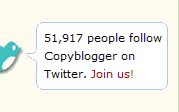
Second, just below the email area there’s the little blue Twitter bird. There you’ll see 51,917 people follow Copyblogger on Twitter. More praise for Copyblogger because that large number will motivate more people to become followers on Twitter.

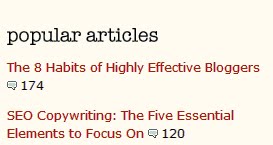
Third was something that might not have stood out quite as much. On the right hand side of the page is a section with popular articles. Knowing those are some of the more popular posts will get people to read them just like more people order the most popular dishes at restaurants. In addition, immediately after the two articles you can see the numbers 174 and 120. If more than 100 people are commenting on these articles doesn’t that make you just a little curious why they’re commenting and what they’re saying? I’d say that’s subtle, yet strategic use of consensus to keep people looking at the site.
In each case Copyblogger could have omitted the numbers but they’d lose out on opportunities because those numbers will cause more people to take action in way that will increase readership. Now, having shared that, there are times when you want to leave the numbers out because they can work against you. For example, what do you think a first time visitor to Copyblogger would have concluded if they only had 100 subscribers or 50 Twitter followers? That might actually work against people deciding to become subscribers or followers. Also, if the numbers are low on comments people might not bother to look at those older posts.

What does this mean for you? As a general rule; if your numbers are not high then don’t show them because you could be shooting yourself in the foot. I’ve seen this with a feature on many websites that lets you know how many people are attending a particular event. I outlined this last year in an article I called “Make Your Next Event the One Everybody Attends.” What constitutes a large number will vary depending on many things. For example, 15 people attending an event is not many but if there are only 20 seats available it’s a large number by comparison. Showing that number will also invoke the principle of scarcity because only a few seats are left so sharing 15 in that context could be very persuasive.

So remember, consensus can work for you or against you depending on the situation. Make sure you’re thinking how your audience will perceive the numbers you share and you’ll probably do just fine. Of course, referring back to this article would be a smart move too.

Brian
Helping You Learn to Hear “Yes!”

When Setting Sales Goals Always…

I’m a big Jeffrey Gitomer fan. If you’ve read my blog for long then you’ve probably seen his picture and read some of his quotes. I find his writing style unique, entertaining and most importantly, educational. I’ve used his material in my sales training and frequently recommend his books. I also put my money where my mouth is because I own all of his books. Yup, I have the Little Red Book, Little Black Book, Little Gold Book…I have all those Little Books. And I own a copy of The Sales Bible. It’s not the leather bound, King James edition with my name engraved in gold, but it’s worth its weight in gold…if you do the things Gitomer suggests.

I think I’ve painted a clear picture; I’m a Gitomer disciple. But, even though he wrote The Sales Bible and I’m a disciple, I recognize Gitomer is human and makes mistakes just like all of us. Some of you who are his followers might be shouting at me through your PC, “Blasphemy! Away with him!” Please read on before you excommunicate me.

Several weeks ago, in his weekly Sales Ezine he posed the following question about goal setting, “When setting goals in sales, you should always:”

A. Write them down and tell others.

B. Reward yourself when you reach them.

C. Make them reasonable.

D. Never set them too

While there is some validity to each answer, I chose answer A, “write them down and tell others,” because that’s a proven method for success and therefore holds the most potential. In fact, out of more than 4,000 responses, 60% of people made the same choice that I did. However, to my surprise Jeffrey’s “correct” answer was B, reward yourself.
I won’t dispute that for some people a reward might help them stay the course and achieve their sales goals. It might be personally more motivating for Jeffrey because he’s a highly self-motivated individual. Unfortunately I don’t think the same can be said for the majority of salespeople let alone people in general. The research in social science is very clear; the principle of consistency is a HUGE motivator for people to follow through on prior commitments. Because people feel an internal pressure to do what they say, making goals public will help many more people reach those goals as compared to others who set goals but keep them private. In Dr. Robert Cialdini’s book Influence Science and Practice, in the chapter on Commitment and Consistency, a study by Morton Deutsch and Harold Gerard is cited on this very subject. Results from their study were clear, “students who had publicly recorded their initial positions most resolutely refused to shift from those positions later.”

Organizations that try to get people to change bad habits (over-eating, smoking, etc.) have taken advantage of the principle of consistency by having people make public commitments then sharing those commitments, with friends and family. Here’s a simple rule to remember; people live up to what they write down.One more way to increase the odds of reaching your goal would be to incorporate the principle of scarcity as opposed to rewarding yourself. A reward is a nice thing but too often we can forgo rewards and not feel bad. However, when we think we’ll lose something, research has found our motivation changes rather dramatically. How can you incorporate scarcity? Try putting $100 of your own money on the line. Go to the bank, get a nice crisp $100 bill and give it to a trusted friend. Tell your friend, “Look, I have a goal I really want to meet. If I don’t meet the goal you have my permission to give the money to [name a charity]. But, if I meet my goal you have to give me my $100 back.” That’s a win-win because if you succeed that’s great. If you don’t, a worthy cause benefits.

So here’s the deal; whatever you choose to do, if you truly want to succeed, start by setting a goal. But don’t stop there, write out your goal then make it known to others. By doing this you’ll take advantage of the principle of consistency because it’s in your nature to begin with. Then ramp it up a bit by putting something of value on the line. Oh yes, and when you reach your goal, take Jeffrey’s advice and reward yourself with the cash you got back because you’ll have earned it.