Will the Real Candidate Please Speak?

This post is a slight rework of something I wrote six years ago. Every election cycle ramps up more than the last and even though it’s not a presidential election, emotions are running higher than ever with the House and Senate up for grabs. 

Fiction or Fact?

Matt Damon starred in the 2011 movie, The Adjustment Bureau, where he played the youngest politician to be elected to Congress. In the opening scene he has to address supporters after having lost an election bid for the Senate, a race he clearly should have won.

During his consolation speech he begins to reveal the truth about himself and his campaign. He tells the audience everyone assumed his meteoric rise as a young congressman was due to his authenticity. He proceeds to tell people he’s not been authentic at all. He begins by telling them a saying he’d just mentioned about his old neighborhood was made up. He confessed he only used it because it polled well with voters. 

He goes on to tell everyone his tie was chosen from 56 others because of what it signified. He then let people know his campaign paid $7,300 to find out how to perfectly scuff his shoes in order to appeal to the widest array of voters. 

Ironically he was viewed more positively the day after the speech because he’d finally been authentic.

Marketing Candidates

We’re knee deep in the political process once again in the U.S., so I thought it was time to share a little about persuasion in the political process. Damon’s revelation about his campaign is more realistic than you might imagine.

Over the years I’ve participated in many “marketing studies” and quite a few have centered on politics. During these political studies people are literally gathered together for the sole purpose of finding out which phrases resonate best with voters. Mind you, during the selection process participants are paired down so the pollsters understand if the phrases will work best with white, middle aged, conservative males making a certain amount of money or minority voters having a certain educational background, or soccer moms, etc.

By a show of hands or in written format those conducting the marketing ask participants which sentence in each pair appeals the most. One examples was:

  1. A strong national defense
  2. A strong U.S. military

Another example was:

  1. Family values
  2. American ideals

Let’s assume most people like #1 in both pairs.

Before you know it you’ll hear politicians talking about how “a strong national defense” is important and how the other party doesn’t care about “family values.”

I hope you’re seeing the picture that’s being painted. Very little of what you hear from people running for Congress, the Senate, or president, comes from their own words. What you’re getting is a republican or democratic made up persona designed to appeal to the most voters.

We Don’t Always Like Real People

Part of the reason republican outsiders like Donald Trump, Ben Carson, and Carly Fiorina got so much attention from the masses and media in 2016 was because they were not run of the mill puppet-like politicians who’ve been airbrushed to appeal to voters. For the most part – love ‘em or hate ‘em – they were presenting their real selves. To a lesser degree (only because he’s been in politics a long time) Bernie Sanders has a similar appeal for many democratic voters. Certainly AOC could be put in the more authentic category too.

Most career politicians spout the “same old same old.” You only have to watch a few debates to hear the same politically correct jargon and talking points intended to appeal to the base.

For example, it always sounds as if every governor led the greatest comeback his or her state had ever seen. The skeptic in me always thought, things were so bad with the economy in 2008, if you couldn’t boast about lower unemployment, increased spending on schools, new programs, etc., in your state then you would have been a terrible governor! The same could be said of recoveries after the pandemic. The rising tide of an economic recovery helped every state look much better when compared to 2008 or 2020.

What to do?

So what are we to do? Pay attention to what’s said and see if you can confirm key facts. It’s amazing how politicians (and the media) will tell us things that aren’t true or are a twisted version of the truth to support their points.

No candidate is perfect and none will hold your opinions or values on everything. In all likelihood there will be two or three core issues for each voter that will determine who gets their vote. It may be healthcare reform, the economy, immigration, student loan forgiveness, abortion, social justice, foreign affairs, etc. 

No matter who you vote for there may be inconsistencies with their positions on other issues but then again each of us are inconsistent to one degree or another. Just make sure whoever you vote for is the person they present themselves to be and not some campaign consultant, poll-generated image designed to appeal to vote getting. This isn’t Facebook, it’s not about “likes”. Vote for a real person…if one happens to be running.

Brian Ahearn

Brian Ahearn is the Chief Influence Officer at Influence PEOPLE. An author, TEDx speaker, international trainer, coach, and consultant, he’s one of only a dozen people in the world personally trained by Robert Cialdini, Ph.D., the most cited living social psychologist on the science of ethical influence.

Brian’s first book, Influence PEOPLE, was named one of the 100 Best Influence Books of All Time by BookAuthority. His follow-up, Persuasive Selling for Relationship Driven Insurance Agents, was an Amazon new release bestseller. His new book, The Influencer: Secrets to Success and Happiness, is a business parable.

Brian’s LinkedIn courses on persuasive selling and coaching have been viewed by more than 500,000 people around the world!

A Tip to Make Time Pass Quickly

Last week I drove to North Carolina and back to work with a client. It was a 500-mile trip, eight hours of highway driving each way. That’s a lot of alone time and it can become a bit monotonous. To pass the time quickly I did several things you probably do. I listened to podcasts, I finished a few books on audible, and I made it a point to call some friends along the way. However, there was one thing I did that seemed to pass the time more quickly than any other activity.

Small Area Hypothesis

I incorporated something called the small area hypothesis into my drive. This psychological concept tells us people are more motivated when their focus is drawn to whichever is smaller in size, their completed actions/tasks/time or their remaining actions/tasks/time.

Imagine you’re running a marathon. I’ve run half a dozen and can attest to this—early in the race, you don’t focus on the fact you have 24 or 25 miles to go. That would be rather daunting on your psyche. Instead, focus your thoughts on, “One or two miles down already!”

Eventually you’ll encounter a tipping point, the halfway mark in the race. That’s where you begin focusing on the remaining miles. Your thoughts become, “Only 13 or 12 miles to go!” That’s because the remaining distance gets smaller and smaller, resulting in more motivation to finish the race.

My Drive

So how did I incorporate this psychological tip into the trip? When I first started, and I hit the 50-mile mark, I texted my wife to let her know, “50 miles down.” At the 100-mile mark I did the same thing. I continued to do this every 50 miles until I hit the 250-mile mark. At that time I let her know I was halfway through the drive. From that point on, it was 200 miles, 150 miles, 100 miles, then 50 miles left.

This might seem like a silly head game but believe me, it really did make the trip go quicker. When you’re traveling 75 miles an hour, going 50 miles only takes about 40 minutes. I was pleasantly surprised at how fast each 40-minute segment came and went.

Another Example

I also saw this at play when I was in college. I had no idea about this little bit of psychology but here’s how I unknowingly used it. During finals week I would study from 8:00 AM until 8:00 PM each day, only taking an extended break for lunch and dinner. I would set my clock for 45 minutes of intense study followed by a 15-minute break. Rather than focusing on how long the day would be and how much studying I had to do, focusing on small 45-minute segments made the time pass quickly. Before I knew it, the morning was over and I was off to lunch. After refueling, the afternoon went quickly and suddenly it was time for dinner. The final few hours of study flew by compared to the earlier parts of the day.

Conclusion

The next time you have something that will take quite a bit of time—a long drive, a 10 or 12 hour workday, a long-distance run, studying all day, etc.—I encourage you to try this small area hypothesis. I think you’ll find as I did, the time will seem to pass more quickly than you might imagine and before you realize it, you’ll be finished with your activity.

Brian Ahearn

Brian Ahearn is the Chief Influence Officer at Influence PEOPLE. An author, TEDx speaker, international trainer, coach, and consultant, he’s one of only a dozen people in the world personally trained by Robert Cialdini, Ph.D., the most cited living social psychologist on the science of ethical influence.

Brian’s first book, Influence PEOPLE, was named one of the 100 Best Influence Books of All Time by BookAuthority. His follow-up, Persuasive Selling for Relationship Driven Insurance Agents, was an Amazon new release bestseller. His new book, The Influencer: Secrets to Success and Happiness, is a business parable.

Brian’s LinkedIn courses on persuasive selling and coaching have been viewed by more than 500,000 people around the world!

Don’t Sell Yourself Short: You Need These 3 Things!

When it comes to getting what you want, don’t sell yourself short. Far too often people don’t get what they want because they’re missing one of these elements: confidence, skill, and planning.

Confidence in Asking

If you struggle with confidence when it comes to asking for what you want, I have a book suggestion. Vanessa Bohns, PhD, an ​​Associate Professor of Organizational Behavior at Cornell University, has a wonderful book called, You Have More Influence Than You Think. The title says it all. She uses research to prove each of us is more likely to get what we want than we might expect. She wrote:

“The last time I officially calculated, my participants had approached more than 14,000 people with these sorts of requests (donations, borrow a phone, give directions, etc.). And across all of these different kinds of requests, what I find remains remarkably consistent: Over and over, people underestimate the number of people who will say “yes.” In fact, people are almost twice as likely to agree to the range of things my participants ask for in these studies as they expect, which is a huge effect.”

Influence Skills

Of course, the more skill you have when making a request, the more likely you are to hear, “Yes!” This is where research around the science of influence comes into play.

There are more than seven decades of research around how to ethically influence people. The most celebrated name when it comes to this topic is Robert Cialdini, PhD. His numerous books, including Influence: The Psychology of Persuasion, have sold more than 7 million copies. Cialdini popularized what are known as the “principles of influence” or “principles of persuasion.”

These principles, when tapped into ethically and correctly, will increase your influence abilities because they inform people, consciously and subconsciously, into yes.

Game Plan

Having all the confidence in the world, and the necessary skill, won’t do you much good if you don’t have a plan in place.

I work primarily with salespeople and can tell you, it’s never a good idea to wing it. With enough confidence and skill, you might get what you want now and then but it won’t be an effective approach when it comes to your bigger asks.

Sales guru Brian Tracy, author of The Psychology of Selling, defines selling as, “the process of persuading a person that your product or service is of greater value to him or her than the price you’re asking for it.”

Notice that persuasion is at the core of selling. And, as Tracy notes, it’s a process. Another way of defining process is “a planned approach.”

Conclusion

Luck certainly plays a role in life and success. As the Roman philosopher Seneca said, “Luck is where preparation meets opportunity.” With greater confidence, more skill, and a good plan, you can take advantage of the opportunities that come your way and create your own luck.

Bottom line, you can get what you want in life far more often than you may realize so don’t sell yourself short.

Brian Ahearn

Brian Ahearn is the Chief Influence Officer at Influence PEOPLE. An author, TEDx speaker, international trainer, coach, and consultant, he’s one of only a dozen people in the world personally trained by Robert Cialdini, Ph.D., the most cited living social psychologist on the science of ethical influence.

Brian’s first book, Influence PEOPLE, was named one of the 100 Best Influence Books of All Time by BookAuthority. His follow-up, Persuasive Selling for Relationship Driven Insurance Agents, was an Amazon new release bestseller. His new book, The Influencer: Secrets to Success and Happiness, is a business parable.

Brian’s LinkedIn courses on persuasive selling and coaching have been viewed by more than 500,000 people around the world!

Articles that Might Interest You

I’ve had the good fortune to write for a number of publications and have been featured in a few. Below are links to various articles you might find informative and helpful on your journey to master influence.

Go Solo – Applying the Science of Influence

My “why” is to help clients enjoy more professional success and personal happiness. I do this by showing them how to apply the science of influence in their daily activities. The goal is to make it easier for people to say yes to them. My primary clients are leaders and salespeople in the insurance industry because getting to yes is a critical component of their success. Read more

WorldClassPerformer.com – Short Life Lessons

Where did you grow up and what was your childhood like? Did you have any particular experiences/stories that shaped your adult life? I lived in a dozen places by my 13th birthday. We eventually settled in Central Ohio and I still call it home. Playing football and getting into weightlifting was formative for me because of the discipline I learned. That was four decades ago and I still workout daily. Read more

Selling Power – What’s the Best Way to Persuade Customers?

According to author and sales trainer Brian Tracy, “Selling is the process of persuading a person that your product or service is of greater value to him or her than the price you’re asking for it.” Read more

Selling Power – Referrals Made Easy

Referrals are the lifeblood of most businesses. After all, if you have a good customer it’s likely they know other people or businesses that are similar. The question is: How do you tactfully get warm introductions? Read more

Sales Mastery – Influencing PEOPLE in Sales

Much of your professional success depends on getting people to say “Yes.” Because the ability to influence is so important, scientists have research exactly what makes someone influential. Read more

Sales Mastery – Using the Principles of Persuasion to Build Relationships

If you’ve been in sales for any length of time you know relationships are extremely important. While relationship cannot overcome a poor product and has limits on how much it will impact price, there’s no denying a strong relationship is better than a weak or non-existent relationship. It can be the difference maker in tight situations. Read more

Sales Mastery – What Makes Saying “Yes” Easy for Our Brains

Here are a few things you need to understand about people. First, everyone has reasons for doing what they do. They may not be your reasons and they may not appear to be good reasons but everyone has their own reasons for doing what they do. And you can bet if they don’t have any reasons top of mind they will generate them when asked. Read more

Sales Mastery – How to Motivate Customers to Take Action

So you’ve met with a prospective client and successfully established a relationship. It’s clear they like you so they’ve given you a shot at their business. Of course, liking you and trusting you enough to actually give you their business are two different things. But you’ve done a good job overcoming some of their uncertainty by establishing your credibility and showing how many customers just like than have made the switch. They’re comfortable with you and trust you. However, when you hit the home stretch you sense their hesitancy to pull the trigger and make the switch. Read more

LinkedIn – Persuasive People do these 5 Things. Do You?

Regardless of your role or career stage, persuasion is one of the top skills companies need most from employees in 2020, according to recent LinkedIn Learning data. But being persuasive is not the same as being manipulative. Someone who is manipulative focuses solely on what’s good for them. It’s a one-sided transaction. On the flip side, persuasion means that you carefully consider the other person’s wants, needs, desires, and goals. It’s mutually beneficial. I like to say: “Good for you, good for me, then we’re good to go!” Read more

Sales 3.0 – Mistakes Salespeople Make When Trying Influence Prospects

For decades I’ve helped salespeople incorporate the psychology of persuasion into their sales processes. During those years I’ve seen countless salespeople make the same mistakes. To help you avoid those pitfalls and enjoy more success I’ll share the six most common mistakes salespeople make. More importantly, I’ll give you solutions to the pitfalls. Read more

CPCU Insights – The Influential Underwriter

Many underwriters struggle to gain buy-in from agents on underwriting decisions. There are a couple of notable reasons for this. First, most underwriters are not well-schooled in how to sell their decisions. Second, many don’t want to sell decisions, preferring to rely on the logic of their positions. However, the data from behavioral psychology is clear: People don’t make rational decisions most of the time. This article proposes that underwriters move away from selling and toward persuading, using research-based psychological tips to make this case. Read more

Brian Ahearn

Brian Ahearn is the Chief Influence Officer at Influence PEOPLE. An author, TEDx speaker, international trainer, coach, and consultant, he’s one of only a dozen people in the world personally trained by Robert Cialdini, Ph.D., the most cited living social psychologist on the science of ethical influence.

Brian’s first book, Influence PEOPLE, was named one of the 100 Best Influence Books of All Time by BookAuthority. His follow-up, Persuasive Selling for Relationship Driven Insurance Agents, was an Amazon new release bestseller. His new book, The Influencer: Secrets to Success and Happiness, is a business parable.

Brian’s LinkedIn courses on persuasive selling and coaching have been viewed by more than 500,000 people around the world!

A Perspective on Faith and Influence

Several years ago, after giving a presentation I had lunch with my daughter Abigail. It had been years since she’d seen me in front of an audience, so I was curious to hear her thoughts. After sharing some insights about the presentation, she asked a question that was near and dear to her heart as well as mine. The question she asked was, “Where is God in all of this?” 

If you’ve followed me for any length of time, then you know my faith is the most important part of my life. I’ll share what I told Abigail about how I see the principles of influence tying into my faith. I hope it encourages you.

Liking

In most corporate settings it’s not acceptable to talk about God but I think the principles of influence can be used in ways that align with many biblical tenets. For example, when I use the principle of liking I can come pretty close to love. That is, when I do all I can to like the person I’m with, I will enjoy them more and work harder for them as a result. This is true even if they don’t feel as strongly towards me. Don’t you feel you work harder for people you know and like? 

The more I come to know and like people it all but removes manipulation. I wouldn’t manipulate my friends and I’m confident you wouldn’t either. When people believe that you genuinely like them, they’re more open to whatever you might ask of them.

I believe tapping into liking from the onset creates a virtuous cycle and properly focuses your intentions when using the other principles of influence.

Reciprocity

Jesus had a couple of things to say about giving which taps into reciprocity. He encourages people with this truth; it’s better to give than receive. When we help people that we like we feel even better about our giving. With this approach we’re not giving to get. Instead, we’re giving to genuinely help. Authentic giving is received much differently than giving when the other person thinks you just want something in return. 

He also encourages you to give to others as you would have them given to you. Think about what you’d want someone to do for you then try doing the same for them. When you’re the first to give, and do so out of a generous spirit, people are more likely to give back when you need something.

Social Proof

When you invoke social proof, showing what other people are doing, you’re taking this approach because you genuinely want to help the other person see the merits of whatever it is that you’re asking or offering. Following the lead of others usually works out well, especially if they are similar to you.

Authority

When you tap into authority, sharing expertise or citing sources, it’s not perceived as you simply trying to convince someone you’re right. When someone knows that you like and care for them, they sense you’re genuinely sharing information that would be beneficial in their decision making.

Consistency

People usually feel better about themselves when they follow through on their word. Asking instead of telling it’s a great way to use the principle of consistency. You’re not doing this to steer someone down a path that they don’t want to go. Rather, you’re doing your best to show the benefits of what you’re offering. By gaining a commitment early on and having someone follow through you’re allowing them to feel better about themselves. A win for both people!

Scarcity

Using the principle of scarcity, if done incorrectly, can feel manipulative. No one likes to feel threatened or scared into doing something. That approach creates resentment and resistance. However, when your basis is friendship, a true desire to help another person, then employing scarcity is simply using psychology to help them make the best decision possible.

Unity 

The final principle – unity – is something that Robert Cialdini introduced just over five years ago. This principle is about having a shared identity. When you’re deeply bonded with someone, helping them in a very real sense helps you. The same is true when they help you, they get a great sense of satisfaction because it’s almost as if they’re helping themselves.

I equate unity to love. As I’ve surveyed people, I’ve come to realize quite often they’ll do things for people they’re deeply connected with, things they may not do for people that they simply like. For example, if you had a relative who needed a kidney or large sum of money, you might be very likely to help them simply because you’re family. I think that’s the essence of love, doing something for another person regardless of how you feel or what it may cost you.

Conclusion

Let’s bring this full circle. When I think about loving God, I’m told to do so with all my heart, soul, mind, and strength, and to love my neighbor (everyone) as myself. Here’s how I envision engaging the principles of influence to fulfill those commands. 

  • Heart. The principles of liking and reciprocity tap into our heart, our core, because they’re foundational for relationships. 
  • Mind. Authority and social proof are principles that engage the mind, causing us to think deeply about what other people are doing or what experts have to say. 
  • Strength. When it comes to strength and how we feel, consistency and scarcity seem to fit the bill. We hate the feeling of losing something, scarcity, and we hate the feeling of letting others down, consistency. The feelings that arise are strong drivers to take action.
  • Soul. Our soul encompasses all of who we are, our identity, and that’s why I believe unity comes into play here.

I’m still working all of this out in my mind, but I hope sharing it gives you pause to think about how best to interact with people when you’re trying to influence their behavior. For me, it starts with knowing, liking, and caring. That’s the foundation and everything else builds from there.

Brian Ahearn

Brian Ahearn is the Chief Influence Officer at Influence PEOPLE. An author, TEDx speaker, international trainer, coach, and consultant, he’s one of only a dozen people in the world personally trained by Robert Cialdini, Ph.D., the most cited living social psychologist on the science of ethical influence.

Brian’s first book, Influence PEOPLE, was named one of the 100 Best Influence Books of All Time by BookAuthority. His follow-up, Persuasive Selling for Relationship Driven Insurance Agents, was an Amazon new release bestseller. His new book, The Influencer: Secrets to Success and Happiness, is a business parable.

Brian’s LinkedIn courses on persuasive selling and coaching have been viewed by more than 500,000 people around the world!

In Praise of the Insurance Industry

Like nearly every person I know in the insurance industry, I fell into it. My career is closing in on 40 years and with very few exceptions – perhaps younger people who went to school for risk management or children of insurance agency owners – I never met someone who said, “All I ever wanted to do was get into insurance!” There may have been some, but it was a running joke that everyone in the industry fell into it. 

In my case, I’d accepted a retail job while I was still in college that would have taken me to Akron, Ohio. I only interviewed with The Travelers Insurance Company because a girl I dated at the time lived in the Columbus area. As fate would have it, I got the job and met my wife, Jane, on the first day of work! As much as I love the industry, the best thing insurance gave me was the opportunity to meet Jane.

Prior to entering the industry, I didn’t know anything about it. In my mind insurance was ugly paneled offices and leisure suits. That perception was quickly erased by The Travelers and all of the professionals I met during my first year.

Now, with decades under my belt, I often tell people that insurance is a noble industry. That’s a pretty big claim, calling something noble, but I believe it.

Insurance is a noble industry for two main reasons. First, we help people. Second, we help the economy. Let me elaborate a little on both.

When I say we help people consider this. When tragedy strikes, if the insurance agent and company have done a good job with their clients, then they help people get back on their feet.

No person ever said after a tragic loss, “Darn my insurance agent, she has me fully covered. I’m not out a penny!” Unfortunately, many have said, “Darn my agent, he didn’t sell me the right coverages or the right limits and now I’m out thousands (maybe tens of thousands) of dollars!” As someone who loves the industry this is unacceptable.

How do we help the economy? Do you think a bank would be willing to loan you a large sum of money to buy a car, purchase a home, or start a business, if you couldn’t guarantee repayment if tragedy struck?

No smart investor would be so foolish! However, the insurance industry makes those guarantees on your behalf. The insurance industry allows consumers greater opportunity to purchase homes and autos as well as start a business. 

But it doesn’t end there. Think of all the people who have to make the cars, build the homes, and do things that are related to the businesses you may start. The guarantee the insurance industry makes creates a ripple effect throughout the economy that allows for more people to work, more goods to be produced, and allows more people to purchase those goods. 

Helping people and helping our economy grow and stay strong are indeed noble things. Although I don’t work for an insurance company or an insurance agency any longer, both groups are my primary focus. I concentrate my efforts there because of my years of experience within the industry and my understanding of how the industry operates. On top of that, I believe if I help insurance agents and company people do their jobs to the best of their abilities, then I remain part of something noble and that’s worth pursuing every day.

Brian Ahearn

Brian Ahearn is the Chief Influence Officer at Influence PEOPLE. An author, TEDx speaker, international trainer, coach, and consultant, he’s one of only a dozen people in the world personally trained by Robert Cialdini, Ph.D., the most cited living social psychologist on the science of ethical influence.
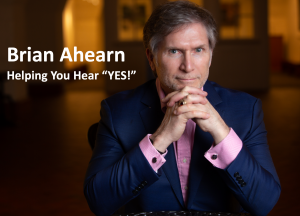
Brian’s first book, Influence PEOPLE, was named one of the 100 Best Influence Books of All Time by BookAuthority. His follow-up, Persuasive Selling for Relationship Driven Insurance Agents, was an Amazon new release bestseller. His new book, The Influencer: Secrets to Success and Happiness, is a business parable.

Brian’s LinkedIn courses on persuasive selling and coaching have been viewed by more than 500,000 people around the world!

Gas Prices – Greed or Free Markets at Work?

Free market societies enjoy many benefits over countries that try to manage their overall economies in a top-down fashion. Free markets have been a major factor in lifting many people out of poverty across the globe. That’s not to say that other economic approaches don’t have some advantages because they do. Certain commodities, services, and industries should be regulated by the government for overall efficiency and general welfare. 

One deeply held belief of free markets proponents is that collectively, individual buyers and sellers know more than a small group of people at the top who try to set prices and regulate transactions between parties.

The collective, many over the expert few, is sometimes referred to as “the wisdom of the crowd.” For more on that concept, I suggest you look at James Surowiecki’s Wisdom of Crowds. For the most relevant, understandable, and very interesting resource on economics that I’ve come across over the decades I refer you to Basic Economics by Thomas Sowell. 

I share those opening paragraphs to set up the rest of the article which focuses on something that impacts all of us – gas prices. Right now, we’re feeling pain at the pump in unprecedented ways. Regarding gas prices, you may have seen the following posted on one or more of your social media sites recently.

It would be very easy to conclude Exxon is simply greedy, taking advantage of average Americans by increasing prices to increase profits. This begs the question: is Exxon operating out of greed or simply participating in the free market economy? If it’s not greed, then why would their profit in Q1 of 2022 be nearly double when compared to the same time the year before?

If you look at the chart below, you’ll see the top line represents gross profit margin. That percentage is figured out as follows: (Revenue – Cost of Goods Sold) / Revenue. The 5-year chart shows a very consistent percentage of 20 to 24 with the exception of 2021.

Why was 2021 so bad? People were hardly driving because of the pandemic so revenue dropped significantly. However, the cost of oil was relatively stable as were Exxon’s fixed costs (refineries, pipelines, salaries, etc.). With lower revenues and costs staying essentially the same, their gross margin dipped to a 5-year low when it hit about 17%.

In 2022, revenue rose significantly and that was primarily because people started traveling again. When revenue rises faster than cost of goods sold, the profit margin will increase. However, in Exxon’s case it only rose a percentage or two above their normal trend. You see the same phenomenon with their operating margin and net margin. 

Chart source: Macrotrends

Now another issue has arisen: refinery capacity. Oil companies and investors in oil have to make a choice: Do they pour more money into an industry that many people want to go away or do they do something else with their profits. If they could refine more oil without major investment and keep their profit margins at acceptable levels, I think they would. If they did not, it would work against the idea that they are greedy. After all, if they want more profit and can get it, why wouldn’t they go after it?

I don’t write this as an apologist for Exxon or the oil companies. I don’t own stock in oil companies and don’t have oil companies as clients. I cannot speak to their accounting practices, positions on climate change, or a host of other things. I’ve no doubt someone with a deeper background in economics or knowledge of the oil industry might challenge some of my assumptions. If I’m incorrect on some point(s) please feel free to comment below.

I wrote this post because it’s important that we understand more than a meme or simplistic stat. There’s always more to the story and we need to explore just a bit more. In this case, contrast (compared to what?) has to be considered. Just because a company doubled its total profit does not mean they are taking advantage of consumers. 

As much as I’d like to pay less for gas, in this case I don’t believe Exxon or other oil companies are gouging us. If you believe that, then next time gas falls below $3.00 or $2.50 a gallon are you willing to hold up the industry as good guys, champions of the average working person? 

Brian Ahearn

Brian Ahearn is the Chief Influence Officer at Influence PEOPLE. An author, TEDx speaker, international trainer, coach, and consultant, he’s one of only a dozen people in the world personally trained by Robert Cialdini, Ph.D., the most cited living social psychologist on the science of ethical influence.

Brian’s first book, Influence PEOPLE, was named one of the 100 Best Influence Books of All Time by BookAuthority. His follow-up, Persuasive Selling for Relationship Driven Insurance Agents, was an Amazon new release bestseller. His new book, The Influencer: Secrets to Success and Happiness, is a business parable.

Brian’s LinkedIn courses on persuasive selling and coaching have been viewed by more than 500,000 people around the world!


Old White Men

Not long ago I had a conversation with someone I love dearly, someone who sees the world differently than I do. She sincerely wants the best for people, as I do. I’ll also add that she has a heart of gold. However, it’s often the case when you get people together, you’re likely to have differing opinions on how best to accomplish noble goals.

Conveying frustration about many things going on in society, she said, “I’m tired of a bunch of old white men running everything.” Her position was clear, old white men are the cause of most of society’s problems. 

Calmly I reminded her, “You know when you say that you’re lumping me in that category because I’m getting old, I’m white, and I’m a man.” I went on to tell her, “I think you’d agree that I’ve never tried to hold anyone back. I’ve helped minorities in many ways, my best friend of 45 years is black, and I think people I’ve worked with would say I’m a good person. Therefore, I refuse to be identified with a category that’s continually singled out as the main problem in society.”

I Didn’t Mean You

She tried to assure me she wasn’t talking about me but that’s like making an off-color comment then telling a person who is part of the group being put down, “I’m not talking about you. You’re different.”

Do you think anyone who hears that “clarification” would say, “Thank you for clarifying that because I don’t consider myself part of [name the race, sex, religion, etc.].” Not likely.

I went on to share that even though I don’t consider myself part of the problem, and even though I know she loves me, her comment immediately put me on my heels and naturally made me resist her point of view. It’s hard to embrace someone and their ideas when you’re put you on the defensive.

I gave her some advice, “If you really want to persuade someone to your way of thinking, don’t attack. Instead say, ‘I wish there were more people who looked like me or other underrepresented groups in positions of authority.’” It’s not just what you say but how you say it that matters. Most people I know embrace the idea of giving more women, minorities, people of different sexual orientation, etc., equal access and opportunity.

A Problem Approach

When you arbitrarily label a group “old, white men” that’s a problem because you’re engaging in:

  • Ageism (old) – If you can’t be young, being old is your next best alternative! Never forget, wisdom and experience often come with age and those are good things that should be tapped into. 
  • Racism (white) – No one can help what their skin color happens to be. If everyone has lived experiences then all should be welcome to the table. 
  • Sexism (male) – Again, this is something outside of anyone’s control. It shouldn’t matter if someone is male or female as long as they’re qualified for the position they hold.

Your Own Worst Enemy

Here’s the reality – many people who pronounce labels like this are doing the very thing they decry! It doesn’t matter their intent, it’s the same thing and the end doesn’t justify the means. When you do this you become your own worst enemy. 

Beyond that conversation here are just a few recent examples from social media. 

  • A LinkedIn post started, “Dear fellow White men” and the author told white men to shut up if they didn’t agree with his take on things. Anyone who politely shared another point of view in the comments section was told to “shut up.”  
  • A Facebook post opened with, “Dear White Evangelical,” then began to pronounce a series of judgments. This is exactly what Christians are told not to do. If that same post had been directed at any other religion, there would have been outrage.

Parting Thoughts

I’m an advocate of reciprocity – put out what you want to receive from others. If you want respect, tolerance, kindness, or whatever else, then be the person who gives it first. Mahatma Gandhi put it well when he told people, “Be the change you want to see in the world.”

Let me close with this; I will not engage in the labeling, name calling, misinformed accusations, or other forms of communication that hurt. That approach doesn’t do anything to bring us closer to deal with our issues. I may not see the world, its problems, and solutions like you do. That’s okay from my perspective and I hope you’re okay with it too. If we talk I will ask you lots of questions to learn from you. When it’s time to share my point of view, I will do so in a respectful manner.

I hope anyone reading this will join me. 

Brian Ahearn, CPCU, CTM, CPT, CMCT

Brian Ahearn is the Chief Influence Officer at Influence PEOPLE. An author, TEDx speaker, international trainer, coach, and consultant, he’s one of only a dozen people in the world personally trained by Robert Cialdini, Ph.D., the most cited living social psychologist on the science of ethical influence.

Brian’s first book, Influence PEOPLE, was named one of the 100 Best Influence Books of All Time by BookAuthority. His follow-up, Persuasive Selling for Relationship Driven Insurance Agents, was an Amazon new release bestseller. His new book, The Influencer: Secrets to Success and Happiness, is a business parable.

Brian’s LinkedIn courses on persuasive selling and coaching have been viewed by more than 500,000 people around the world!


Quarterly Newsletter

Two Quarters Down, Two to Go! If we were a football or basketball team we’d have just come out of the locker room for the second half of the game. Whether we were up or down at the half, our coaches would have been talking to us about what went well in the first half, what could have been better, and most importantly, what we need to do the rest of the game in order to win.

I hope you see the parallel with what you do. You can’t do much about Q1 and Q2 now because they’re history. But, you can impact Q3 and Q4. I hope some of the resources I share in this newsletter help you achieve your 2022 professional and personal goals.

Sincerely,

Brian

What’s Influence PEOPLE all about?

  •       Why – Help you enjoy more professional success and personal happiness.
  •       How – Teach you the science of ethical influence.
  •       What – Speak, write, train, coach, and consult.
  •       Who – Clients include leaders, salespeople, business coaches, insurance professionals, and attorneys.

Here’s What’s New…

Writing

I my spring newsletter I mentioned that I’m working on a book about my relationship with my father. It can be tough being raised by a Marine. I’m tentatively going with the title, His Story, My Story. I’ve sent drafts to quite a few Marines to gather their thoughts. I’m happy to report, the feedback has been excellent so far! My goal is to make the book a resource for the Marine Corps to give to Marines and their families. Hopefully reading it will lead to better relationships between Marines and their loved ones.

My other project has been the influence series I just concluded last week. Similar to my book The Influencer, the series was a story based approach to teach readers about influence. The story centers around Pat, a learning manager, and her former college basketball coach, Coach Smith. If you didn’t get a chance to read it, here’s the link to the opening. You’ll find links to all 15 installments at the end of each post. Next step is to work with my book coach, Barbara Grassey, to turn the story into a free eBook for anyone who is a current or future blog subscriber.

Podcasts

Seven new podcasts went online last quarter (how lucky) bringing the total available to 150 episodes. If podcasts are your thing, you can find links to all 150 shows on my website. If building better relationships is what you need right now then check out these two episodes:

  • My good friend Kwame Christian invited me back on his show Negotiate Anything (the #1 rated negotiations podcast in the world!) for a 4th time, making me his first 4x guest. I was honored. This time we talked about influence concepts from The Influencer: Secrets to Success and Happiness. We went deep on ethical influence vs. manipulation and how the principle of liking can all but remove manipulation from interactions. Click here to listen our conversation.
  • Melina Palmer is absolutely one of my favorite people! Her smile and laugh are infectious. She asked me to come back on The Brainy Business Podcast to talk about The Influencer and how to build better relationships. You don’t want to miss the one because it’s applicable to everyone. Click here to join the fun!

Best of…

More recommendations for you to read, listen to, and watch. No two people are exactly alike so you might not like or agree with some of my suggestions but I  encourage you to be open minded to anything that will stretch your thinking and challenge your assumptions.

Books

Crossing the Chasm by Geoffrey Moore. Here’s another book I did an in-depth review of for a short course on the Emeritus learning platform. This book explores what it takes for organizations to move from early adoption of a product or service to mainstream adoption. It’s easy for consumers and end users to see new products or services and think their development was a no-brainer. However, getting products or services to that point has many more challenges than you probably realize. If you’re working on a new product, service, or way of doing things, this book is a must read. You’ll get very strategic, targeted advice that will up your odds of success tremendously.

Podcasts

Opinion Science is hosted by Andy Luttrell, an assistant professor of psychological science at Ball State University. I met Andy about 10 years ago when he was a grad student at The Ohio State University. I’ve been a guest on his show as have been people like Robert Cialdini, Dan Pink, Melina Palmer, Zoe Chance and many others in the field of social sciences. Andy is a Columbus native so we’ve had coffee and I can tell you firsthand, he’s a good guy. I enjoy the different angles he takes with guests so even if you’ve heard the folks just noted, you’ll get a different perspective from Andy’s interviews.

Watch

Poldark is a PBS drama series set in the late 1700s and early 1800s. Jane and I loved the show!  The storyline was intriguing and the scenery and costumes were stunning. Here’s a brief description from Wikipedia – “In 1783 Captain Ross Poldark returns from the American War of Independence to his home in Cornwall after three years in the army. Upon his return, he discovers his father has died, his estate is in ruins and in considerable debt, and his childhood sweetheart Elizabeth is engaged to his cousin Francis. He meets a young woman called Demelza and hires her as a maid but they fall in love and marry. Throughout the series, the story continues to follow the lives of Ross and Demelza, Elizabeth and Francis and George Warleggan while they deal with their marriages, lost loves, death, the birth of their children and war.”

Brian Ahearn

Brian Ahearn is the Chief Influence Officer at Influence PEOPLE. An author, TEDx speaker, international trainer, coach, and consultant, he’s one of only a dozen people in the world personally trained by Robert Cialdini, Ph.D., the most cited living social psychologist on the science of ethical influence.

Brian’s first book, Influence PEOPLE, was named one of the 100 Best Influence Books of All Time by BookAuthority. His follow-up, Persuasive Selling for Relationship Driven Insurance Agents, was an Amazon new release bestseller. His new book, The Influencer: Secrets to Success and Happiness, is a business parable.

Brian’s LinkedIn courses on persuasive selling and coaching have been viewed by more than 500,000 people around the world!

Pay it Forward

Pat had an uneventful week at the office. She couldn’t put her finger on it but she felt melancholy most of the time. She wasn’t sure if it was coming down from the high of so many weeks where she saw instant response to the things that Coach Smith was teaching her or if it was something else. Despite how she was feeling, her mood was lifted Friday around lunch as she thought about seeing Coach Smith that afternoon at the coffee shop.

As was becoming her custom, she arrived a little earlier than the arranged meeting time. She was surprised that Coach was not there when she walked in. He was always ahead of schedule because of the freedom he had in retirement and the enjoyment of watching people.

Pat ordered her drink then sat down to relax while she waited for Coach to arrive. She kept glancing at her watch wondering what could be keeping him. Before she knew it 15 minutes had passed. She was just about to call him when she noticed Sally, Coach Smith’s wife, walking in and looking around, as if she too was looking for Coach.

Pat had not seen Sally since her playing days. She had fond memories of Sally because she was always at the game supporting the team and Coach Smith. Suddenly their eyes locked and Sally began to make her way over to the table. Pat had a sick feeling in the pit of her stomach, as if she knew something was dreadfully wrong.

Pat remembered that Sally always carried herself in a dignified way but today she looked out of sorts as she made her way across the cafe. She walked up to Pat, extended both of her hands to hold Pat’s and said, “Pat it’s so good to see you. Coach has told me all about your meetings and how much they meant to him.” Even to Sally he was Coach.

The past tense phrase Sally used caught Pat’s attention. Her voice cracked and she asked Sally, “Why did you say ‘meant’? Is there something wrong with Coach?”

Suddenly Sally’s face betrayed a sadness and she told Pat that he’d passed away the night before in his sleep. She began to share a little about his medical history and several bouts with congestive heart failure in recent years. Now Coach’s slower than normal movements and breathing struggles at their last meeting made sense to Pat. As Sally continued to talk, tears started streaming down Pat’s face.

Seeing Pat’s reaction, Sally stopped mid-sentence and hugged her. She whispered in her ear, “It’s okay, we’re all going to miss him.”

Composing herself, Pat said, “I’m so sorry. I should be comforting you Sally. With all you’re going through, why did you feel the need to come here to tell me in person?”

Sally began, “You have no idea how much coming here to see you these last several months meant to him. He talked about you constantly and how much he enjoyed getting together with you. It reminded him of his coaching days because it was a chance to impact your life. We both sensed the end might be near and that’s why we took a short vacation about a month and a half ago. We needed time together to make sure we said everything that needed to be said. Over the weekend he wrote something for you and asked that I give it to you whenever he couldn’t make it here again. I’ve not read it so I don’t know what he wanted to share with you. Despite the emotional roller coaster, and all the things that are now in motion planning his funeral, I felt I had to give you this personally because you meant so much to him. You mean just as much to me because of the joy you gave him.”

By this time tears were pouring down Pat’s face and she tried to compose herself again.

Sally told Pat about the funeral details on the upcoming Monday. As she got ready to leave Sally told Pat, “Don’t open the letter here. Take it home with you so you have time to read it and grieve in a way that’s comfortable for you. Again, thank you for the opportunity you gave him because he was so happy right up to the end.”

Pat sat in silence for quite a while after Sally left. She never touched her drink and unknowingly left it on the table when she got up to leave. When she got home she took a long walk, still in shock and trying to compose herself. It was close to six o’clock when she finally sat down to read the letter.

Dear Pat,

If you’re reading this then I’ve gone home. No need to cry for me because I’ve lived a joyful life and feel I’m going out on top, a winner in the biggest game of them all – life. I owe much of that to you. Retirement has been good but I missed coaching because it allowed me to impact lives.

Seeing you at the coffee shop months ago was not a coincidence. I saw it as a divine appointment. God put you in my life again so I could have one last chance to coach. Your enthusiasm for learning and growing invigorated me. I knew we’d make it through everything I needed to share before I was called home.

Now your charge is to take up the mantle and coach. It’s a different game than you played in college but the principles are the same. Use what I’ve taught you to build strong, productive teams the rest of your career. But more than that, be the kind of coach who impacts people’s lives. I’ve no doubt you will and that gives me great comfort. 

Please remember to always pay it forward. Trust me, as you do so you will get so much more than you give. 

With love,

Coach Smith

With tears streaming down her face, Pat folded the letter and walked over to her bookcase where there were pictures of family, friends, and significant events. 

She picked up a picture of Coach Smith and the team when they won the conference championship her senior year. She stared at it for several minutes and was flooded with memories of her playing days. She placed the letter on the bookcase then gently set the picture on top of it. There was no better place to keep such a wonderful gift. 

Suddenly the tears stopped and a feeling of peace washed over Pat. She knew she would miss Coach but thankfulness was mostly what she was feeling at that moment. That’s because of the time they’d spent together and all she’d learned. 

Standing by the window in her kitchen, looking at the people going about their normal lives, she took a deep breath, looked up at the puffy white clouds and said, “You can count on me to pay it forward Coach.”


Installments

  1. And Now for Something Completely Different
  2. Coach’s Lesson on Liking
  3. Game Time for Pat
  4. Coach’s Lesson on Reciprocity
  5. Tis Better to Give
  6. A Lesson on Peer Pressure
  7. Putting Peer Pressure to Work at Work
  8. A Trusted Expert
  9. Becoming a Respected Leader
  10. Ask, Don’t Tell if You Want Commitment
  11. Less Directive
  12. Wins and Losses
  13. Don’t be a Downer
  14. Self-sacrifice
  15. Pay it Forward


Brian Ahearn, CPCU, CTM, CPT, CMCT

Brian Ahearn is the Chief Influence Officer at Influence PEOPLE. An author, TEDx speaker, international trainer, coach, and consultant, he’s one of only a dozen people in the world personally trained by Robert Cialdini, Ph.D., the most cited living social psychologist on the science of ethical influence.

Brian’s first book, Influence PEOPLE, was named one of the 100 Best Influence Books of All Time by BookAuthority. His follow-up, Persuasive Selling for Relationship Driven Insurance Agents, was an Amazon new release bestseller. His new book, The Influencer: Secrets to Success and Happiness, is a business parable.

Brian’s LinkedIn courses on persuasive selling and coaching have been viewed by more than 500,000 people around the world!