Frankie Says Relax

Frankie Says Relax was an icon song in the early 80s by the English band Frankie Goes to Hollywood. I’m taking Frankie’s advice this week as Jane and I spend time at a beach house in North Carolina. It’s our first vacation, just the two of us, in three years.

What’s my idea of relaxing? Catching up on reading, finishing my next book, some light exercise, sleeping in past 5 a.m., and drinking a little more Scotch than normal.

I love what I do but don’t take enough time to wind down so I’m looking forward it! As you read this, I may be staring at ocean waves, watching a sunrise, looking up at the stars, or walking the beach with Jane.

Wherever you are, I hope you’re making some time to relax and recharge your batteries.

Brian Ahearn

Brian Ahearn is the Chief Influence Officer at Influence PEOPLE, LLC. An author, TEDx speaker, international trainer, coach, and consultant, he’s one of only 20 people in the world personally trained by Robert Cialdini, Ph.D., the most cited living social psychologist on the science of ethical influence.

Brian’s first book, Influence PEOPLE: Powerful Everyday Opportunities to Persuade that are Lasting and Ethical, was named one of the 100 Best Influence Books of All Time by BookAuthority. His second book, Persuasive Selling for Relationship Driven Insurance Agents, was an Amazon new release bestseller in several categories.

Brian’s LinkedIn Learning courses on persuasive selling and coaching have been viewed by more than 400,000 people around the world.

The Influencer – Sneak Peak!

I’m still hard at work on book #3, The Influencer: Secrets to Success and Happiness. I was shooting for an October release but based on feedback from pre-readers I’m reworking parts before getting it to my editor. I’m still confident that it will be available by year-end. (The perfect Christmas gift? LOL)

The book follows the life of John Andrews, an ordinary young man born into a typical American middle class family. While there’s nothing extraordinary about John, his upbringing, or education, he becomes an extraordinary influencer. That’s because of what he learns from peers, coaches, clients, and mentors along the journey of life.

I hope you enjoy this sneak peak chapter where John learns the secret to building strong, lasting relationships.

Making Friends with Ben

Ben Blackstone was in his late 40s and reminded John of his dad. Ben was like Todd in that most issues were black and white, right or wrong, good or bad. John would silently chuckle when Ben would routinely make statements like, “There are two kinds of people in the world: those who are your customers and those who aren’t,” and, “When I was your age…” 

Ben had a very laid back way about him when it came to his sales calls. His casual approach reminded John of a golfer who didn’t try to kill the ball but who swung easy and always landed the shot in the middle of the fairway. Those golfers made the game look easy and Ben made sales look effortless. For Ben, a sales call was just a conversation between friends. That was evident because John could see how much Ben’s customers liked him.

On their third day together, as they drove down a lonely country road in Ben’s company car, John finally worked up the courage to ask Ben about his relationships. “Ben, something I’ve noticed is how much your customers like you. What do you do to get them to like you?”

Ben, eyes focused on the road ahead, casually replied, “I don’t do anything to get them to like me.”

John pressed him, “You must do something to get them to like you as much as they do.”

“Nope, I never try to get a customer to like me,” Ben answered with a slight grin.

John, getting a little frustrated, said, “Okay, I give up. Clearly I’m missing something. What’s your secret?”

Ben’s eyes lit up and he said, “John, I’m glad you asked. Most people who ask the questions you asked think I’m pulling their leg and stop short of finding out the secret to great relationships.”

John furrowed his brow and inquired, “So what’s the secret Ben?”

“The secret is…” Ben paused to build the anticipation, then went on, “I do my darndest to like my customers.” 

Staring at Ben, somewhat confused, John asked, “I don’t get it Ben. I know you like them but why do they like you?”

Ben elaborated, “John, once people know you truly like them, it’s almost impossible not to like you in return. But your liking has to be genuine. People have BS meters and can detect insincerity a mile away.”

John leaned in, “But what do you do to like them?”

Ben got straight to the point, “There are two simple approaches I take in order to like people. First, I make every effort to find out what we have in common. I do that because it’s natural for people to like other people they see as similar to themselves. Have you ever met someone who cheered for your favorite football team and you found you instantly liked them?”

“All the time,” John quickly replied. “Anybody who cheers for my team is okay in my book.”

“Exactly! See, it’s not about them liking you, it’s about you connecting on something you have in common so you’ll like them. My second approach is to pay people compliments when warranted. People don’t offer compliments nearly enough so when you do, that kind act is like giving a tall glass of water to a thirsty person – they drink it up!” Ben said with what was now becoming a familiar grin.

“But what if the person is kind of a jerk?” John interjected.

“Great question! Abraham Lincoln once said, ‘I don’t like that man. I must get to know him better.’ I believe honest Abe and I’m a firm believer there’s good in everyone. Some people you have to look a little harder but when you find a good quality then pay a genuine compliment you’ll be amazed at the difference it makes. Difficult people seldom get compliments so they’re dying from thirst but don’t seem to realize it. When you give them that cool glass of water they appreciate it even more than most people!”

“Ben, you make it sound so simple,” John noted.

Wrapping up the conversation, as they pulled into the parking lot for their next appointment, Ben said, “That’s because it is simple John. Always have this mindset with whomever you meet; ‘I want to like this person.’ Then connect and compliment. The more you do it, the easier it gets until it’s just naturally who you are.”

John threw this pearl that Ben taught him onto a sticky note: Don’t try to get people to like you. Instead, come to like other people. This reminded him of the liking principle he first encountered in college but Ben’s advice took it to a whole new level. And, it alerted him to something he had mistakenly done. He spent so much effort on getting people to like him that he realized now he might have come across as desperate to make friends. He vowed to start making an effort to like everyone he met.

Brian Ahearn

Brian Ahearn is the Chief Influence Officer at Influence PEOPLE, LLC. An author, TEDx speaker, international trainer, coach, and consultant, he’s one of only 20 people in the world personally trained by Robert Cialdini, Ph.D., the most cited living social psychologist on the science of ethical influence.
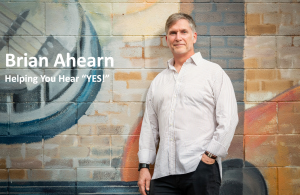
Brian’s first book, Influence PEOPLE: Powerful Everyday Opportunities to Persuade that are Lasting and Ethical, was named one of the 100 Best Influence Books of All Time by BookAuthority. His second book, Persuasive Selling for Relationship Driven Insurance Agents, was an Amazon new release bestseller in several categories.

Brian’s LinkedIn Learning courses on persuasive selling and coaching have been viewed by more than 400,000 people around the world.


Reflections of a Recovering Perfectionist

I don’t always enjoy getting feedback. I bet most people reading this don’t like it either. It would be great to sail through life doing everything perfectly but that’s not reality. Although I don’t always enjoy feedback, I’ve learned to embrace it. In my case, feedback stings because I used to be a perfectionist. 

Quick Backstory

I was raised by a Marine. For some of you reading this, nothing more needs to be said. My father had high expectations for me, especially when it came to grades. Education was a big thing in the Ahearn family, going back to my grandfather who was a professor at NYU and other prestigious colleges. 

I vividly remember bringing a report card home in eighth grade: six As and a C. My father’s response was, “What happened in English?” That took place more than 40 years ago and the fact that I still remember it shows it had a big impact on me. It set in motion a need to be perfect.  

Interestingly, when Jane and I went to an open house during our daughter Abigail’s freshman year of high school I was confronted with a similar situation. Abigail’s grades were good except in science. I kept my mouth shut, not wanting to saddle her with my burden. 

No matter how well I did, it was never quite good enough. In my mind feedback wasn’t received as an opportunity to grow and do better, it filtered through me as, “Not good enough.” I never took time to enjoy what I’d accomplished or how far I’d come. It was always about what could have been better and how far I still had to go.

Growth

Over time, I slowly learned to change how I thought about feedback. There’s no denying on a gut level it still bothers me a little and sometimes even stings. But I’ve learned that I can acknowledge how I feel then set aside my emotions and choose a different thought process concerning the feedback.

Most of the feedback I receive comes from people who know me. I know they’re rooting for me and their feedback is only intended for good. Reminding myself of that helps.

I’ve also learned to enjoy the process of growth. Now, whenever I give a presentation, I almost always feel like it’s the best one I’ve given. After enjoying that feeling I look for ways to make it better. However, now I do so because I enjoy improving my skills and know the better I get, the more people I can help. It’s fun. 

Current State

This all came to mind recently when I received feedback from people on my upcoming book, The Influencer: Secrets to Success and Happiness

Writing a book is a little like having a kid. Both are creations that emanate from you. Just as most parents think their kid is just the best thing ever, authors tend to feel similar about their writing. Someone criticizing your kid would sting and some of the feedback I received felt like that.  

I spent a good bit of time processing what people shared. I also talked it over with Jane. Now I’m diving back into the book. It may delay its publication, but it will be worth it because the finished product will be even better.  

Conclusion 

Most of the time you can’t help how you feel. Feelings come from a lifetime of experience and conditioning. But that doesn’t mean you have to be ruled by your emotions. 

Denying how you feel doesn’t work either. I’ve found the best approach is to honestly acknowledge how you feel. Next, take a breath and assess the situation. What story are you telling yourself? Sometimes people are trying to tear you down, but you don’t need to listen to them. Focus on the people who are your fans, the ones cheering for your success. 

None of this is easy but if you struggle with perfectionism or feedback like I did, you too can turn the corner. It won’t happen by chance, it will take some deliberate work, and it’s so worth it.

Brian Ahearn

Brian Ahearn is the Chief Influence Officer at Influence PEOPLE, LLC. An author, TEDx speaker, international trainer, coach, and consultant, he’s one of a dozen people in the world personally trained by Robert Cialdini, Ph.D., the most cited living social psychologist on the science of ethical influence.

Brian’s first book, Influence PEOPLE: Powerful Everyday Opportunities to Persuade that are Lasting and Ethical, was named one of the 100 Best Influence Books of All Time by BookAuthority. His second book, Persuasive Selling for Relationship Driven Insurance Agents, was an Amazon new release bestseller in several categories. 

Brian’s LinkedIn Learning courses on persuasive selling and coaching have been viewed by 400,000 people around the world.

Why Should I Believe You?

My wife, Jane, is an awesome golfer! But, that wasn’t always the case. About 15 years ago she said, “I’m tired of people saying I have a nice swing. I want to get good scores! All I want for my birthday is money for golf lessons.” 

Being the dutiful husband that I am, I gave her cash for that birthday. I also told the rest of the family that’s what she wanted.

Jane started taking lessons and practicing like a fiend! Over the years her scores dropped from the 100 to 110 range, down to the upper 70s and low 80s. In July this year she broke par for the first time. She birdied the 18th hole, the number one handicap hole on the course, to shoot a one under 71. Proud moment for her, proud moment for me.

Here’s the Story

I share that history to set up this story. Many, many years ago, I came home from a sales training event and during dinner I told her about a golf example I used in the training. I thought she’d appreciate that and it would make good conversation.

Several weeks went by and Jane was reading a book about golf. She turned to me and said, “Listen to what Corey Pavin says,” then went on to read a paragraph. What she read had to do with mindset and was almost exactly what I told her weeks before. Knowing that, I replied, “I told you that.” 

She had no recollection of me sharing the golf example a few weeks earlier no matter how detailed I got about the training event or dinner conversation. Finally, I gave up and said, “Oh, if Corey Pavin says it then it’s true but when I say it, it’s not?”

Here’s the deal; Corey Pavin was a pro golfer who won 15 PGA events, including the U.S. Open in 1995, and was the #2 ranked golfer in the world at one time. So, who would you believe when it comes to golf advice; Corey Pavin, U.S. Open winner, or Brian Ahearn, bogey (double bogey!) golfer? That’s a no brainer, right? You’ll go with Corey Pavin every time. 

Here’s the Thing

But here’s the thing; what I shared with Jane was every bit as true as what Corey Pavin wrote on the pages of that book. Sometimes it’s not what’s being said, it’s all about who’s saying it. The principle of authority alerts us to this reality; people will naturally believe the expert more than a non-expert. 

What does this mean for you? If you want to be persuasive you need to invoke your expertise or borrow expertise whenever possible. In my case, Jane might have believed me more if I’d reminded her that I learned to play golf at Muirfield Village Golf Course, Jack Nicklaus’s course that hosts The Memorial Tournament. In other words, I learned from some pretty good pros.

My other option would have been to tell her about pros, like Corey Pavin, who use the mindset approach I shared. Knowing that right off the bat would have given more validity to my words.

Either approach would have taken what I said out of the realm of opinion and made me more influential. Next time you’re trying to influence people keep this in mind because it might be the difference between belief and disbelief. 

PS To commemorate her under par round, I gave Jane a coffee mug that says, “71 and Fabulous.” I told her, “Every morning when you drink from it I want you to think, ‘I am capable.'” I may not be Corey Pavin but I do know a thing or two about mindset.

Brian Ahearn

Brian Ahearn is the Chief Influence Officer at Influence PEOPLE, LLC. An author, TEDx speaker, international trainer, coach, and consultant, he’s one of only 20 people in the world personally trained by Robert Cialdini, Ph.D., the most cited living social psychologist on the science of ethical influence.

Brian’s first book, Influence PEOPLE: Powerful Everyday Opportunities to Persuade that are Lasting and Ethical, was named one of the 100 Best Influence Books of All Time by BookAuthority. His second book, Persuasive Selling for Relationship Driven Insurance Agents, was an Amazon new release bestseller in several categories. 

Brian’s LinkedIn Learning courses on persuasive selling and coaching have been viewed by more than 390,000 people around the world.

Remember Who You Are…Talking To Or About

If you watched The Lion King you may recall the scene where Mufasa tells Simba, “Remember who you are.” Today we need to be reminded, “Remember who you are…talking to or about.”

American gymnast Simone Biles, one of the best-known athletes on the planet, made the decision to withdraw from the Olympics, the biggest stage in the world, on the day of her competition. You’d have to be living on a secluded island to have missed this story. With her competing the United States women’s gymnastics team was almost a shoo-in for the gold. She was expected to contend for, and likely win, five gold medals, which would have made her the most decorated Olympic female athlete ever.

When I first heard the story my gut reaction was, “What?!?” That instant reaction came from growing up in a time when the mantra in sports was, “No pain, no gain!” or “Suck it up!” and “How bad do you want it?” We were told stories about athletes who played with broken bones and concussions because “they wanted it more than the other guy.” And now we know how wrong those actions were. Just look at the number of NFL players who can barely walk later in life and how many have taken their lives because of concussion related incidents.

The negative reaction of some people to Simone’s decision to withdraw reminded me of General George Patton slapping the soldier in the hospital and accusing him of cowardice. We now know that particular soldier and countless others were not cowards. They suffered from post-traumatic stress disorder (PTSD). 

Given what I’ve read about the twisties, a type of vertigo that people who do aerial acrobatics can experience, I don’t blame Biles at all. The amazing feats of athleticism she performs are incredibly dangerous. One wrong landing because of disorientation could lead to paralysis or even death.

Everyone is entitled to their own opinion but what bothers me, and hopefully bothers you as well, is how people express their opinion about her as a person. I’m not going to dignify any of the people by mentioning their names or detailing what they said.

Here’s what I use to keep me in check and do my best to respect people, even those I disagree with. I remind myself that whoever I’m interacting with is someone’s…

Mother or Father

Brother or Sister

Son or Daughter

That covers most relationships. How would I want someone to treat my mother in this situation? How would I want someone to treat my sister? How would I want my daughter treated? In every case I want them to be treated with respect because I love them. Never forget, the person you’re interacting with has infinite value to many people in their lives and should be treated as such.

I don’t want someone I love labeled a disgrace, quitter, horrible person, or anything like that by someone who doesn’t know them in the least. I’m pretty sure most of those making the disrespectful comments would not hold the same view if their son or daughter made a similar decision.

This goes back to reciprocity – we get what we give. If we want respect for ourselves and our loved ones, let’s give respect and hope others follow suit. When we don’t get it, politely call it out. For example, my mother used to work customer service and roadside assistance for AAA. On occasion people would get nasty with her. I always told her, when someone says something disrespectful, let them know you don’t appreciate it. If they do it again, give them one warning, “I asked you to please not use that language with me. Next time I will have no choice but to end the call.” Most people stop when confronted with a confident response like that. If they persist, politely end the call then immediately let your supervisor know what happened. When we let people get away with rude behavior it only reinforces the behavior. 

Setting aside my initial gut reaction noted earlier, recognizing it comes from lots of prior conditioning, I respect and applaud Simone Biles for trusting her instinct to not risk injury, even if it cost her and the team. I’ve no doubt many athletes look back on their careers and wish they’d made similar decisions now that they know what they know. 

Brian Ahearn

Brian Ahearn is the Chief Influence Officer at Influence PEOPLE, LLC. An author, TEDx speaker, international trainer, coach, and consultant, he’s one of only 20 people in the world personally trained by Robert Cialdini, Ph.D., the most cited living social psychologist on the science of ethical influence.

Brian’s first book, Influence PEOPLE: Powerful Everyday Opportunities to Persuade that are Lasting and Ethical, was named one of the 100 Best Influence Books of All Time by BookAuthority. His second book, Persuasive Selling for Relationship Driven Insurance Agents, was an Amazon new release bestseller in several categories. 

Brian’s LinkedIn Learning courses on persuasive selling and coaching have been viewed by more than 385,000 people around the world.

Misinformation, Censorship, and Big Tech

Discussions about misinformation, censorship, and big tech social media platforms have been prominent in the news lately. The convergence of the six-month anniversary of the January 6th Capitol insurrection, ongoing debates about the origins of Covid-19 in the Senate, and the Biden administration’s failure to reach the stated goal for national vaccination all play into the discussion about the role and responsibility of big tech’s dissemination of information.

Misinformation and Manipulation

While the government cannot censor your right to free speech private companies can. That’s why the government is leaning heavily on big tech to do so. In other words, the government is indirectly trying to control free speech under the guise of the spread of misinformation and legal action against social media providers. But, let’s pause and consider the government’s role in misinformation from the highest level, our Presidents:

Kennedy and the Bay of Pigs

Johnson and all the misinformation about the Vietnam War

Nixon and everything having to do with Watergate

Reagan and the Iran Contra Affair

Bush Sr. telling voters, “Read my lips. No new taxes.”

Clinton’s denials about Monica Lewinsky

Bush and WMDs in Iraq

Obama saying dozens of times everyone could keep their healthcare

Trump…take your pick

Misinformation and the manipulation of information are not limited to big tech social media platforms, not by a long shot. Plenty of both go on in podcasts, over text, in phone calls, etc. As someone who strives to teach people how to ethically influence people, misinformation and manipulation anger me. But the answer is not to put the government thumb on social media and censor you and me.

Censorship

For most of my life I’ve heard about the ACLU defending the right for Nazi’s to march in different communities under the guise of free speech. I’ve known veterans who’ve said, “I don’t agree with what you said but I’ll die for your right to say it.” Freedom to share our ideas and thoughts is a constitutional right in this country. 

Censorship seldom works because there’s a principle of influence that comes into play – scarcity. Humans naturally value things more when they believe they are rare or possibly going away. There are numerous studies that show this. In one study with mock juries, when told to disregard certain information because it was irrelevant and therefore inadmissible, that jury award was 46% higher than another jury that never heard about the information. Don’t think about elephants – the very command causes you to do exactly that in the moment and likely for some time. 

Censored books and movies usually enjoy a bounce in sales. After all, if someone, some group, or the government, doesn’t want us to know about certain information then many people will assume it must be good, important, relevant or have some element of truth to it. If you’ve raised kids, you’ve seen this. The moment you say they can’t touch it, watch it, listen to it, or play with it that’s all they want to touch, watch, listen to or play with!

What about Truth?

What if the information that’s deemed inappropriate turns out to be true? If the kinds of restrictions being proposed were in place in some form or fashion in the past we’d probably be worse off because we wouldn’t have gotten to the truth in many scandals.

New Administrations

How will you react the next time there’s a shift in power and a new administration deems your viewpoint misinformed and attempts to restrict it? No party will remain in power indefinitely and what goes around comes around. We’ve been seeing this tit for tat more and more with our political parties. Of course, each side justifies it because they always believe they own the moral high ground. The approach of any party to restrict speech will come back to haunt them and will cause more polarization.

What’s the Answer?

I don’t know the answer but I’m not an elected official so it’s not my job to spend countless hours trying to figure it out. Having said that, I feel strongly that I know what the answer is not and that’s some form of censorship. Censorship is not seeing the forest for the trees. Those who censor might get what they want in the short run but I think we will all lose in the long run.

Brian Ahearn

Brian Ahearn is the Chief Influence Officer at Influence PEOPLE, LLC. An author, TEDx speaker, international trainer, coach, and consultant, he’s one of only 20 people in the world personally trained by Robert Cialdini, Ph.D., the most cited living social psychologist on the science of ethical influence.

Brian’s first book, Influence PEOPLE: Powerful Everyday Opportunities to Persuade that are Lasting and Ethical, was named one of the 100 Best Influence Books of All Time by BookAuthority. His second book, Persuasive Selling for Relationship Driven Insurance Agents, was an Amazon new release bestseller in several categories. 

Brian’s LinkedIn Learning courses on persuasive selling and coaching have been viewed by more than 385,000 people around the world.


Even Superheroes Need the Power of Persuasion

When I thought about this week’s blog post I felt I’d run dry. I’ve been writing weekly for more than a dozen years. That’s a long time and it’s not always easy to come up with fresh ideas to write about. 

No matter how much I pondered topics over the weekend, nothing jumped out. Then, as I was sitting in Starbucks on Monday morning it hit me. I was listening to Coldplay’s Something Just Like This and decided to share a post I’d written nearly a decade ago. The beautiful thing is that it ties in with last week’s post, What’s Your Superpower to Change the World? Coldplay’s opening lyrics that jarred me are:

I’ve been reading books of old

The legends and the myths

Achilles and his gold

Hercules and his gifts

Spider-Man’s control

And Batman with his fists

And clearly I don’t see myself upon that list

The Original Post 

As I was watching Spiderman 2 with my daughter on a lazy Sunday afternoon something leaped out at me. No, it wasn’t Peter Parker from the top of a tall building; it was Spiderman’s need for the power of persuasion when his superhero powers couldn’t do the trick.

As the movie concludes, Spiderman battles Dr. Otto Octavius who had become the evil Dr. Octopus. Spiderman momentarily bests the evil doctor and pulls off his mask to reveal his true identity. Dr. Octavius recognizes Peter Parker, a former student. The following exchange ensues as Peter tries to convince the doctor to shut down the octopus-like machine he’s created.

Spiderman: You once spoke to me about intelligence; that it was a gift to be used for the good of mankind.

Dr. Octavius:  Privilege.

Spiderman:  These things have turned you into something you’re not.

Dr. Octavius:  It was my dream.

Spiderman:  Sometimes we have to give up the thing we want the most.

Dr. Octavius:  You’re right.

At that point the doctor, having regained his old notion of right and wrong, proceeds to help Spiderman defeat the tentacle monster.

Despite his “spidey” superpowers our superhero decided the better course of action was to tap into a different superpower; the power of the principle of consistency. This principle of influence tells us people feel the psychological need to be consistent in word and deed. This need arises from the fact that most people feel bad about themselves when they say one thing and then go back on their word. This principle is so powerful that sometimes we even find ourselves doing things we don’t really want to do just because we said we would.

A Real World Encounter

An example of this might be the appliance salesman noticing you looking at a particular refrigerator model. Knowing full well there’s plenty in stock he might say, “I think we just sold the last one earlier today.” This taps into scarcity and makes you want it all the more. Then he taps into consistency, “I could go in the back and take a look if you like. If we have one left do you want it?” Feeling the tug that it might be the last one, then giving your word that you do want it, might lead you to make a purchase you might not have otherwise. After all, it will be hard to back out when he returns and tells you, “Great news, I was wrong. We do have one left. Let’s go get the paperwork started.”

Fortunately, Spiderman didn’t rely on stretching the truth like the salesman might have. During that final exchange between Peter Parker and his former professor, Peter simply reminded Dr. Octavius he told students his goal was to use artificial intelligence for the good of mankind. The doctor acknowledged it was indeed a privilege and this was the turning point where the foe became a friend and the two worked together to defeat the evil machine.

Tapping into the power of consistency is available to us more often than you think. We can do so by asking questions or learning about the other person in advance of the conversation where you need to be persuasive.

Conclusion 

So, here’s my persuasion advice: next time you want to persuade someone do your homework first. Can you find out something about the other person’s values and beliefs? Can you learn their stated position on things or uncover some of their prior actions? If you can and you figure out how to align your request with them, the odds of them saying “Yes” to you will go up rather dramatically. You might not be in a battle for the supremacy of good versus evil or trying to save a city from a mad man but nonetheless, I’m sure your request is important to you.

Brian Ahearn

Brian Ahearn is the Chief Influence Officer at Influence PEOPLE, LLC. An author, TEDx speaker, international trainer, coach, and consultant, he’s one of only 20 people in the world personally trained by Robert Cialdini, Ph.D., the most cited living social psychologist on the science of ethical influence.

Brian’s first book, Influence PEOPLE: Powerful Everyday Opportunities to Persuade that are Lasting and Ethical, was named one of the 100 Best Influence Books of All Time by BookAuthority. His second book, Persuasive Selling for Relationship Driven Insurance Agents, was an Amazon new release bestseller in several categories. 

Brian’s LinkedIn Learning courses on persuasive selling and coaching have been viewed by more than 385,000 people around the world.

What’s Your Superpower to Change the World?

I’ve been a guest on more than 100 podcast episodes over the last few years. I enjoy podcasts for several reasons. First, they are a great opportunity to reach new audiences around the world. Second, the conversations give me a chance to work on my speaking skills and messaging. Last but not least, I’ve met many wonderful podcast hosts. As the world slowly reopens, I hope to meet as many of them as possible during my travels. 

Having been on so many shows, it’s pretty rare when I’m asked a question I’ve not heard before. That wasn’t the case when Jason Cooper invited me on The Global Sales Leader Podcast earlier this year. Jason hails from Dublin, Ireland, so I hope to share a pint of Guinness or some Irish Whiskey with him someday. You can watch the episode on YouTube. 

Jason asked me a question I’d not encountered on any other show, and I thought it would be worth sharing with you. He asked, “If you had a magic pill to become a superhero, or had a magic power for 10 minutes, what would you use it for and how would you use it.”

After a long pause I replied, “I want to have a platform where the entire world can hear me. I want an opportunity to share something that might impact millions, or perhaps billions of people’s thinking for just a moment to get them to act more decently and civilly towards each other.”

I told Jason, “There was a meme on the internet a while ago that was attributed to the rapper Eminem. It said, ‘I don’t care if you’re black or white, male or female, gay or straight, if you treat me with respect, I’ll treat you with respect.’ People online applauded it, some saying that was their religion.”

Then I went on, “If you stop and think about it, what he’s saying is, I’m waiting for you to treat me with respect, and when you do, then I’ll treat you with respect. In other words, he’s turned away waiting and the other person is turned away, waiting.”

“I think the right approach is, ‘I don’t care if you’re black or white, male or female, gay or straight, I will treat you with respect, and I hope you’ll treat me with respect in return.’ In other words, I’m going to extend the very thing I want from you, and I hope you’re generous and reciprocate by giving it to me.”

I concluded, “When I tell people this they look as if the wheels are turning in their minds, as if they’re thinking, ‘You’re right that’s what makes sense. I should be extending forgiveness, kindness, respect, and grace. I need to extend those, and most people will reciprocate. That will get the ball rolling.’”

My approach isn’t new. Jesus encouraged us to be the first to give (the Golden Rule) and to treat people as we’d want to be treated. Gandhi told his followers to be the change they wanted to see in the world. Although what I shared isn’t new, I’ve come to see that it’s often the case that people can use different words to say the same thing. Sometimes the slightly different approach is what makes the lightbulb come on for people. I hope this sheds some new light on an old subject for you. Extend kindness, generosity, caring, and other good qualities and I think you’ll be pleasantly surprised at how they come back around to you.  

Brian Ahearn is the Chief Influence Officer at Influence PEOPLE, LLC. An author, TEDx speaker, international trainer, coach, and consultant, he’s one of only 20 people in the world personally trained by Robert Cialdini, Ph.D., the most cited living social psychologist on the science of ethical influence.

Brian’s first book, Influence PEOPLE: Powerful Everyday Opportunities to Persuade that are Lasting and Ethical, was named one of the 100 Best Influence Books of All Time by BookAuthority. His second book, Persuasive Selling for Relationship Driven Insurance Agents, was an Amazon new release bestseller in several categories. 

Brian’s LinkedIn Learning courses on persuasive selling and coaching have been viewed by more than 385,000 people around the world.

Quarterly Newsletter

In my last quarterly newsletter I wrote, “If all goes well we might feel like life is closing in on ‘normal’ by summer.” Thankfully that seems to be the case in nearly all parts of the country.

I hope the second quarter was good for you on a professional and personal level. That was certainly the case for me. I was pleasantly surprised at the opportunities that started popping. I’ve used the video studio I set up in my home extensively with current and prospective clients. 

What’s caught my notice more than anything are the in-person speaking and training opportunities that have opened up for Q3 and Q4. No one is talking about contingency plans which leads me to believe businesses have faith that the vaccine is working, and the pandemic is largely in the rearview mirror. I hope things are looking up for you with each passing day.

Sincerely,

Brian

What’s Influence PEOPLE all about?

  •       Why – Help you enjoy more professional success and personal happiness.
  •       How – Teach you the science of ethical influence.
  •       What – Speak, write, train, coach, and consult.
  •       Who – Clients include leaders, salespeople, business coaches, insurance professionals, and attorneys.

Here’s What’s New

Blog Posts

Last quarter was a blogging milestone. My first post came out 12 years ago and every week since that time I’ve posted an article. That’s more than 600 posts! It’s not always easy to come up with something to share and some weeks I feel dry. However, it’s often the case when I come up with ideas just before my deadline that the articles resonate the most. I started the blog simply to share something I thought could help people on a professional and personal level. I hope you’ve gotten a few ideas that help you at the office and home.

Podcasts

Podcasts continue to be a cornerstone of my outreach to new markets. There are 108 listed on my website, several upcoming recordings on the calendar, and more than half a dozen ready for publication. Beyond the business aspect, I’ve met some truly good people, folks I hope to see in person as the country opens up and I hit the road. A few shows I encourage you to check out include: 

Writing

I’m happy to say both Influence People: Powerful Everyday Opportunities to Persuade that are Lasting and Ethical and Persuasive Selling for Relationship Driven Insurance Agents continue to do well and get excellent reviews. Persuasive Selling also serves as the basis for my one-day workshop for insurance companies and insurance agents. Reach out to me if you’d like to learn more about that.

I’ve finished writing my third book, The Influencer: Secrets to Success and Happiness, and it’s in the hands of a few dozen reviewers. One early reviewer wrote, “This is a book for anyone in a position of influence! You will be a better teacher, coach, manager, leader, salesperson, or elected official when you learn how to use the scientifically proven methods of persuasion Brian shares throughout the book.”

The book follows a young man, John Andrews, as he learns about the impact influence can have on his professional success and personal happiness. I chose a story format to engage a new audience, people who might not pick up a psychology or sales book. Writing The Influencer has been the most fun I’ve ever had writing! Keep an eye out for it later this year.

Best of…

Warren Buffett said, “The best investment you can make, is an investment in yourself. The more you learn, the more you’ll earn.” Being one of the richest people who ever lived, let’s heed Buffett’s words! Below are books, podcasts, and shows that will help grow your greatest investment.

Books

Maverick: A Biography of Thomas Sowell by Jason L. Riley. Sowell is one of the great economic thinkers of the last 60 years and one of the most prolific writers having authored more than 30 books. Sowell grew up in Harlem in the 1930s and 40s, served in the military, then became an avowed Marxist. It wasn’t until he saw government inefficiency in action that he began to rethink many of his positions on governments and the economy. Whether or not you agree with his positions you cannot dispute his brilliance. 

Basic Economics: A Common Sense Guide to the Economy by Thomas Sowell. I read this book nearly a decade ago but was inspired to pick it up again after reading Maverick. Without getting overly technical, resorting to endless charts, or boring the reader with stats, Sowell lays out what the study of economics is and is not, and how it explains daily life. Reading this book will give you an appreciation for why so many government solutions fail to solve some of our biggest problems (Hint: there’s a difference between political and economic solutions). The more I read the more convinced I became that more much of our freedom is due to our ability to prosper in a free market society.

Podcasts

Armchair Expert is co-hosted by Dax Shepard and Monica Padman. I was turned on to this show by my wife Jane. Dax and Monica have interesting guests including Barack Obama, Quentin Tarantino, Amy Poehler and many others. What I enjoy about the show is how down to earth, fun and funny the conversations are.

WorkLife is the brainchild of Adam Grant. Grant is a social psychology professor at Wharton and has authored numerous books. His goal is admirable – to make work not suck. I guarantee he will challenge your thinking so get ready to say, “I don’t agree,” or “Hmmm,” or “I never looked at it that way before.”

Watch

Thomas Sowell: Common Sense in a Senseless World is an hour-long exploration of the life and work of one of America’s great economists. No need to go into detail here since I mentioned Sowell in the books section. This might be a good way to dip your toe in the water before picking up Maverick or Basic Economics.

Brian Ahearn is the Chief Influence Officer at Influence PEOPLE, LLC. An author, TEDx speaker, international trainer, coach, and consultant, he’s one of only a dozen people in the world personally trained by Robert Cialdini, Ph.D., the most cited living social psychologist on the science of ethical influence.

Brian’s first book, Influence PEOPLE: Powerful Everyday Opportunities to Persuade that are Lasting and Ethical, was named one of the 100 Best Influence Books of All Time by BookAuthority. His second book, Persuasive Selling for Relationship Driven Insurance Agents, was an Amazon new release bestseller in several categories. 

Brian’s LinkedIn Learning courses on persuasive selling and coaching have been viewed by more than 380,000 people around the world.

Was it Good Fortune, an Opportunity Seized, or Both?

If you’ve followed my blog for very long or have read Influence PEOPLE or Persuasive Selling then no doubt you’ve seen my use of this quote, “Luck is where preparation meets opportunity.” For most of my life I attributed the saying to my high school football coach Todd Alles. A few years ago, a friend told me it was Seneca, the Roman philosopher, who first came up with the saying. I’m thankful that Coach was well read! 

Last week I listened to a podcast episode from The Jordan Harbinger Show where Jordan interviewed Robert Frank about The Myth of Meritocracy. The gist of the show was simply this – much more of anyone’s success has to do with luck than they’re willing to admit.

This notion offends some people. I think that’s especially true in America because of our “pick yourself up by your bootstraps” mentality. Frank wasn’t saying success is just luck, but it plays a bigger role than we realize. Many people who never make it big work extremely hard, perhaps harder than some who do make it. The problem is, we don’t know those stories. Books aren’t written and movies are not made about the people who toiled throughout life and didn’t achieve notoriety. That would be too common of a story.  

Whatever you want to call it – good fortune, dumb luck, pure chance or golden opportunities – much of my success has been outside my sphere of control. Here are three that stand out for me because they were life changing. 

My First Job

As I was about to graduate college, I’d accepted a job in Akron, Ohio with a department store. The final week of school I got a letter from The Travelers Insurance Company. I knew nothing about the company or insurance but decided to go to the interview because the job was in Columbus, my hometown. If I got the job I reasoned I’d stay close to the girl I was dating, friends, and family. My first day on the job I met Jane. Within weeks I was no longer dating the other girl and Jane and I have now been married for more than 33 years. Oh yea, and insurance, the industry I knew nothing about, led to a great career!

Our Home

Jane and I have lived in the same home for more than 30 years. Believe it or not, it was the first home we ever looked at. The confluence of events leading to that decision was when a coworker who lived in the neighborhood mentioned to Jane that the home was for sale. The house was unique for the area, a Parade of Homes home in 1968. We didn’t have a realtor and Jim, the man showing the house, just happened to live in the same home – the only other one in the neighborhood – which led to instant trust. 

Meeting Robert Cialdini

My association with Robert Cialdini was completely by chance. After watching a video that a coworker shared, I was drawn to his work because of its application to sales, the research basis and his emphasis on ethics. When Stanford University advertised the video using the word “manipulation” I called them on it. In addition to his clear emphasis on ethical influence, my email to Stanford reminded them that nobody wants to be manipulated and no one (at least that I know) is looking to become a good manipulator. My emphasis was using the word manipulation cannot be helping sales of the video but it was probably hurting sales.

As a result of that email, Stanford changed the marketing of Cialdini’s video. And, to my good fortune, they told him about my email. He had one of his representatives call me to thank me on his behalf. That phone call led to him speaking at my former company and what turned into a nearly 20-year relationship.

Preparation + Opportunity

I do believe we have a hand in creating some of our luck. In each case I’ve noted there were decisions along that way that, if I’d decided differently, I would not have been in the position to positively interact with the opportunities that were presented.

I had to do well enough in school to be considered by The Travelers and I made the decision to take the job even though it paid less than the department store job.

With the house Jane and I had been working good paying jobs for a few years and saved some money. 

With Cialdini I had to trust my moral compass and make the decision to address the situation with Stanford. 

Don’t Forget Gratitude

At the end of the podcast Jordan and Robert Frank discuss the concept of gratitude. If you’re reading this, you should be grateful that you’re alive at this point in time. There’s never been a safer, more prosperous time on this planet than the age we’re living in. If you ponder other aspects of your life and consider some of the things that were outside your control that have helped you, express gratitude. I hope you take some time to check out the podcast episode because I think you’ll get a lot out of the discussion. 

Brian Ahearn is the Chief Influence Officer at Influence PEOPLE, LLC. An author, TEDx speaker, international trainer, coach, and consultant, he’s one of only a dozen people in the world personally trained by Robert Cialdini, Ph.D., the most cited living social psychologist on the science of ethical influence.

Brian’s first book, Influence PEOPLE: Powerful Everyday Opportunities to Persuade that are Lasting and Ethical, was named one of the 100 Best Influence Books of All Time by BookAuthority. His second book, Persuasive Selling for Relationship Driven Insurance Agents, was an Amazon new release bestseller in several categories. 

Brian’s LinkedIn Learning courses on persuasive selling and coaching have been viewed by more than 380,000 people around the world.