Assume Positive Intent: The Influence of Giving Grace

Earlier this year, I delivered a full-day training event for a client. The session went well—until the debrief. The CEO passed along a bit of feedback: a couple of attendees were put off by a response I gave during the Q&A.

The Scenario?

During the training, a participant asked how I’d respond if a young woman on my team brought a sensitive issue to my attention. I replied, “If you were my daughter, here’s what I’d tell you.”

To me, this was heartfelt and meant to convey deep care. But a few younger employees heard something different—something condescending or paternalistic. Their reaction caught me off guard. After all, my response came from a place of love, respect, and the principle of unity, one of Dr. Cialdini’s most powerful principles of influence.

What is Unity ?

Unity is about shared identity—seeing others as part of “us” rather than “them.” When we feel connected, we’re more likely to act in each other’s best interests because, in a very real sense, their success and happiness becomes part of our success and happiness.

When it comes to unity, Cialdini often points to Warren Buffett’s line to shareholders in a recent annual report: “I’m going to tell you what I would tell my family.” The implication? His advice wasn’t corporate speak—it was personal, sincere, and deeply considered.

That’s how I meant my comment. I have a close, meaningful relationship with my daughter. If I’m offering someone the same advice I’d give her, it means I care—deeply.

Senders and Receivers

But here’s where communication gets tricky.

There’s what I intended to say and there’s what I actually said. But wait, there’s more…
There’s what the other person thinks they heard and what they actually heard (the exact words).

Those things often don’t align. And that gap? That’s where misunderstanding lives.

We all filter messages through our own experiences. For someone who had a strained relationship with a parent, my comment might land differently than it did for someone who had a better upbringing. I can’t know everyone’s personal history. But I do know this: when we assume negative intent, we shut the door to connection.

Positive Intent

When we assume positive intent, we open the door to understanding.

Giving the benefit of the doubt doesn’t mean we ignore how a message makes us feel or silence honest feedback. It means we seek clarification before forming judgment. It means we ask, “What did you mean by that?” rather than assuming the worst.

Would it have helped if someone had approached me during a break to ask why I framed my answer that way? I think so. I would’ve shared the story of a trusted mentor who once looked me in the eye and said, “If you were my son…” It was an important point in my career because I knew his advice came from a place of love.

What Did I Learn?

Still, I’ve learned something from this experience. I’ll adjust my approach—not my message—by framing it in the future. That’s pre-suasion in action: setting the stage before the message is delivered.

Next time, I’ll remind the audience about the principle of unity. Then I’ll reference Buffett’s words. I’ll also share the story of my mentor and my affection for my daughter. By doing so, I’ll help listeners better understand the intent behind my words.

What if someone still disagrees? That’s okay. Not every message will land with everyone—but trying to please everyone is a surefire way to water down what matters.

Advice for Audience Members and Communicators

If you’re ever in the audience and something doesn’t sit right, don’t just disengage—engage by asking questions. Start a conversation. Try to understand intent from the other person’s point of view. You might walk away with a new perspective—or help someone else gain one.

And if you’re the one speaking? Remember: context—especially when it comes from a place of shared humanity—can make all the difference.

Let’s give each other the benefit of the doubt. It might be the most influential thing we do.

Edited by ChatGPT

Brian Ahearn

Brian Ahearn is the Chief Influence Officer at Influence PEOPLE and a faculty member at the Cialdini Institute.

An authorTEDx speaker, international trainer, coach, and consultant, Brian helps clients apply influence in everyday situations to boost results.

As one of only a dozen Cialdini Method Certified Trainers in the world, Brian was personally trained and endorsed by Robert Cialdini, Ph.D., the most cited living social psychologist on the science of ethical influence.

Brian’s first book, Influence PEOPLE, was named one of the 100 Best Influence Books of All Time by Book Authority. His follow-up, Persuasive Selling for Relationship Driven Insurance Agents, was an Amazon new release bestseller. His latest book, The Influencer: Secrets to Success and Happiness, is a business parable designed to teach you how to use influence at home and the office.

Brian’s LinkedIn courses on persuasive selling and coaching have been viewed by more than 800,000 people around the world. His TEDx Talk on pre-suasion has more than a million views!
Parenting and Grandparenting: Influence Lessons for Leaders and Mentors

I’ve been out of the corporate world for nearly seven years now. Over the course of three decades in the insurance industry, I wore many hats: boss, coach, and mentor.

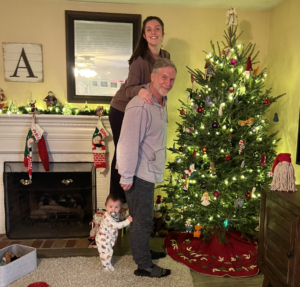
Lately, I’ve been reflecting on the differences between those roles—especially the contrast between being a boss and a mentor. That reflection has been inspired by someone very special: our new grandson, Emmett.

Every time I look at a photo of him, I think, “I love that little guy!” It’s a powerful, overwhelming emotion. At times, I’ve caught myself wondering, “Do I love him more than I loved our daughter Abigail when she was born?” That’s a hard comparison to make—Abigail arrived nearly 30 years ago—but what I’ve realized is that the love is different, not greater.

As a parent, you’re driven by a primal responsibility. You love your children, of course, but that love comes with tremendous obligation: feeding, protecting, guiding, shaping. You’re constantly thinking about their future, and your role in it.

Grandparenting, on the other hand, is love unburdened. There’s no pressure to raise the child—just to enjoy, support, and love. You choose to be there. Every interaction is voluntary. It’s joyful, not stressful. It feels free!

And that got me thinking: this is very similar to how being a mentor differs from being a boss.

The Boss vs. Mentor Mindset

As a boss, you carry serious responsibility. You’re accountable for your team’s results. Your positional authority gives you power—assigning tasks, conducting reviews, approving raises. A good boss certainly coaches, but even that coaching comes with an undercurrent of pressure because “performance” is always the overarching goal.

Mentorship is different. There’s no positional power—just personal credibility. People don’t have to listen to a mentor; they choose to. And when someone seeks out your insight voluntarily, your influence can go deeper.

In terms of Cialdini’s principles of persuasion, bosses rely more on in-authority: title, structure, and consequence. Mentors succeed through an-authority—a term I use to describe those who are seen as credible guides because of who they are, not what title they hold. Mentors influence not by directive, but by invitation.

A Matrix to Clarify the Differences

Other principles that come into play are LikingReciprocity, Consistency, and Unity. Let’s simplify the contrast using a matrix:

Dimension Parent / Boss Grandparent / Mentor
Role & Responsibility Responsible for performance and outcomes. Must protect, correct, and drive results. No formal responsibility. Freely support, encourage, advise, and love unconditionally.
Motivation Duty and obligation. Choice and connection.
Emotional Posture Emotionally intense: urgency, stress, fear of failure. Emotionally free: calm, patient, joyful presence.
Timeframe Short-term: KPIs, grades, deadlines. Long-term: character development, legacy, purpose.
Relationship Dynamic In Authority: performance managed, expectations enforced. An-Authority: collaborative, growth inspired.
Influence Style Directive and Evaluative: “Do this,” “Fix that.” Uses positional authority and feedback. Reflective and Consultative: “Have you considered…?” Relies on trusted expertise, sharing stories and wisdom.
Principles of Influence Authority (In), Unity (Team), Consistency (Expectation), Scarcity (Consequences) Authority (An), Liking (Choice), Reciprocity (Freely Give)

Why This Matters

Whether you’re leading a team or guiding a mentee, the way you show up matters. If your role demands performance, you’ll need to lean heavily on authority, consistency, and scarcity. But if you’re in a position to guide without pressure, don’t underestimate the power of relational influence.

In fact, some of the most transformative leadership I’ve witnessed comes not from bosses demanding change—but from mentors inspiring it. It’s a shift from managing behavior to shaping belief. From compliance to commitment.

Practical Takeaways

Ask yourself these questions:

  • Am I showing up like a parent or a grandparent?
  • Am I managing outcomes or mentoring growth?
  • Am I leveraging your title or trust?

Influence isn’t always about being in charge. Often, the greatest influence comes when people lean in—not because they have to, but because they want to.

Just like little Emmett doesn’t need me to raise him, but he gets to be loved by me—I think the people we lead, or mentor deserve that same freedom. Less pressure. More presence.

And ultimately, a deeper connection that inspires real change.

What do you think? Have you experienced the shift from boss to mentor—or parent to grandparent—in your own life or work? Share your experiences in the comments below.

Edited with ChatGPT


Brian Ahearn

Brian Ahearn is the Chief Influence Officer at Influence PEOPLE and a faculty member at the Cialdini Institute.

An author, TEDx speaker, international trainer, coach, and consultant, Brian helps clients apply influence in everyday situations to boost results.

As one of only a dozen Cialdini Method Certified Trainers in the world, Brian was personally trained and endorsed by Robert Cialdini, Ph.D., the most cited living social psychologist on the science of ethical influence.

Brian’s first book, Influence PEOPLE, was named one of the 100 Best Influence Books of All Time by Book Authority. His follow-up, Persuasive Selling for Relationship Driven Insurance Agents, was an Amazon new release bestseller. His latest book, The Influencer: Secrets to Success and Happiness, is a business parable designed to teach you how to use influence at home and the office.

Brian’s LinkedIn courses on persuasive selling and coaching have been viewed by more than 800,000 people around the world. His TEDx Talk on pre-suasion has more than a million views!
The Spotlight Effect—It’s Not About You or Me

Last week, I wrote about integrity and the importance of doing the right thing, regardless of who might be watching. This week, I want to flip the spotlight—literally—and talk about something called the spotlight effect.

If you’re not familiar with the term, here’s the short version: The spotlight effect is the tendency to think that people are paying more attention to us than they actually are—especially when we make mistakes.

You forget someone’s name. Say the wrong thing in a meeting. Send a follow-up email that gets ignored. It’s easy to assume others are dwelling on it. But here’s the truth: They’re not. Not even close. And the same is true for me.

My Wake-Up Call

A few years ago, after I left my corporate role at State Auto Insurance to pursue Influence PEOPLE full time, I hit a wall.

I was sending out emails. Leaving voicemails. Following up with people, many that I’d known and worked with—people who had moved on to new companies. I was confident in the value I could bring… but nobody was responding.

Not one person.

Three months passed, and I started to wonder, Did I mess this up? Did I overestimate my relationships? Was I not as good as I thought?

Then, in the span of 24 hours, a half-dozen people got back to me. And they all said roughly the same thing: “Brian, it’s not you. Here’s what’s been going on with me…”

That’s when it hit me: Despite strong relationships, I wasn’t their focus.
In fact, I wasn’t even on their radar most of the time.

And that realization—humbling as it was—helped me remember how I used to operate when I was in their shoes. Back then, I was juggling internal priorities, corporate goals, dozens of competing demands, all while leading a small team. Even if I liked a vendor or training partner, getting back to them wasn’t always high on the priority list.

Don’t Take It Personally—Take It Strategically

With that in mind, I made two key adjustments to how I approach client outreach today:

  1. I stay in touch regularly.
    I follow up with prospective clients once a quarter—by email or phone. Not in a pushy way, but in a consistent way, always letting them know I’m here for them. Because when timing, need, and budget finally align, I want to be top of mind.
  2. I stay visible on LinkedIn.
    Whenever I connect with someone new, I make sure we’re connected on LinkedIn. I post content daily, so even if they’re not responding to my emails, they’re still seeing me regularly—and hopefully finding value in what I share.

This approach works. I’ve had people reach out after months (even years) of silence to say, “We’ve got a project—and we thought of you.”

Influence Principle in Action: Consistency

This is a textbook example of Robert Cialdini’s principle of consistency adding to authority. When people see you show up regularly—with value, not just sales pitches—you become familiar. Trust grows and you build credibility over time. And when they’re finally ready to act, you’re the obvious choice.

It also speaks to liking. The more people become familiar with you—seeing your face, hearing your voice—and benefit from your content, the more they’re likely to feel connected to you and like you.

Final Thought: The Spotlight Will Shift

So, if you’re in sales, starting a business, or simply trying to build influence, remember this: Most people aren’t thinking about you. They’re dealing with their own challenges, deadlines, and distractions.

That’s not rejection. It’s reality.

Instead of taking silence personally, take it as a signal to stay consistent, stay visible, and stay helpful. Because one day, the spotlight might turn your way—and when it does, you’ll be ready.

Questions to Ponder

Have you ever assumed someone was ignoring you, only to find out they were just busy or overwhelmed? How did that shift your thinking? Please share your experience in the comments.

Edited with ChatGPT

Brian Ahearn

Influence PeopleBrian Ahearn is the Chief Influence Officer at Influence PEOPLE and a faculty member at the Cialdini Institute.

An authorTEDx speaker, international trainer, coach, and consultant, Brian helps clients apply influence in everyday situations to boost results.

As one of only a dozen Cialdini Method Certified Trainers in the world, Brian was personally trained and endorsed by Robert Cialdini, Ph.D., the most cited living social psychologist on the science of ethical influence.

Brian’s first book, Influence PEOPLE, was named one of the 100 Best Influence Books of All Time by Book Authority. His follow-up, Persuasive Selling for Relationship Driven Insurance Agents, was an Amazon new release bestseller. His latest book, The Influencer: Secrets to Success and Happiness, is a business parable designed to teach you how to use influence at home and the office.

Brian’s LinkedIn courses on persuasive selling and coaching have been viewed by more than 800,000 people around the world. His TEDx Talk on pre-suasion has more than a million views!

Just Do It (The Right Thing)

You’ve probably heard by now about the Coldplay concert and the “Kiss Cam” controversy involving the CEO and head of HR from Astronomer. If not, either you’ve tuned out the news or you’ve been living under a rock.

This isn’t a post to pile on. I’m sure those individuals are experiencing plenty of shame and regret. Their decision didn’t just impact them—it spilled over to colleagues, friends, and especially their families.

What struck me wasn’t just the moment itself, but a LinkedIn post I saw afterward. It reminded leaders that they’re always under surveillance. It mentioned reputation, duty, and leadership. All valid points. But I think it missed the deeper truth.

I chimed in with a comment: “If you focus on doing the right thing… you don’t have to worry about being watched.”

That simple line sparked dozens of likes and thoughtful comments. Why? Because it cuts to the heart of leadership and ethical influence: integrity.

Who Are You When No One’s Watching?

We shouldn’t do the right thing just because we’re afraid of being caught. That’s not integrity—that’s image management. True integrity is doing what’s right even when no one is watching or will ever know.

We’ve all heard that quote. But how often do we stop and reflect on what it means in practice?

Let me be clear: we’re all going to mess up. I certainly have. Like the time I was reading a book on a flight to a training event. I found a story that fit perfectly with a point I wanted to make in my training. It was funny, insightful… and, it turns out, offensive to some in the room.

I didn’t realize it until a longtime coworker—someone I trusted and knew had my best interests at heart—pulled me aside afterward. She gently but directly told me how the story landed. I hear her loud and clear and the next time I addressed that same group, I led with an apology.

Dale Carnegie famously wrote, “When you’re wrong, admit it quickly and emphatically.” That’s not just good advice—it’s good influence. When you take responsibility for your mistakes, people are more likely to trust you again. Why? Because owning up is rare. And rare things stand out.

Influence That Lasts Begins with Trust

In my work teaching ethical influence—whether through LinkedIn Learning, keynotes, or my books—I come back to this truth again and again: You cannot influence people over the long haul without trust.

Robert Cialdini calls this liking and authority—people follow those they feel connected to and respect. Aristotle talked about it too. He called it ethos, one of the three pillars of persuasion. Ethos isn’t just your title or expertise—it’s your character.

People follow your example far more than your words. If your life doesn’t align with your message, your influence will eventually unravel.

Who Are You Accountable To?

One of my favorite Bible verses comes from the apostle Paul. In his first letter to the church at Corinth he wrote: “I care very little if I’m judged by you or any human court; indeed, I do not even judge myself. My conscience is clear, but that doesn’t make me innocent. It’s the Lord who judges me.”

In other words, Paul lived with an internal compass set to a higher standard. Not the court of public opinion. Not the viral spotlight. Not even his own self-assessment. His aim was simple: do what’s right in the eyes of God.

Whether you share that worldview or not, the principle still applies. If your life is grounded in something deeper than optics or outcomes, you’ll stand firm when the spotlight hits—and when it doesn’t.

Final Thought

Would the situation at the concert have been less damaging if the couple hadn’t been outed? Maybe but there still would have been consequences to their choice and that’s the real issue.

Here’s my challenge: Don’t focus on who might be watching. Focus on doing what’s right.

When you live with integrity, you build influence that’s strong enough to withstand scrutiny—and compassionate enough to admit when you fall short.

What’s one decision you’ve made where you chose integrity over convenience? I’d love to hear your story and I’m sure readers would too.

Edited with ChatGPT

Brian Ahearn

Brian Ahearn is the Chief Influence Officer at Influence PEOPLE and a faculty member at the Cialdini Institute.

An author, TEDx speaker, international trainer, coach, and consultant, Brian helps clients apply influence in everyday situations to boost results.

As one of only a dozen Cialdini Method Certified Trainers in the world, Brian was personally trained and endorsed by Robert Cialdini, Ph.D., the most cited living social psychologist on the science of ethical influence.

Brian’s first book, Influence PEOPLE, was named one of the 100 Best Influence Books of All Time by Book Authority. His follow-up, Persuasive Selling for Relationship Driven Insurance Agents, was an Amazon new release bestseller. His latest book, The Influencer: Secrets to Success and Happiness, is a business parable designed to teach you how to use influence at home and the office.

Brian’s LinkedIn courses on persuasive selling and coaching have been viewed by more than 750,000 people around the world. His TEDx Talk on pre-suasion has more than a million views!

Love, Unity, and Life-Changing Moments

“When the most important things in our life happen, we quite often don’t know what’s going on.”—C.S. Lewis, Mere Christianity

That quote hit me over the weekend. It’s amazing how a decision that feels ordinary in the moment can turn out to be extraordinary in hindsight.

Looking back, there are three moments that changed the course of my life—moments where Cialdini’s principle of Unityand the experience of love came together in ways I couldn’t have predicted.

A Career Decision That Changed Everything

In the spring of 1986, I was wrapping up college and preparing to move to Akron, Ohio, to start a job in the retail industry. Then I got a letter from Travelers Insurance.

To be honest, I didn’t have a great impression of the insurance industry. But the position was based in Columbus—my hometown—and I’d been dating a girl from there since high school. Out of respect for her and curiosity about the opportunity, I went to the interview.

I liked what I heard. I accepted the offer. That decision sparked a decades-long career in insurance… but the bigger impact came on day one. That’s when I met Jane, the woman who would become my wife. We celebrated our 37thwedding anniversary this past March.

One decision. A whole new life direction.

The Email That Changed My Career

Fast forward to 2003. A coworker handed a videotape to my boss and me—yes, a literal VHS tape. It was Dr. Robert Cialdini giving a talk at Stanford on the Power of Persuasion.

As I watched, something clicked. This was the why behind so many sales strategies I’d seen succeed… or fail. Cialdini’s insights were grounded in research, not gut instinct or personal experience—and that mattered to me as someone who likes to understand what makes things work.

Even better, he made it clear: influence can be ethical. You can move people to action without manipulating them.

Sometime later, I received a marketing flyer from Stanford promoting Cialdini’s materials along with many other experts. But one word jumped off the page describing Cialdini’s talk: manipulation. That didn’t sit right because he was so clear about non-manipulative approaches to influence. I decided to email Stanford.

I wrote something along these lines:

“I don’t know anyone who wants to be manipulated—or is looking to become a good manipulator. That word’s not helping your sales. It’s probably hurting them.”

Shortly after, a representative from Dr. Cialdini’s office called to thank me. My note had led Stanford to change their marketing of his materials. Then she mentioned that Dr. Cialdini traveled the world speaking about influence.

I just happened to sit next to the woman in charge of planning our events and booking our speakers. I transferred the call. The following year, Dr. Cialdini was in Columbus speaking to our insurance agents!

That one moment led to a passion that redirected my career. Today, I teach people around the world how to ethically influence others through my company, Influence PEOPLE.

When Pain Leads To Change

The third moment came not from career success, but from personal pain.

Jane and I were in a difficult season in our marriage. I’d tried everything I knew to fix our the relationship, but nothing seemed to work. I finally hit a wall.

I prayed, “God, I don’t care what you do with Jane. Things have to be right between you and me.”

In that moment, I felt like God whispered, “Now I can start working with you.”

From there, things began to change—first in me, then in our marriage, and eventually all of my relationships. My relationship with God grew deeper, and the Bible stopped being just an interesting book. It became alive. The stories I’d read started to mirror the experiences I was living.

It’s now my personal belief that nothing matters more than our relationship with our Creator. That kind of love—the unconditional kind—transforms everything.

Love, Unity, and Unexpected Paths

Each of these moments—meeting Jane, discovering ethical influence, surrendering in faith—was rooted in connection. In unity. In love.

Not one of them seemed life-changing in the moment. But each reshaped my future in powerful ways.

Dr. Cialdini teaches that Unity—the shared identity we feel with others—is one of the most powerful principles of human behavior. And love, whether romantic, relational, or divine, is at the heart of unity. We act differently when we see others as part of us.

Your Turn

Think back over your life.

What’s a decision you made that didn’t feel big at the time—but time has helped you recognize, changed everything?

Where has love, unity, or even pain led to growth you never expected?

I’d love to hear your story. Drop a comment and let’s start a conversation.

P.S. Want to find out more about the influence faith connection? Keep an eye out for my next book, Influenced from Above: Where Faith and Influence Meet, coming in October.

Edited with ChatGPT

Brian Ahearn

Brian Ahearn is the Chief Influence Officer at Influence PEOPLE and a faculty member at the Cialdini Institute.

An authorTEDx speaker, international trainer, coach, and consultant, Brian helps clients apply influence in everyday situations to boost results.

As one of only a dozen Cialdini Method Certified Trainers in the world, Brian was personally trained and endorsed by Robert Cialdini, Ph.D., the most cited living social psychologist on the science of ethical influence.

Brian’s first book, Influence PEOPLE, was named one of the 100 Best Influence Books of All Time by Book Authority. His follow-up, Persuasive Selling for Relationship Driven Insurance Agents, was an Amazon new release bestseller. His latest book, The Influencer: Secrets to Success and Happiness, is a business parable designed to teach you how to use influence at home and the office.

Brian’s LinkedIn courses on persuasive selling and coaching have been viewed by more than 750,000 people around the world. His TEDx Talk on pre-suasion has more than a million views!

Moving Business from Transactional to Relational

This week I’m in Houston working with a client, and getting here is a perfect example of why moving business from transactional to relational changes everything.

About six years ago, I spent a few days with this same client, providing one-on-one sales and influence training for their lead salesperson. We capped it off with a day listening to his sales calls so I could give real-time feedback. He was thrilled with the results because the training didn’t just help his career—it impacted how he communicated in everyday life.

And I genuinely enjoyed working with him, so I made it a point to stay in touch. A quick email here, a text to check in there, an occasional call to see how things were going—small touchpoints that turned into a real relationship.

In the years that followed, he got married and had a child. I became a grandfather. We celebrated those milestones together from afar. Earlier this year, when he decided to leave the company, he encouraged the owner to bring me back to train his replacements. A month later, I got the call, and here I am again in Houston, ready to help this organization—and to build new relationships.

Here’s what I want you to take away:
People want to do business with people they know, like, and trust. But more than that, they want to do business with people who know them, like them, and care about them.

During my years at State Auto Insurance, I would leave early on Mondays and return late Thursdays or Fridays when visiting a regional office. It would have been easier to fly in, do my training, and fly out because I was busy. However, I knew that breakfasts, lunches, dinners, and after work activities, those small moments of conversation were where the real influence happened.

The people I trained didn’t see me as “the home office guy” telling them what to do. They saw me as Brian, someone who genuinely liked and cared for them. And because of that, they were more open to putting influence principles into practice, which led to better results for them—and for the company.

Those relationships didn’t just improve business in the moment. Years later, as people moved on to new companies, they would reach out, remembering our connection. Relationships have a way of opening doors that transactions alone never will.

I believe the relationships we build are the only things we take with us into eternity. Our businesses and careers are simply vehicles that help us build and nurture those connections—if we choose to prioritize people over transactions.

Sadly, many get this backwards. They chase numbers while neglecting people, forgetting that making money is good, but building relationships is great.

If you want to move your business from transactional to relational, tap into the principle of liking—not to get people to like you, but to take the time to know, appreciate, and genuinely like them. People are far more receptive to your influence when they feel seen and valued.

Influence is all about people. Ethical influence isn’t about manipulating others into a “yes.” It’s about building trusted relationships so they’re open to your ideas because they experience your authenticity.

So, here’s my challenge to you this week:

  • Check in on a past client, not to sell, but to see how they’re doing.
    Look for small ways to connect with the people you serve.
    Invest a little more time in conversations that build connection, not just transactions.
  • You might be surprised at how much more effective your influence becomes when you start with genuine connection.

How have you seen relationships drive business in your career? I’d love to hear your stories and ideas in the comments.

Edited with ChatGPT

Brian Ahearn

Brian Ahearn is the Chief Influence Officer at Influence PEOPLE and a faculty member at the Cialdini Institute.

An author, TEDx speaker, international trainer, coach, and consultant, Brian helps clients apply influence in everyday situations to boost results.

As one of only a dozen Cialdini Method Certified Trainers in the world, Brian was personally trained and endorsed by Robert Cialdini, Ph.D., the most cited living social psychologist on the science of ethical influence.

Brian’s first book, Influence PEOPLE, was named one of the 100 Best Influence Books of All Time by Book Authority. His follow-up, Persuasive Selling for Relationship Driven Insurance Agents, was an Amazon new release bestseller. His latest book, The Influencer: Secrets to Success and Happiness, is a business parable designed to teach you how to use influence at home and the office.

Brian’s LinkedIn courses on persuasive selling and coaching have been viewed by more than 750,000 people around the world. His TEDx Talk on pre-suasion has more than a million views!

The Overlap of Unity and Love

Everything changed in March when our first grandchild, Emmett, arrived. It’s hard to describe the joy this little guy brings simply by existing. We’re blessed that Abigail and Tyler live only ten minutes away, allowing us to see Emmett multiple times a week and watch him grow.

As I see him discover the world, I think about what’s happening in his brain. He doesn’t understand words yet, but his mind is forming connections at an astonishing rate. One day, he will know what hands are, what stars are, and what a house is. It’s a beautiful reminder of how we’re wired to learn and adapt.

Naturally, my screensaver is a picture of Emmett. Every time I see it, I think, I love that little guy. But what does this have to do with influence?

Robert Cialdini’s principle of Unity teaches that we are more likely to say “yes” to those with whom we share a deep bond—a shared identity. Nowhere is that bond stronger than in families, where we share the same genetic makeup.

There are things we’ll do for family, even for relatives we don’t particularly like, that we would never consider doing for friends. You’d likely donate an organ to a family member before you’d consider doing so for even your closest friend. We’re wired this way to ensure our family lines continue, and it’s why unity creates such powerful influence.

I believe Unity is the principle of influence that most closely aligns with love. Not the romantic kind, but the biblical kind of love, defined as putting another’s well-being ahead of your own. Parents would rather suffer themselves than see their children suffer. It’s the highest form of sacrifice, and I believe it’s built into us by God.

With Emmett, this becomes clear in new ways. Babies are completely dependent on others for survival, yet they bring us joy without having to do anything. Their simple existence is enough.

While I don’t wish away a moment of these early days, I look forward to the day when Emmett can speak and begin to understand the world. I want to pass on to him the lessons I’ve learned about life, faith, and ethical influence—just as Jane and I did with Abigail when she was born.

Back then, our desire was to pour the best of ourselves into Abigail while helping her avoid the mistakes we made. I believe if we can do this with our children, the world becomes a better place, one person at a time.

Three decades later, we have the opportunity to do the same with Emmett. The challenges of 2025 are different from those in 1995, but human beings are still wired the same way. Despite technological advances, the human brain hasn’t changed in any significant way for more than 30,000 years. Emmett is working with the same hardware you and I have.

The opportunity to teach him how to influence people ethically, how to navigate life’s challenges, and how to walk with God excites me more than I can express.

None of us will live forever, but parts of us live on through our children and grandchildren. As we share what we’ve learned, they carry those lessons forward. In that sense, we all continue on—if we choose to instill in those we love the wisdom we’ve gained.

Much like influence, everyone understands this truth at some level, but few approach it thoughtfully and intentionally. I encourage you to think about those you love:

  • Are you actively instilling in them the best parts of yourself?
  • Are you sharing the lessons that will help them live happy, fruitful lives?

If not, there’s no better time to start than today. Unity and love aren’t just abstract concepts; they are the quiet, daily opportunities we have to leave a meaningful legacy—and influence the world for the better, one life at a time.

What’s one lesson you hope to pass on to those you love? Share it below—I’d love to hear it.

Do you want to see more of this kind of comparison? Take a look at this sneak preview from my upcoming book, Influenced from Above: Where Faith and Influence Meet.

Edited with ChatGPT

Brian Ahearn

Brian Ahearn is the Chief Influence Officer at Influence PEOPLE and a faculty member at the Cialdini Institute.

An author, TEDx speaker, international trainer, coach, and consultant, Brian helps clients apply influence in everyday situations to boost results.

As one of only a dozen Cialdini Method Certified Trainers in the world, Brian was personally trained and endorsed by Robert Cialdini, Ph.D., the most cited living social psychologist on the science of ethical influence.

Brian’s first book, Influence PEOPLE, was named one of the 100 Best Influence Books of All Time by Book Authority. His follow-up, Persuasive Selling for Relationship Driven Insurance Agents, was an Amazon new release bestseller. His latest book, The Influencer: Secrets to Success and Happiness, is a business parable designed to teach you how to use influence at home and the office.

Brian’s LinkedIn courses on persuasive selling and coaching have been viewed by more than 750,000 people around the world. His TEDx Talk on pre-suasion has more than a million views!

Quarterly Newsletter – Summer Updates

I hope your summer is off to a great start and that you’ve got some fun planned with family and friends. For us, the past few months have revolved around two things: a trip to Europe and our grandson, Emmett.

If you saw my post in early June, then you already know about our time in France and Switzerland—it was AMAZING! If you ever get the chance to go, don’t pass it up. In case you missed it, here’s the link.

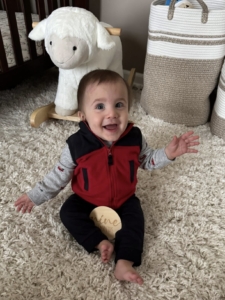
Jane and I absolutely LOVE being grandparents. Everything people told us about grandparenting is true. The first picture of Emmett was taken on Father’s Day. Every time I see a photo of him, I think, “I love that little guy!”


You’re halfway through the year—time flies! I hope the second half of 2025 exceeds your wildest expectations, both personally and professionally.

Warm regards,

Brian

What’s Influence PEOPLE all about?

✅ Why – Help you enjoy more professional success and personal happiness.

✅ How – By teaching the science of ethical influence.

✅ What – Speaking, writing, training, coaching, and consulting.

✅ Who – Leaders, salespeople, business coaches, insurance professionals, and more.

Here’s What’s New…

Speaking

This quarter, I had the opportunity to work with Selective Insurance agents in New Jersey. What a fantastic group! They came with a wealth of experience and an openness to new ideas. Much of my remaining time has been dedicated to a cohort from the Cialdini Institute.

Writing

My upcoming book, Influenced from Above: Where Faith and Influence Meet, is on track for a fall release. It explores the connection between Dr. Cialdini’s principles of influence and spiritual truths. To ensure we stay on track, I’ve teamed up with my book coach, Barbara Grassey. If you’re thinking about writing a book and going the self-publishing route, I highly recommend contacting Barbara!

As mentioned in my last newsletter, the writing is complete. I’m currently seeking endorsements and going through the editing process. Dr. Cialdini had this to say:

With this book, Brian Ahearn provides a marriage of spiritual inspiration and psychological illumination that is matchless in my experience.

Want a sneak peak? Click here for a short preview.

In Case You Missed It…

Here are two recent podcast episodes you might enjoy:

DDDM.FM Podcast – Mastering Influence in Sales

DDDM stands for Data-Driven Decision Making, a great context for discussing the science of influence. I joined host Lukasz Schab to explore research-backed ways to boost sales and improve the bottom line. Click here to watch and listen on YouTube.

Sales Reinvented – Feel, Felt, Found

Sales performance coach Paul Watts invited me to discuss objection handling. I shared insights on the “feel, felt, found” approach and how lessons from improv comedy can enhance sales training. Paul also asked for three do’s and three don’ts when facing objections. To listen in on the conversation, click here.

Best of…

Below are recommendations for you when it comes to your reading, listening, and watching pleasure. I’m confident you’ll have some new ideas from each listed resource just as I did.

Read

Scarcity: The New Science of Having Less and How it Defines Our Lives was written by Sendhil Mullainathan and Elder Shafir. As a follower of this newsletter, you likely understand the principle of scarcity—we value things more when they’re rare or diminishing. But why is that? The authors explain how scarcity affects our thinking and decisions, especially for those facing poverty or time pressure. This book offers a deeper understanding of the psychology behind scarcity and how to ethically apply it to help others.

Listen

I occasionally tune into The Ben Shapiro Show. While his conservative perspective isn’t for everyone, I find his analysis—especially regarding Middle East events since October 7, 2023—a compelling counterbalance to mainstream coverage. If you’re open to new perspectives, give a few episodes a try.

Watch

The Chosen, Season 5 is now available on Amazon Prime. This series is, in my opinion, the best portrayal of Jesus’ life—both historically accurate and deeply engaging. Director Dallas Jenkins adds creative elements where Scripture is silent, but always in ways that remain true to the message and the people. I especially appreciate how human and relatable each Apostle is portrayed.

Edited with ChatGPT

Brian Ahearn

Brian Ahearn is the Chief Influence Officer at Influence PEOPLE and a faculty member at the Cialdini Institute. An author, TEDx presenter, international speaker, coach, and consultant, Brian helps clients apply influence in everyday situations to boost results.

As one of only a dozen Cialdini Method Certified Trainers in the world, Brian was personally trained and endorsed by Robert Cialdini, Ph.D., the most cited living social psychologist on the science of ethical influence.

Brian’s first book, Influence PEOPLE, was named one of the 100 Best Influence Books of All Time by Book Authority. Persuasive Selling for Relationship Driven Insurance Agents was an Amazon new release bestseller. The Influencer, is a business parable designed to teach you how to use influence in everyday situations.

Brian’s LinkedIn courses on persuasive selling and coaching have been viewed by over 750,000 people around the world and his TEDx Talk on pre-suasion has more than a million views!

Influence Gone Wrong: A Lesson from the Desert

If you’ve been following me recently, you know I’ve been head down writing my next book, Influenced from Above: Where Faith and Influence Meet. It’s due out this fall, and it’s a project that’s deeply personal because faith is the most important part of my life.

My goal with the book is to explore how timeless spiritual wisdom intersects with Robert Cialdini’s principles of ethical influence.

After reading an advance copy, Cialdini wrote, “With this book, Brian Ahearn provides a marriage of spiritual inspiration and psychological illumination that is matchless in my experience.”

Now, when you’re immersed in a project like this, you start to see examples everywhere. And recently, I ran across one in Scripture that grabbed my attention — not because it was a great example of influence done right, but because it showed what happens when influence goes wrong.

It’s the story of the twelve spies in the book of Numbers. Moses sends a representative from each tribe to scout out the Promised Land. When they return, all twelve agree on one thing: the land is rich and abundant. But that’s where the consensus ends.

Joshua and Caleb stood firm in faith, urging the people to trust God and move forward, but the other 10 spies focused on fear. Then Caleb quieted the people before Moses and said, ‘We should by all means go up and take possession of it, for we will surely overcome it.’ But the men who had gone up with him said, ‘We are not able to go up against the people, for they are too strong for us.’ So they gave out to the sons of Israel a bad report of the land which they had spied out, saying, ‘The land through which we have gone, in spying it out, is a land that devours its inhabitants; and all the people whom we saw in it are men of great size. There also we saw the Nephilim (the sons of Anak are part of the Nephilim); and we became like grasshoppers in our own sight, and so we were in their sight.’” (Numbers 13:30-33)

You probably know how this is going to end. The majority ruled. The people listen to the ten, not the two. Fear spread, faith faltered, and an entire generation missed out on the Promised Land.

That’s the power — and the danger — of social proof.

Social proof is one of the most powerful tools in the influence toolkit because, in a very real sense, we are pack animals, wired for connection. It’s why we read reviews before trying a restaurant or follow the crowd when unsure what to do. We assume that if everyone else is doing something, it’s probably the right thing.

But here’s the catch: social proof is neutral. It doesn’t care if the crowd is right or wrong — it just amplifies what the crowd is doing.

That’s what happened in the desert. The Israelites had every reason to trust God based on prior experience, but they let the fear of the majority drown out the truth they already knew. They followed the crowd, and it cost them everything.

So, what’s the lesson for us?

First, if you’re a leader — in business, ministry, or life — be cautious how you use social proof. One of the most common missteps I see is when people point to the wrong crowd to try and influence the right behavior.

Here’s what I mean: a teacher says, “Half the class cheated on the last test,” hoping to shame students into better behavior. But what do students hear? “Everyone’s doing it — I guess it’s normal.” And guess what? Cheating goes up.

If you’re trying to discourage a behavior, don’t highlight how common it is. Highlight the positive instead. Even if only a few people are doing the right thing, you can frame it as a growing trend. And that’s often enough.

People are more likely to follow a behavior if they think it’s catching on. “More and more students are turning in their own work,” is a stronger, smarter use of social proof than “Everyone’s been cheating.”

Second, remember this: the majority isn’t always right. There will be times, as leaders or people of faith, where you’re called to stand with the few — maybe even stand alone — against fear, noise, or bad advice. That’s when influence meets integrity.

Joshua and Caleb didn’t win the popular vote. But they stayed true to what they believed, and in the long run, they were the ones who entered the land flowing with milk and honey.

As you go into your week, I’d like to challenge you to think differently about influence. Not just how you use it — but how it’s being used on you. Who are the “ten spies” giving bad reports in your life? And who are the Joshua and Caleb voices you need to listen to more?

Influence is everywhere. It’s happening all the time. Let’s be more intentional about how we use it — and more discerning in how we respond to it.

Your Turn

  • Have you ever seen social proof point people in the wrong direction?
  • What are some creative or positive ways you’ve used it to drive good behavior?

Drop your thoughts in the comments — let’s learn from each other.

Edited with ChatGPT

Brian Ahearn

Brian Ahearn is the Chief Influence Officer at Influence PEOPLE and a faculty member at the Cialdini Institute.

An author, TEDx speaker, international trainer, coach, and consultant, Brian helps clients apply influence in everyday situations to boost results.

As one of only a dozen Cialdini Method Certified Trainers in the world, Brian was personally trained and endorsed by Robert Cialdini, Ph.D., the most cited living social psychologist on the science of ethical influence.

Brian’s first book, Influence PEOPLE, was named one of the 100 Best Influence Books of All Time by Book Authority. His follow-up, Persuasive Selling for Relationship Driven Insurance Agents, was an Amazon new release bestseller. His latest book, The Influencer: Secrets to Success and Happiness, is a business parable designed to teach you how to use influence at home and the office.

Brian’s LinkedIn courses on persuasive selling and coaching have been viewed by more than 750,000 people around the world. His TEDx Talk on pre-suasion has more than a million views!

The 10% Advantage: How Ethical Influence Unlocks 33% More Sales

You’ve probably heard the phrase, “Don’t sweat the small stuff.” But in sales—and influence—it turns out that small changes can lead to big results. These are, in Robert Cialdini’s words, “Small Bigs.”

Let me show you what I mean when it comes to your sales.

Let’s Look at the Math

Imagine you’re working deals with an average size of $50,000. Your commission rate is 12%, and you keep 60% of those earnings. That puts $3,600 in your pocket for every sale you close. If you close three deals a month, you’re making $10,800 monthly—$129,600 annually.

Not bad. But what if I told you that a few small improvements of 10% in your process could raise your annual income by 33.1%—without adding a single new lead?

That’s not fuzzy math. That’s influence math.

Let’s break it down.

Suppose you get 24 leads a month and book first meetings with 50% of them—so 12 meetings. You generate enough interest with half of those prospects that they continue the sales process, which gives you six serious opportunities. Then you close half—three sales a month.

Now imagine getting just 10% better at each stage, going from 50% to 55%. That means:

  • Turning 55% of leads into meetings → 13.2 meetings as opposed to 12
  • Converting 55% of those to active opportunities → 7.3 sales conversations where you had 6 before
  • Closing 55% of those deals → 4 sales per month instead of 3

At $3,600 per sale, that’s $14,375 per month or $172,498 per year. That’s a 33.1% bump in your income from the same 24 leads! No extra time prospecting. Just a smarter and more persuasive throughout process.

So, what’s the secret?

It’s Not Grinding, It’s Influencing Better

When people think about influence, they often jump to tactics or tricks. But real influence—the kind that’s ethical and sustainable—starts with understanding people. It’s built on Cialdini’s principles of liking and reciprocity, two of the most powerful forces in social psychology.

Let’s start with liking. People are more likely to say yes to someone they know and trust—someone they like. That’s not about flattery; it’s about authentic connection. Are you showing genuine interest in your prospects? Do they feel seen and heard in your conversations?

Next is reciprocity. When you give first—your time, insight, or helpful advice—people naturally feel inclined to give back. That doesn’t mean manipulating people into owing you. It means creating value first, without strings attached. When you become known as someone who helps, trust grows—and with it, your close rate.

These principles don’t require more hours. They require more intentionality. Can you tweak how you approach your first meetings? Can you reframe your message so it resonates more deeply? Can you improve your questions so prospects feel you’re solving their problem, not pitching your solution?

That’s where my book, Persuasive Selling, comes in. It outlines how small changes in communication can lead to big returns in trust, engagement, and results.

So, here’s my challenge to you:

  • What would it look like to be just 10% better at converting leads to meetings?
  • How might you improve your early conversations to spark more interest?
  • Where could your closing conversations go from pressure to persuasion?

Remember, the biggest leaps often come from the smallest steps. And those steps usually involve getting a little better at helping people say “yes” throughout the sales process.

That’s not just a good sales strategy. That’s ethical influence in action.

Share Your Thoughts

What’s one small change you’ve made in your sales process that made a big difference?
Or—where do you think you could improve by just 10%?

Drop your thoughts in the comments so we can learn from each other.

And if you want help applying these ideas to your world, connect with me here on LinkedIn—or grab a copy of Persuasive Selling. Small change for Big wins.

Edited with ChatGPT

Brian Ahearn

Brian Ahearn is the Chief Influence Officer at Influence PEOPLE and a faculty member at the Cialdini Institute.

An authorTEDx speaker, international trainer, coach, and consultant, Brian helps clients apply influence in everyday situations to boost results.

As one of only a dozen Cialdini Method Certified Trainers in the world, Brian was personally trained and endorsed by Robert Cialdini, Ph.D., the most cited living social psychologist on the science of ethical influence.

Brian’s first book, Influence PEOPLE, was named one of the 100 Best Influence Books of All Time by Book Authority. His follow-up, Persuasive Selling for Relationship Driven Insurance Agents, was an Amazon new release bestseller. His latest book, The Influencer: Secrets to Success and Happiness, is a business parable designed to teach you how to use influence at home and the office.

Brian’s LinkedIn courses on persuasive selling and coaching have been viewed by more than 750,000 people around the world. His TEDx Talk on pre-suasion has more than a million views!